KI-Beratung Beta

Gutscheinbedingungen

**Gültig bis 18.11.2026 auf englischsprachige Klassiker (klassiker-32728) online auf thalia.at und in der Thalia App. Einzelne Artikel können ausgeschlossen sein. Ausgenommen sind preisgebundene Artikel & eBooks. Pro Einkauf einmal einlösbar. Click & Collect nur bei Onlinevorabzahlung möglich. Keine Barauszahlung. Nicht kombinierbar mit anderen Aktionen und Gutscheinen. Gutschein wird auf max. 500€ Bestellwert angerechnet. Nicht gültig für Geschenkkarten, Versandkosten und Services.

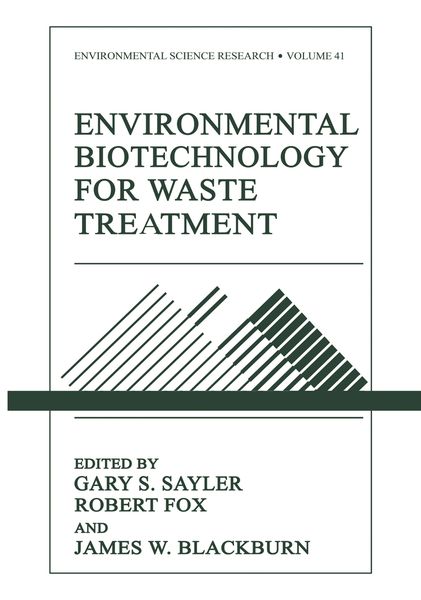
Produktbild: Environmental Biotechnology for Waste Treatment
Band 41

Environmental Biotechnology for Waste Treatment

99,99 €

inkl. gesetzl. MwSt., Versandkostenfrei


Beschreibung

The use of biotechnical processes in control of environmental pollution and in haz ardous waste treatment is viewed as an advantageous alternative or adduct to phys ical chemical treatment technologies. Yet, the development and implementation of both conventional and advanced biotechnologies in predictable...

Beschreibung

The use of biotechnical processes in control of environmental pollution and in haz ardous waste treatment is viewed as an advantageous alternative or adduct to phys ical chemical treatment technologies. Yet, the development and implementation of both conventional and advanced biotechnologies in predictable and efficacious field applications suffer from numerous technical, regulatory, and societal uncertainties. With the application of modern molecular biology and genetic engineering, there is clear potential for biotechnical developments that will lead to breakthroughs in controlled and optimized hazardous waste treatment for in situ and unit process use. There is, however, great concern that the development of these technologies may be needlessly hindered in their applications and that the fundamental research base may not be able to sustain continued technology development. Some of these issues have been discussed in a fragmented fashion within the research and development community. A basic research agenda has been established to promote a sustainable cross-disciplinary technology base. This agenda includes developing new and improved strains for biodegradation, improving bioanalytical methods to measure strain and biodegradation performance, and providing an in tegrated environmental and reactor systems analysis approach for process control and optimization.

Produktdetails

Einband

Taschenbuch

Erscheinungsdatum

02.03.2012

Abbildungen

X, 298 p. 35 illus., 1 illus. in color.

Herausgeber Gary S. Sayler + weitere

Produktdetails

Einband

Taschenbuch

Erscheinungsdatum

02.03.2012

Abbildungen

X, 298 p. 35 illus., 1 illus. in color.

Herausgeber
Verlag Springer Us
Seitenzahl

298

Maße (L/B/H)

25,4/17,8/1,7 cm

Gewicht

576 g

Auflage

Softcover reprint of the original 1st ed. 1991

Sprache

Englisch

ISBN

978-1-4684-5957-9

Herstelleradresse

Springer-Verlag GmbH
Tiergartenstr. 17
69121 Heidelberg
DE

Email: ProductSafety@springernature.com

Noch keine Bewertungen vorhanden

Verfassen Sie die erste Bewertung zu diesem Artikel

Helfen Sie anderen Kundinnen und Kunden durch Ihre Meinung.

Kundinnen und Kunden meinen

Bewertungen (0)

  • Produktbild: Environmental Biotechnology for Waste Treatment
  • Current Perceptions.- Environmental Biotechnology: Perceptions, Reality, and Applications.- Media Images of Environmental Biotechnology: What Does the Public See?.- Perspectives on Bioremediation in the Gas Industry.- Considerations in the Selection of Environmental Biotechnology as Viable in Field-Scale Waste Treatment Applications.- The Technical, Economic, and Regulatory Future for Bioremediation: An Industry Perspective.- Removing Impediments to the Use of Bioremediation and Other Innovative Technologies.- Bioremediation Research Issues.- Field-Scale Case Studies.- Evaluation of Bioremediation in a Coal-Coking Waste Lagoon.- Evaluation Process for the Selection of Bioremediation Technologies for Exxon Valdez Oil Spill.- Full-Scale Bioremediation of Contaminated Soil and Water.- Technical Issues and Concerns in Implementation.- Feasibility and Other Considerations for Use of Bioremediation in Subsurface Areas.- Integration of Biotechnology to Waste Minimization Programs.- Bioremediation of Explosives Contaminated Soils (Scientific Questions/Engineering Realities).- Practices, Potential, and Pitfalls in the Application of Biotechnology to Environmental Problems.- What is the Km of Disappearase?.- Use of Treatability Studies in Developing Remediation Strategies for Contaminated Soils.- Biodegradation of Mixed Solvents by a Strain of Pseudomonas.- Nontechnical Issues and Concerns in Implementation.- The Field Implementation of Bioremediation: An EPA Perspective.- An Historical Perspective: Does Good Science or Good Press Generate Demand?.- Ways to Identify and Obtain Rights to Technology from Federal Facilities.- An Overview of Current Attitudes on the Use of Biotreatment for Cleanup.- What Are the Critical Issues Necessary to Win the Confidence of State Regulators? Views of a Project Manager on Bioremediation Sites.- Federal Regulations: How They Impact Research and Commercialization of Biological Treatment.- International Activities.- Polluted Heterogeneous Environments: Macro-scale Fluxes, Micro-scale Mechanisms, and Molecular Scale Control.- The Pilot Plant Testing of the Continuous Extraction of Radionuclides Using Immobilized Biomass.- Research and Development Programs for Biological Hazardous Waste Treatment in the Netherlands.- Summary.- Environmental Biotechnology—From Flask to Field: A Review.- Contributors.