KI-Beratung Beta

Gutscheinbedingungen

**Gültig am 15.10.2026 auf Spielzeug, Schreibwaren, Filme, Geschenke & Trends, Musik, tolino eReader & Zubehör, Hörbücher und Hörbuch-Downloads, nicht preisgebundene Bücher und Kalender in der Thalia App. Einzelne Artikel können ausgeschlossen sein. Aufgrund der Buchpreisbindung sind deutschsprachige Bücher und eBooks ausgenommen. Zusätzlich ausgenommen sind Abos & Flatrates, Games, Geschenkkarten/-boxen, Shelfies, Software, Zeitschriften sowie einzelne Artikel von tonies®. Pro Einkauf einmal einlösbar. Click & Collect nur bei Onlinevorabzahlung möglich. Keine Barauszahlung. Nicht kombinierbar mit anderen Aktionen und Gutscheinen. Gutschein wird auf max. 500€ Bestellwert angerechnet. Nicht gültig für Versandkosten und Services.

Produktbild: Side-Effects of Anti-Inflammatory Drugs
Band 2

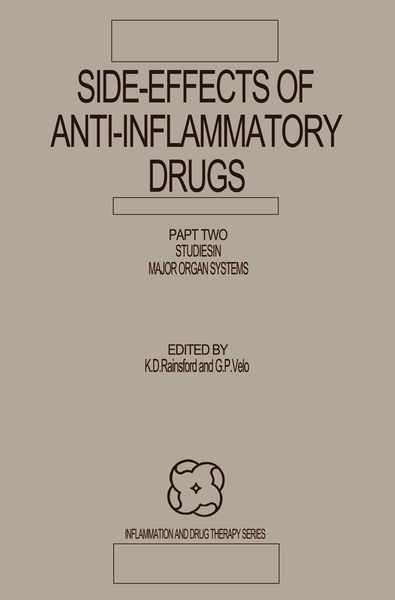
Side-Effects of Anti-Inflammatory Drugs Part Two Studies in Major Organ Systems

99,99 €

inkl. gesetzl. MwSt., Versandkostenfrei


Beschreibung

Produktdetails

Einband

Taschenbuch

Erscheinungsdatum

08.05.2012

Abbildungen

XXVI, 496 p. 8 illus.

Herausgeber

K. D. Rainsford + weitere

Verlag

Springer Netherland

Seitenzahl

496

Maße (L/B/H)

23,5/15,5/2,7 cm

Gewicht

739 g

Auflage

Softcover Reprint of the Original 1st 1987 edition

Sprache

Englisch

ISBN

978-94-010-9777-2

Beschreibung

Produktdetails

Einband

Taschenbuch

Erscheinungsdatum

08.05.2012

Abbildungen

XXVI, 496 p. 8 illus.

Herausgeber

Verlag

Springer Netherland

Seitenzahl

496

Maße (L/B/H)

23,5/15,5/2,7 cm

Gewicht

739 g

Auflage

Softcover Reprint of the Original 1st 1987 edition

Sprache

Englisch

ISBN

978-94-010-9777-2

Herstelleradresse

Libri GmbH
Europaallee 1
36244 Bad Hersfeld
DE

Email: gpsr@libri.de

Noch keine Bewertungen vorhanden

Verfassen Sie die erste Bewertung zu diesem Artikel

Helfen Sie anderen Kundinnen und Kunden durch Ihre Meinung.

Kundinnen und Kunden meinen

Bewertungen (0)

  • Produktbild: Side-Effects of Anti-Inflammatory Drugs
  • 2 Table of Contents.- Section III Gastrointestinal Tract (Experimental Aspects).- 1 Mechanisms of gastric contrasted with intestinal damage by non-steroidal anti-inflammatory drugs.- Discussion.- 2 The enterohepatic circulation of some anti-inflammatory drugs may cause intestinal ulcerations.- Discussion.- 3 Limitations of laboratory models in predicting gastrointestinal toleration of oxicams and other anti-inflammatory drugs.- 4 Why are non-steroidal anti-inflammatory drugs so gastrotoxic, even when given orally as solubilized salt formulations or parenterally?.- 5 Early and late phases in the formation by anti-inflammatory drugs of intestinal lesions in rats.- 6 Role of intestinal microflora in maintaining indomethacin induced intestinal lesions in rats.- 7 Comparison of gastric mucosal damage and prostaglandin formation in arthritis patients treated with carprofen and ibuprofen.- 8 Inhibition of prostanoid synthesis by anti-inflammatory drugs in human gastric mucosa.- 9 Leukotriene formation in the gastrointestinal tract and effects of anti-inflammatory drugs.- 10 Evidence for sulphydryl-sensitive process in the mechanisms of acute gastric mucosal injury and defence.- 11 Experimental and clinical studies on the prevention of aspirin-induced gastric damage by “cytoprotective” drugs.- 12 Both E prostaglandins and prolonged indomethacin treatment exert trophic effects on the gastric mucosa.- 13 Gastrointestinal side-effects of prostaglandins.- 14 Investigation of auranofin-induced diarrhoea.- 15 Pyrido-pyrimidines — with analgesic and anti-inflammatory activity — inhibit the gastrointestinal mucosal damage induced by different prostaglandin synthesis inhibitors.- 16 Al(OH)3 inhibits aspirin-induced gastric lesions in cats with Heidenhain pouch.- 17 Polyenephosphatidylcholine: an inhibitor of NSAID gastric toxicity which increases impaired mucosal PGE2 synthesis.- 18 Prostaglandins prevent red streaks in rat gastric mucosa caused by intravenous aspirin but not by salicylate.- 19 Gastroduodenal alkaline secretion, mucosal defence mechanisms and the influence of non-steroidal anti-inflammatory agents.- Section IV Antirheumatic and Immunoregulatory Agents.- 20 Side-effects of penicillamine: some recent aspects.- Discussion.- 21 Side-effects of gold complexes and D-penicillamine: genetic aspects.- Discussion.- 22 Anti-malarial induced ocular toxicity during the treatment of rheumatoid arthritis.- Discussion.- 23 Clinical aspects and side effects of sulphasalazine in the treatment of rheumatoid arthritis.- Discussion.- 24 Sulphasalazine: mode of action and side-effects in rheumatoid arthritis and ulcerative colitis.- Discussion.- 25 Side-effects of levamisole: recent aspects.- Discussion.- 26 Toxicology of immunoregulatory agents.- Discussion.- 27 Actions of novel immunoregulants useful in the treatment of arthritis as may be relevant to their toxicity.- Discussion.- 28 Monitoring for gold salt nephropathy and follow-up of gold-induced proteinuria by micro-PAGE electrophoresis.- 29 Long-term (up to 8 years) evaluation of side-effects of gold salts, levamisole and D-penicillamine in rheumatoid arthritis patients.- 30 Side-effect profile of sulphasalazine in inflammatory arthritis.- 31 Penicillamine-induced dermatomyositis and polymyositis.- Section V Glucocorticoids.- 32 Pulsed intravenous methylprednisolone in the treatment of rheumatoid arthritis.- Discussion.- 33 Side-effects in SLE patients treated with methylprednisolone pulse therapy (MPPT).- 34 Mechanisms of bone damage by glucocorticoids.- Discussion.- Section VI Hypersensitivity Conditions.- 35 Aspirin allergy.- Discussion.- 36 Genetic susceptibility toward NSAID induced toxic epidermal necrolysis.- Discussion.- 37 Pathophysiology and pharmacology of asthma.- Discussion.- 38 Photosensitivity due to anti-inflammatory analgesic drugs: a laser flash photolysis study of azapropazone.- Section VII Nephrotoxicity of Nsaids.- 39 Recent studies on the comparative nephrotoxicity of anti-inflammatory agents.- Discussion.- 40 Hospitalizations for renal impairment among users and non-users of non-steroidal anti-inflammatory drugs in Saskatchewan, Canada, 1983.- Discussion.- 41 Anti-inflammatory drugs and renal synthesis of prostaglandins and thromboxane in patients with systemic lupus erythematosus.- Discussion.- 42 The biochemical nephrotoxicity of anti-inflammatory and analgesic drugs: metabolic activation in the medulla and cortex.- Discussion.- 43 Free radical reactions during warm ischaemia and reperfusion of rabbit kidneys: potential therapeutic effects of desferrioxamine in renal transplantation.- Discussion.- 44 The effects of indomethacin, ketoprofen and piroxicam on basal and furosemide-induced sodium excretion in the healthy subject.- Section VIII Special Drug Aspects.- 45 Azapropazone is not a pyrazolidine derivative.- 46 The effect of benoxaprofen on thyroid function.- 47 The response of human platelets to aspirin in vitro.- 48 Differential influences of salsalate, aspirin and naproxen on plasma renin activity and platelet thromboxane (TxB)2 synthesis.- 49 Antihypotensive effects of non-steroidal anti-inflammatory drugs: a study on thermal-induced hypotension.- 50 Mechanism of action of neuropeptides: a group of naturally occurring (endogenous) anti-inflammatory analgesic compounds.