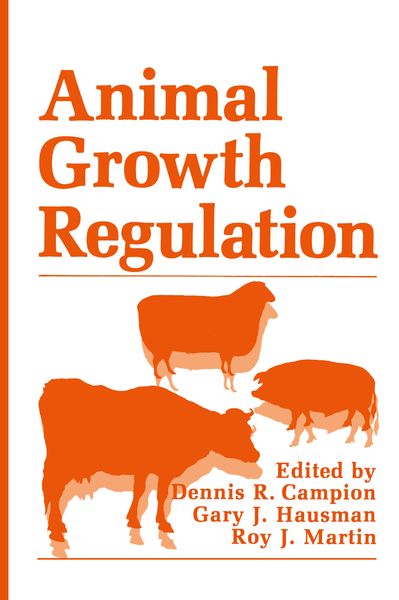

• Produktbild: Animal Growth Regulation
  • Produktbild: Animal Growth Regulation

Animal Growth Regulation

49,99 €

inkl. gesetzl. MwSt., Versandkostenfrei


Beschreibung

Produktdetails

Einband

Taschenbuch

Erscheinungsdatum

26.04.2012

Herausgeber

Dennis R. Campion + weitere

Verlag

Springer Us

Seitenzahl

424

Maße (L/B/H)

22,9/15,2/2,4 cm

Gewicht

616 g

Auflage

Softcover reprint of the original 1st ed. 1989

Sprache

Englisch

ISBN

978-1-4684-8874-6

Beschreibung

Produktdetails

Einband

Taschenbuch

Erscheinungsdatum

26.04.2012

Herausgeber

Verlag

Springer Us

Seitenzahl

424

Maße (L/B/H)

22,9/15,2/2,4 cm

Gewicht

616 g

Auflage

Softcover reprint of the original 1st ed. 1989

Sprache

Englisch

ISBN

978-1-4684-8874-6

Herstelleradresse

Springer-Verlag GmbH
Tiergartenstr. 17
69121 Heidelberg
DE

Email: ProductSafety@springernature.com

Kundinnen und Kunden meinen

0 Bewertungen

Informationen zu Bewertungen

Zur Abgabe einer Bewertung ist eine Anmeldung im Konto notwendig. Die Authentizität der Bewertungen wird von uns nicht überprüft. Wir behalten uns vor, Bewertungstexte, die unseren Richtlinien widersprechen, entsprechend zu kürzen oder zu löschen.

Die Bewertungen sind nach Format, Anzahl Sterne und Datum sortiert.

Verfassen Sie die erste Bewertung zu diesem Artikel

Helfen Sie anderen Kund*innen durch Ihre Meinung

Kundinnen und Kunden meinen

0 Bewertungen filtern

  • Produktbild: Animal Growth Regulation
  • Produktbild: Animal Growth Regulation
  • 1 Placental Regulation of Fetal Growth.- 1. Introduction.- 2. Placental Anatomy and Pattern of Blood Flow.- 3. Placental Growth.- 4. Growth of Uteroplacental Blood Flow.- 5. Regulation of Blood Flow.- 6. Placental Transport.- 7. Hormone Secretion.- 8. Conclusions.- References.- 2 Endocrinology of Bone Formation.- 1. Introduction.- 1.1. Unique Aspects of Bone Physiology.- 1.2. Bone Structure.- 1.3. Methods of Investigating Bone Formation.- 2. Hormones.- 2.1. Somatomedins.- 2.2. PTH.- 2.3. Vitamin D.- 2.4. Calcitonin.- 2.5. Insulin.- 2.6. Thyroid Hormones.- 2.7. Sex Steroids.- 2.8 Glucocorticoids.- 3. Local Regulators of Bone Formation.- 3.1. Prostaglandins.- 3.2. Noncollagen Proteins.- 3.3. Growth Factors.- References.- 3 Endocrine Regulation of Adipogenesis.- 1. Introduction.- 2. Insulin.- 3. Growth Hormone.- 4. Insulinlike Growth Factors.- 5. Glucocorticoids.- 6. Indomethacin, Prostaglandins, and AMP.- 7. Thyroid Hormones.- 8. Cachectin.- 9. Autocrine Control.- 10. Perspectives on Integrated Endocrine Control.- References.- 4 Autocrine, Paracrine, and Endocrine Regulation of Myogenesis.- 1. Introduction.- 2. Muscle Structure.- 3. Myogenesis.- 4. Factors Affecting Myogenesis.- 4.1. Insulinlike Growth Factors (Somatomedins).- 4.2. Insulin.- 4.3. Transforming Growth Factor-? (TGF-?) (Differentiation Inhibitor).- 4.4. Transferrin.- 4.5. Fibroblast Growth Factor (FGF).- 4.6. Somatotropin.- 4.7. Glucocorticoids.- 4.8. Thyroid Hormone.- 5. Summary.- References.- 5 The Expression of Protooncogenes in Skeletal Muscle.- 1. Introduction.- 2. Categories of Oncogenes.- 2.1. Tyrosine Kinases.- 2.2. GTP-Binding Proteins.- 2.3. Nuclear Proteins.- 2.4. Peptide Hormones.- 3. Oncogene Expression in Skeletal Muscle.- References.- 6 Regulation of Myofibrillar Protein Gene Expression.- 1. Introduction.- 2. Multigene Families.- 3. Major Myofibrillar Proteins of the Sarcomere.- 3.1. Actin.- 3.2. Tropomyosin (TM).- 3.3. Troponin (TN).- 3.4. Myosin Light Chains (MLC).- 3.5. Myosin Heavy Chains (MHC).- 4. Isolation and Characterization of MHC Sequences.- 5. Effects of Various Stimuli on MHC Gene Expression.- 5.1. Thyroid Hormone.- 5.2. Exercise/Electrical Stimulation.- 6. Alternative Splicing and MHC Gene Structure.- 7. Conclusions.- References.- 7 Regulation of Growth by Negative Growth Regulators.- 1. Introduction.- 2. Transforming Growth Factor-?.- 3. Platelet-Derived Inhibitors.- 3.1. 37-kDa Protein.- 3.2. 27-kDa Protein.- 3.3. Proteins Greater than 200 kDa.- 4. Interferons.- 5. Liver-Derived Inhibitors.- 6. Mammary-Derived Inhibitor.- 7. Glycopeptide Inhibitors.- 8. Density-Dependent Inhibitors.- 9. Summary.- References.- 8 Skeletal Muscle Proteases and Protein Turnover.- 1. Introduction.- 2. General Features of Intracellular Protein Degradation.- 3. Intracellular Degradation of Muscle Proteins.- 4. Neutral and Alkaline Proteolytic Activities.- 4.1. Neutral and Alkaline Proteolytic Activities in Muscle Cells.- 4.2. The ATP-Stimulated and ATP-Dependent Proteinases.- 4.3. The Ca2 +-Dependent Proteinases.- 5. Protease Inhibitors.- 6. Summary.- References.- 9 Regulation of Protein Turnover.- 1. Introduction.- 2. Factors That Affect Tissue Growth and Protein Turnover.- 2.1. Protein Turnover in Different Tissues and the Effect of Developmental Age.- 2.2. Nutrient Intake.- 2.3. Functional Load.- 3. Factors That Control Protein Turnover.- 3.1. Substrates and Hormones and Their Relation to Nutritional Control.- 3.2. The Role of Initiation and Ribosomal Accretion in the Control of Translation.- 3.3. Comments on the Link between Receptor Activation and Protein Synthesis.- 4. Conclusion.- References.- 10 Energy Balance Regulation.- 1. Introduction.- 2. Evidence for Energy Balance Regulation in Farm Animals.- 2.1. Lactation.- 2.2. Growing Animals.- 2.3. Compensatory Growth.- 2.4. Egg Production.- 3. Mechanisms of Energy Balance Regulation.- 3.1. Lactation.- 3.2. Brown Adipose Tissue Metabolism.- 3.3. Compensatory Growth.- 4. CNS Control of Food Intake.- 4.1. Brain Areas Involved.- 4.2. Mechanisms of Action.- 5. CNS Control of Peripheral Metabolism.- 5.1. Brain Areas Involved.- 5.2. Direct Regulation.- 5.3. Indirect Regulation.- 6. Theories of Signals Regulating Food Intake.- 6.1. Short-Term Mechanisms.- 6.2. Long-Term Mechanisms.- 7. Role of Neurotransmitters and Neuropeptides.- 8. Summary.- References.- 11 Central Regulation of Growth Hormone Secretion.- 1. Introduction.- 2. Patterns of GH Secretion.- 3. Hypothalamic Peptides Involved in GH Regulation.- 3.1. Somatostatin.- 3.2. GH-Releasing Factor (GRF).- 3.3. Other Peptides That Increase GH Secretion.- 4. Hypothalamic Regions Involved in GH Regulation.- 5. Interaction of Somatostatin and GRF in Episodic GH Secretion.- 6. Neuropharmacological Regulation of GH Secretion.- 6.1. Norepinephrine (NE).- 6.2. Dopamine (DA).- 6.3. Serotonin (5-HT).- 6.4. Other Neurotransmitters.- 7. Gonadal Steroid Modulation of GH Secretion.- 8. Feedback Regulation of GH Secretion.- References.- 12 Mechanisms of Action for Somatotropin in Growth.- 1. Introduction.- 2. Chemical Nature of Somatotropin.- 2.1. Variants of Somatotropin.- 2.2. Fragments of Somatotropin.- 2.3. Receptor Mediation of Somatotropin Effects.- 3. Biological Response to Somatotropin.- 3.1. Nutrient Partitioning.- 3.2. Pattern of Administration.- 3.3. Dose-Response Relationships: Growth Model.- 4. Mechanisms of Action.- 4.1. General Considerations.- 4.2. Carbohydrate Metabolism.- 4.3. Bone and Mineral Metabolism.- 4.4. Adipose Tissue Lipid Metabolism.- 4.5. Muscle and Protein Metabolism.- 5. Summary and Perspectives.- References.- 13 Regulation of Somatomedin Production, Release, and Mechanism of Action.- 1. Origin of the Somatomedin Hypothesis.- 2. Methods of Analyses.- 3. Gene Expression and the Insulin Peptide Family.- 4. Site of Synthesis.- 5. Somatomedin Research in Domestic Animals.- References.- 14 Sexual Differentiation and the Growth Process.- 1. Introduction.- 2. Rats.- 3. Cattle and Sheep.- 4. Swine.- 5. Chickens.- 6. Sexual Differences in Growth-Related Endocrine Processes.- 7. Conclusions.- References.- 15 Potential Mechanisms for Repartitioning of Growth by ß-Adrenergic Agonists.- 1. Introduction.- 2. Biology of Adrenergic Hormones and Neurotransmitters.- 2.1. Endogenous Adrenergic Agents.- 2.2. Synthesis and Removal.- 2.3. Adrenergic Receptors.- 2.4. Coupling of Adrenergic Receptors to Intracellular Function.- 2.5. Physiological Effects of Adrenergic Agonists.- 3. Administration of ß-Adrenergic Agonists to Animals.- 3.1. Effects.- 3.2. Adipose Tissue.- 3.3. Muscle.- 3.4. Other Mechanisms.- References.- 16 Gene Transfer for Enhanced Growth of Livestock.- 1. Introduction.- 2. Identification of Genes for Transfer.- 3. Methods of Producing Transgenic Animals.- 3.1. Microinjection into Fertilized Ova.- 3.2. Retroviral Insertion of Genes.- 3.3. Insertion via Pluripotent Cells.- 3.4. Insertion by Transposons.- 4. Production of Transkaryotic Animals.- 5. Transfer of Growth-Related Genes into Livestock.- 5.1. Integration of Growth-Related Genes.- 5.2. Expression of Integrated Genes.- 5.3. Growth Performance of Transgenic Livestock.- 5.4. Germline Transmission of Fusion Genes.- 5.5. Expression in Animals with Transkaryotic Implants.- 6. Conclusions.- References.- 17 Status of Current Strategies for Growth Regulation.- 1. Introduction.- 2. Steroid Hormone and Xenobiotic Regulation of Animal Growth.- 3. Manipulation of Animal Growth with Exogenous Somatotropin.- 4. Use of Growth Hormone-Releasing Factor (GRF) to Alter Animal Growth.- 5. Use of ?-Adrenergic Agonists to Manipulate Animal Growth.- 5.1. Effects of Adrenergic Agonists in Sheep.- 5.2. Effects of Adrenergic Agonists in Cattle.- 5.3. Effects of Adrenergic Agonists in Swine.- 6. Use of Immunization to Manipulate Animal Growth.- 7. Summary and Perspectives.- References.