
KI-Beratung Beta

  • Produktbild: Advances in Perinatal Medicine
  • Produktbild: Advances in Perinatal Medicine

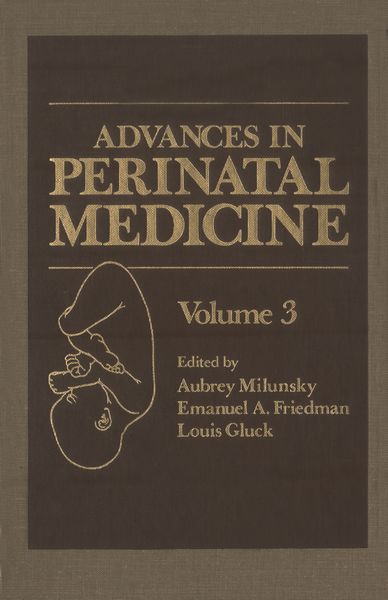
Advances in Perinatal Medicine Volume 3

49,99 €

inkl. gesetzl. MwSt., Versandkostenfrei


Beschreibung

Produktdetails

Einband

Taschenbuch

Erscheinungsdatum

17.02.2013

Abbildungen

XVII, 255 p. 48 illus.

Herausgeber

Aubrey Milunsky

Verlag

Springer Us

Seitenzahl

255

Maße (L/B/H)

23,5/15,5/1,6 cm

Gewicht

423 g

Auflage

Softcover Reprint of the Original 1st 1983 edition

Sprache

Englisch

ISBN

978-1-4684-4423-0

Beschreibung

Produktdetails

Einband

Taschenbuch

Erscheinungsdatum

17.02.2013

Abbildungen

XVII, 255 p. 48 illus.

Herausgeber

Aubrey Milunsky

Verlag

Springer Us

Seitenzahl

255

Maße (L/B/H)

23,5/15,5/1,6 cm

Gewicht

423 g

Auflage

Softcover Reprint of the Original 1st 1983 edition

Sprache

Englisch

ISBN

978-1-4684-4423-0

Herstelleradresse

Libri GmbH
Europaallee 1
36244 Bad Hersfeld
DE

Email: gpsr@libri.de

Noch keine Bewertungen vorhanden

Verfassen Sie die erste Bewertung zu diesem Artikel

Helfen Sie anderen Kundinnen und Kunden durch Ihre Meinung.

Kundinnen und Kunden meinen

Bewertungen (0)

  • Produktbild: Advances in Perinatal Medicine
  • Produktbild: Advances in Perinatal Medicine
  • 1 Antecedents of Childhood Obesity.- 1. Introduction.- 2. Criteria, Classification, and Prevalence.- 3. Interaction of Maternal Weight and the Neonate.- 4. Natural History.- 5. Adiposity and the Adipocyte.- 6. Intervention and Treatment.- References.- 2 The Embryology of Birth Defects: Malformations vs. Deformations vs. Disruptions.- 1. Introduction.- 2. Types of Malformations.- 3. Deformations.- 4. Disruptions.- 5. Conclusion.- References.- 3 Brain Metabolic and Pathologic Consequences of Asphyxia: Role Played by Serum Glucose Concentration.- 1. Fetal Asphyxia as Cause of Brain Injury.- 2. Traditional Concepts Concerning the Brain Metabolic Basis for Injury from Asphyxia.- 3. Brain Tolerance to Circulatory Arrest May Be Extended.- 4. Spurious Evidence That Administering Glucose Solutions Extends Brain Tolerance to Asphyxia.- 5. Evidence That Infusions of Glucose Solutions Reduce Rather Than Extend Brain Tolerance to Anoxia.- 6. Evidence That Infusions of Glucose Solutions Reduce Rather Than Extend Overall Animal Tolerance to Hypoxia.- 7. Hypothesis That Lactic Acid Accumulation beyond 17 to 20 µmoles/g Damages the Brain.- 8. Mechanisms through Which the Fall in Blood Pressure during Hypoxia Injures the Brain.- 9. Brain Biochemical Changes Produced by Hypoxia and Anoxia and Their Relation to Brain Injury.- 10. Mechanisms Which Operate during Hypoxia and during Anoxia to Increase Brain Tissue Lactic Acid Concentrations.- 11. Evidence that Infusions of Glucose Solutions during the Recovery Period Exacerbate Anoxic Brain Injury.- 12. Applicability to the Fetus and Newborn.- 13. Summary and Conclusions.- References.- 4 Bronchopulmonary Dysplasia Today.- 1. Introduction.- 2. Pathology of Bronchopulmonary Dysplasia.- 3. Incidence and Mortality of Bronchopulmonary Dysplasia.-4. Etiology of Bronchopulmonary Dysplasia.- 6. Radiographic Differential Diagnosis of Bronchopulmonary Dysplasia.- 7. Complications and Associations of Chronic Bronchopulmonary Dysplasia.- 8. Surveillance and Assessment of Bronchopulmonary Dysplasia.- 9. Summary.- References.- 5 Neonatal Behavioral Effects of Anesthetic Exposure during Pregnancy.- 1. Introduction.- 2. Infant Neurobehavior—A Model Problem.- 3. Preconception and Chronic Exposure to Anesthetics.- 4. Gestational Exposure to Anesthetics.- 5. Obstetrical Anesthetic and Analgesic Medication and Its Consequences for Newborn Neurobehavior.- 6. Infant Assessment Techniques.- 7. A Tentative Model for Behavioral Effects of Anesthetic Exposure.- 8. More Recent Studies.- References.- 6 Stillbirth: Psychological Consequences and Strategies of Management.- 1. The Neglect of Stillbirth.- 2. The Annihilation of the Experience of Stillbirth.- 3. The Management of Stillbirth.- 4. The Need to Include Siblings.- 5. The Management of Failed Mourning of a Stillbirth.- 6. Epilogue.- References.