Gutscheinbedingungen

**Gültig bis 14.09.2026 auf Spielzeug, Schreibwaren, Filme, Geschenke & Trends, Musik, tolino eReader & Zubehör, Hörbücher, nicht preisgebundene Bücher und Kalender in der Thalia App. Einzelne Artikel können ausgeschlossen sein. Aufgrund der Buchpreisbindung sind deutschsprachige Bücher und eBooks ausgenommen. Zusätzlich ausgenommen sind Abos & Flatrates, Games, Geschenkkarten/-boxen, Shelfies, Software, Zeitschriften sowie einzelne Artikel von tonies®. Pro Einkauf einmal einlösbar. Nur gültig mit im Onlineshop hinterlegter Bonuscard. Click & Collect nur bei Onlinevorabzahlung möglich. Keine Barauszahlung. Nicht kombinierbar mit anderen Aktionen und Gutscheinen. Gutschein wird auf max. 500€ Bestellwert angerechnet. Nicht gültig für Versandkosten und Services.

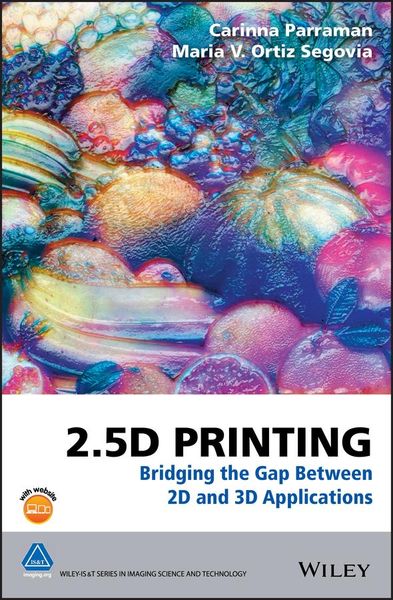
Produktbild: 2.5d Printing

2.5d Printing Bridging the Gap Between 2D and 3D Applications

172,99 €

inkl. gesetzl. MwSt., Versandkostenfrei


Beschreibung

Produktdetails

Einband

Gebundene Ausgabe

Erscheinungsdatum

29.10.2018

Verlag

John Wiley & Sons

Seitenzahl

272

Maße (L/B/H)

24,6/17,5/2 cm

Gewicht

558 g

Auflage

1. Auflage

Sprache

Englisch

ISBN

978-1-118-96730-0

Beschreibung

Produktdetails

Einband

Gebundene Ausgabe

Erscheinungsdatum

29.10.2018

Verlag

John Wiley & Sons

Seitenzahl

272

Maße (L/B/H)

24,6/17,5/2 cm

Gewicht

558 g

Auflage

1. Auflage

Sprache

Englisch

ISBN

978-1-118-96730-0

Herstelleradresse

Libri GmbH
Europaallee 1
36244 Bad Hersfeld
DE

Email: gpsr@libri.de

Noch keine Bewertungen vorhanden

Verfassen Sie die erste Bewertung zu diesem Artikel

Helfen Sie anderen Kundinnen und Kunden durch Ihre Meinung.

Kundinnen und Kunden meinen

Bewertungen (0)

Die Leseprobe wird geladen.
  • Produktbild: 2.5d Printing
  • About the Authors xi

    Series Editor's Preface xiii

    Preface xv

    Acknowledgements xvii

    About the Companion website xviii

    Introduction xix

    1 Defining the Field of 2.5D Printing 1

    1.1 What is Texture? 1

    1.1.1 How to Quantify Texture 2

    1.1.2 How do Artists Convey the Appearance of Texture? 3

    1.1.3 How the Natural World Mimics the Appearance of Texture 4

    1.2 Measuring Texture and Colour 6

    1.3 Images, Pictures and Reproductions 9

    1.3.1 The Anxiety of the Reproduction 11

    1.3.2 Reproducing Images: Tools of the Trade 12

    1.3.3 Reproducing Images: Colour and Texture 15

    1.3.4 Reproductions versus Forgeries versus Copies 15

    1.3.5 Are Facsimiles and Replicas Important? 17

    1.3.6 Copying from Old Masters 19

    1.3.7 Technical Examination of Artworks 20

    1.4 The Authenticity of the Image and Object and Perception of Things 21

    1.5 Current Industrial and Mechanical Methods to Reproduce the Appearance of Texture 24

    1.5.1 2D Printing Methods 24

    1.5.2 The Emergence of 3D Printing 25

    1.6 Conclusion 28

    References 29

    Bibliography and Further Reading 30

    2 The Past 35

    2.1 Introduction 35

    2.2 Artists' Observations on the Appearance of Illumination 36

    2.3 Artists' Conversion of Images into Relief 39

    2.4 Artists' Exploration of Different Sculptural Relief 41

    2.4.1 Examples of Degrees of Projection 45

    2.5 Coloration of Relief Surfaces 51

    2.5.1 Visualising and Reconstructing the Past 57

    2.6 Examples of Artists' Approaches to Representation and Reproduction of Texture 58

    References 66

    Bibliography and Further Reading 67

    3 The Present: Materials, Making, Capturing and Measuring 69

    3.1 Introduction: Universal Knowledge 69

    3.2 The Relationship of Digital Technologies, Knowledge of Materials and Skills 70

    3.3 Methods to Capture and Measure Texture 78

    3.3.1 Commercial and Specialist Scanners 78

    3.3.2 Scanning for Cultural Heritage 82

    3.3.3 In Pursuit of Standards: Metric versus Quality 84

    3.4 Methods to Represent the Appearance of Texture 85

    3.5 Physical Material Libraries 90

    3.6 Methods for 2.5D Printing 92

    3.6.1 Analogue versus Digital 93

    3.6.2 Materials for Printing 96

    3.6.3 Printing Functional Materials 102

    References 105

    Bibliography and Further Reading 108

    4 The Future 115

    4.1 Introduction 115

    4.1.1 The Future of Education in Art Design and Sciences 115

    4.1.2 The Future of Materials and Manufacture 116

    4.2 Circular Economy and Sustainable Manufacturing 117

    4.3 Worldwide Print Connectivity 119

    4.4 Mass Printing for One 120

    4.5 Security Printing 122

    4.6 Conclusion 123

    References 123

    Bibliography and Further Reading 124

    5 Case Studies 127

    Case Study 1: Nature Printing in the Nineteenth Century 127

    Case Study 2: Wallpaper Design 133

    Wallpaper Printing Processes 134

    Case Study 3: 2.5D Printed Tactile Books and Artworks 142

    Examples of Tactile Images that Incorporate Multiplatform and Digital Print Technologies 148

    Case Study 4: Coins and Medals 151

    Making Coins 152

    Medals of Dishonour Exhibition British Museum 155

    Case Study 5: Capturing Texture of Paintings for Museum and Heritage 157

    Visualising Surface Texture Through the Combination of 2D and 3D Data 157

    Workflow: 3D Scanning and Processing 158

    Generation of Colour RTI Images 158

    Generation of Colour 3D Models 160

    Case Study 6: Textiles 161

    Case Study 7: Trompe l'Oeil 167

    Case Study 8: Marble 172

    Case Study 9: Gold 179

    Printing Gold in the Digital Market Place 183

    The Stafford Hoard and Gold Printing at The