Gutscheinbedingungen

**Gültig bis 25.06.2026 auf fremdsprachige Bücher online auf thalia.at und in der Thalia App. Einzelne Artikel können ausgeschlossen sein. Ausgenommen sind preisgebundene Artikel & eBooks. Pro Einkauf einmal einlösbar. Click & Collect nur bei Onlinevorabzahlung möglich. Keine Barauszahlung. Nicht kombinierbar mit anderen Aktionen und Gutscheinen. Gutschein wird auf max. 500€ Bestellwert angerechnet. Nicht gültig für Geschenkkarten, Versandkosten und Services.

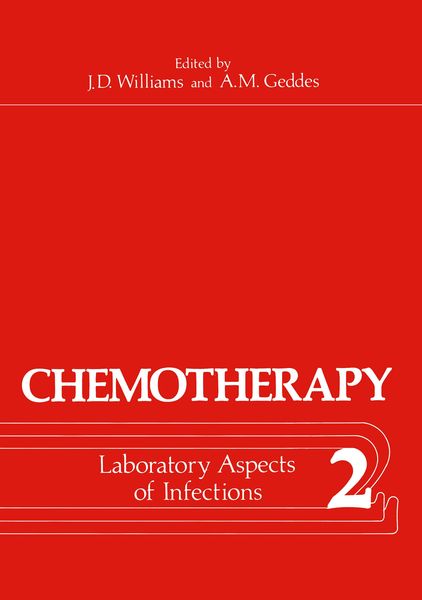
Produktbild: Laboratory Aspects of Infections
Band 2

Laboratory Aspects of Infections

Aus der Reihe Chemotherapy

51,99 €

inkl. gesetzl. MwSt., Versandkostenfrei


Beschreibung

Produktdetails

Einband

Taschenbuch

Erscheinungsdatum

22.12.2012

Verlag

Springer Us

Seitenzahl

462

Maße (L/B/H)

25,4/17,8/2,6 cm

Gewicht

905 g

Auflage

Softcover reprint of the original 1st ed. 1976

Sprache

Englisch

ISBN

978-1-4684-7655-2

Beschreibung

Produktdetails

Einband

Taschenbuch

Erscheinungsdatum

22.12.2012

Verlag

Springer Us

Seitenzahl

462

Maße (L/B/H)

25,4/17,8/2,6 cm

Gewicht

905 g

Auflage

Softcover reprint of the original 1st ed. 1976

Sprache

Englisch

ISBN

978-1-4684-7655-2

Herstelleradresse

Springer-Verlag GmbH
Tiergartenstr. 17
69121 Heidelberg
DE

Email: ProductSafety@springernature.com

Kundinnen und Kunden meinen

0 Bewertungen

Informationen zu Bewertungen

Zur Abgabe einer Bewertung ist eine Anmeldung im Konto notwendig. Die Authentizität der Bewertungen wird von uns nicht überprüft. Wir behalten uns vor, Bewertungstexte, die unseren Richtlinien widersprechen, entsprechend zu kürzen oder zu löschen.

Die Bewertungen sind nach Format, Anzahl Sterne und Datum sortiert.

Verfassen Sie die erste Bewertung zu diesem Artikel

Helfen Sie anderen Kund*innen durch Ihre Meinung

Kundinnen und Kunden meinen

0 Bewertungen filtern

  • Produktbild: Laboratory Aspects of Infections
  • Introductory Comments.- Control of Antibiotic-Sensitivity Testing in Britain.- Control of Antibacterial Susceptibility Testing: Standardization and Proficiency Testing in Canada.- Antibiotic Sensitivity Testing in Australia and New Zealand.- Problems of Standardization of Media.- Effects of Medium on the Results of Antimicrobial Sensitivity Testing.- Influence of Four Commercial Sensitivity Media on In Vitro Activity of Several Antibiotics.- A Spot Plate Method for Antibiotic-Bacterial Killing Rates.- Usefulness of Commercially Available Media to MIC-Determinations of Trimethoprim.- Thymidine and the Assessment of Co-Trimoxazole Action in Liquid Media.- Antibacterial Susceptibility Testing on Anaerobes.- Sensitivity Testing of Mixed Infections.- A Diffusion Disc Susceptibility Test for 5-Fluorocytosine.- The Susceptibility of Clostridia from the Antarctic Soil to Antibiotics.- Brief Antibiotic Exposure and Effect on Bacterial Growth.- Trimethoprim and Rifampicin: In Vitro Activities Separately and in Combination.- A 125I-based Radioimmunoassay for Serum Gentamicin.- Fluorimetric Assay of Tetracycline Mixtures in Plasma.- Assay of Antibiotics with Agar Diffusion Technique.- A New Assay Technique for Antibiotics.- The Problem of Antibiotic Mixtures in Serum Samples.- Some Factors Influencing the Assay of Gentamicin.- Assay of Gentamicin and Tobramycin by a Reliable 2-1/2 hour Klebsiella Plate Method.- Punch Hole Method. A Simplified Bio-Assay Technique of Antibiotic Concentrations.- The Assay of Serum Aminoglycoside Concentrations by the (14C) — Acetyl Transferase Techniques.- Immunochemical Study of the Structural Specificity of an Antigentamycin Antiserum, Useful Also for Radioimmunoassay of Sisomycin.- Serum Activity Determination as Connecting Link Between Experiment and Clinic.- Animal Models in the Assessment of Antimicrobial Agents: What Should We Expect of Them?.- Local Lesions.- Intraperitoneal Challenge.- Endocarditis.- The Usefulness of Experimental Models of Urinary Tract Infections in the Assessment of Chemotherapeutic Compounds.- An Animal Model for Intestinal Infections.- Animal Models in the Assessment of Antimicrobial Agents: Salmonellosis.- Animal Models and Pharmacokinetics.- Use of an In Vitro Model of the Urinary Bladder in the Investigation of Bacterial Response to Antibiotics.- Experimental Intra-Abdominal Sepsis.- Comparative Effects of Amoxycillin and Ampicillin in the Treatment of Experimental Mouse Infections.- Model of Pleuropneumonia in Rats.- Murine Meningoencephalitis Caused by Ps. aeruginosa or Kl. pneumoniae as an Experimental Chemotherapeutic Model.- Animal Experiments on Current Antibiotics.- Effect of Carbenicillin on Pseudomonas Infection.- Comparison of Carfecillin and Carbenicillin on Experimental Urinary Tract Infection.- Model of Experimental Cystitis in Albino Wistar Rats.- Pathogenesis of an Experimental Pyelonephritis Model in the Mouse and Its Use in the Evaluation of Antibiotics.- Chronic E. coli Nephritis in Rats: Model for Assessment of Activity of Antimicrobial Agents.- Combined Therapy of Anti-Endotoxin (OEP) antibody and Gentamicin in the Immunosuppressed Mice with Pseudomonas aeruginosa Infection.- Investigations on Circulatory Tolerance of Doxycycline (Vibravenous®) and Rolitetracycline (Reverin®) in Waking Minipigs.- An In Vitro Comparison of Sisomicin with Gentamicin and Tobramycin.- Bacteriological and Clinical Evaluation of Sisomicin, A New Aminoglycoside Antibiotic.- Pharmacokinetics of Sisomicin in Patients with Renal Impairment.- Serum and Tissue Levels of Sisomicin in Dogs.- Sisomicin Treatment of Urinary Tract Infections.- Parenteral Sisomicin for Surgical Infections.- Clinical Trial of Sisomycin: Evaluation of Two Different Dosages.- In Vivo Activity of Sisomicin in Mice.- New Data on Pharmacology of Gentamicin.- Bacteriological, Clinical, and Pharmacological Investigations with Tobramycin.- The Urinary Excretion of Tobramycin and Gentamicin.- Pharmacokinetics and Ototoxicity of Gentamicin, Tobramycin and Amikacin.- Clinical Experience on Tobramycin.- Evaluation of Tobramycin in Severe Injury Tract Infection.- Butirosin — Pharmacodynamics and Clinical Experience.- Action Mechanism of 3,4-dideoxykanamycin B (DKB) on Some Gram-Negative Bacteria.- Use of 3,4-dideoxykanamycin B (DKB) in Various Infections.- List of Contributors.