Gutscheinbedingungen

**Gültig bis 17.08.2026 auf Schreibwaren & Office-Artikel online auf thalia.at, in der Thalia App und in teilnehmenden Thalia Buchhandlungen in Österreich mit Schulsortiment. In den Buchhandlungen nur gültig auf lagernde Ware. Einzelne Artikel können ausgeschlossen sein. Ausgenommen sind preisgebundene Artikel. Pro Einkauf einmal einlösbar. Nur gültig gegen Vorlage oder im Onlineshop hinterlegter Bonuscard. Infos zur Einlösung in der Buchhandlung sind auf der Bonuscard-Vorteilspreisseite zu finden. Click & Collect nur bei Onlinevorabzahlung möglich. Keine Einlösung bei Scan & Go-Bezahlung. Keine Barauszahlung. Nicht kombinierbar mit anderen Aktionen und Gutscheinen. Gutschein wird auf max. 500€ Bestellwert angerechnet. Nicht gültig für Geschenkkarten, Versandkosten und Services.

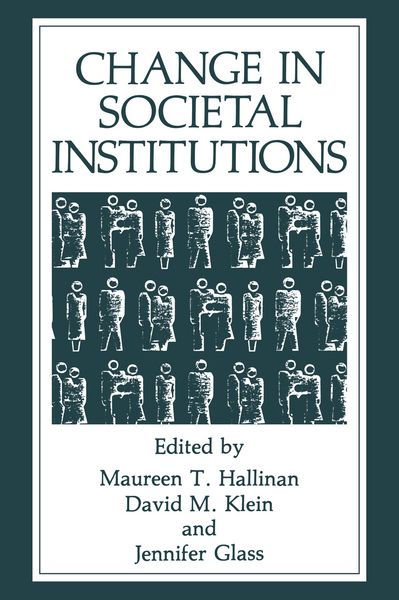
Produktbild: Change in Societal Institutions

Change in Societal Institutions

49,99 €

inkl. gesetzl. MwSt., Versandkostenfrei


Beschreibung

Produktdetails

Einband

Taschenbuch

Erscheinungsdatum

17.09.2011

Herausgeber

J. Glass + weitere

Verlag

Springer Us

Seitenzahl

292

Maße (L/B/H)

22,9/15,2/1,7 cm

Gewicht

432 g

Auflage

1990

Sprache

Englisch

ISBN

978-1-4612-7898-6

Beschreibung

Produktdetails

Einband

Taschenbuch

Erscheinungsdatum

17.09.2011

Herausgeber

Verlag

Springer Us

Seitenzahl

292

Maße (L/B/H)

22,9/15,2/1,7 cm

Gewicht

432 g

Auflage

1990

Sprache

Englisch

ISBN

978-1-4612-7898-6

Herstelleradresse

Springer-Verlag KG
Sachsenplatz 4-6
1201 Wien
AT

Email: GPSR Kontakt

Noch keine Bewertungen vorhanden

Verfassen Sie die erste Bewertung zu diesem Artikel

Helfen Sie anderen Kundinnen und Kunden durch Ihre Meinung.

Kundinnen und Kunden meinen

Bewertungen (0)

  • Produktbild: Change in Societal Institutions
  • 1. The Decline of Occupations: Redefining the Labor Force.- Occupation and a New Workplace Revolution.- The Traditional Significance of Occupations.- Occupations as Trouble.- Occupations as a Social Problem.- Occupations as a Sociological Problem.- Recent Labor Force Developments.- Products.- Technology.- Organization.- Supply-Side Changes.- Summary.- The Declining Significance of Occupation.- Conclusion.- References.- 2. Women, Work, and Family: Changing Gender Roles and Psychological Well-Being.- Employment and Marriage.- Employment and Children.- Women’s Work.- Conclusion.- References.- 3. Gender and the Structural Transformation of the Legal Profession in the United States and Canada.- The Demographics of Professional Growth in the United States and Canada.- The Segmentation and Stratification of Legal Practice.- Partnership, Profit, and Pleasure in Practice.- Power in Practice.- Lawyers’ Lives and the Structural Transformation of Legal Practice.- References.- 4. The Changing Composition of Schools: Implications for School Organization.- Changes in the Makeup of Schools.- Effective Schools Research.- The Organization of American Schools.- On Loosely Coupled Systems.- Rethinking the Model.- Beyond the Coupling of Roles.- On the Significance of Social Ties.- On Networks and Learning.- In-School Networks.- School—Community Networks.- On Effective Social Networks.- Networks and School Achievement.- Networks and Social Capital.- Networks and Culture.- The Tasks Ahead.- References.- 5. Single Parents and the Schools: Effects of Marital Status on Parent and Teacher Interactions.- Theoretical Perspectives.- Sample, Variables, and Approaches.- Characteristics of Parents.- Results: Parents’ Reports of Teachers’ Practices of Parent Involvement.- Teachers’ Reports of Single and Married Parents’ Helpfulness and Followthrough.- Teachers’ Reports of the Quality of Homework by Children from One- and Two Parent-Homes.- Parents’ Awareness, Knowledge, and Evaluations of Teachers.- Other Reports about School from Single and Married Parents.- Summary and Discussion.- References.- 6. The Changing Contours of the Teaching Profession.- Trends in Attrition.- Attrition Rates in the National Longitudinal Study.- Who Left Teaching and Who Wants to Return?.- Teacher Attrition and Teacher Qualifications.- Schools and Patterns of Attrition among Teachers.- Conclusions.- References.- 7. Contradiction and Change in Organized Religion: Roman Catholicism in the United States and Spain.- Organizational Demography and the Catholic Church.- Population Change and the Demographic Transition.- Data and Methods.- Analysis.- Trends in Growth Rates, 1966–1984.- Estimates and Projections of Size and Age Distribution, 1966–2045.- Discussion.- References.- 8. The “Unmaking” of a Movement? The Crisis of US. Trade Unions in Comparative Perspective.- Unionization before and during the Decline.- Theoretical Explanations of the Decline.- Analyzing the Decline.- Regression Diagnostics.- “Implied” Union Growth and Decline.- “Explaining” the US. Density Reduction.- Conclusion and Implications.- Data Appendix.- References.- 9. Medicine, the Medical Profession, and the Welfare State.- Medicine’s Professional Project.- Medicine and the Welfare State.- Costs and Controls.- The Rise of Bioethics.- Professions and Proprietors.- The Limits of Professionalism.- References.- 10. Mass Media and Public Opinion: Emergence of an Institution.- Mass Society Revisited.- The Emergence of a Public Opinion.- Convergence of Mass Media and Public Opinion.- Emergence of an Institution.- New Mass Media.- Conflict with Other Institutions.- Conflict with the Family.- Conflict with Education.- Conflict with Religion.- Conflict with the Polity.- The New Institutional Paradigm.- Summary.- References.- 11. Things Fall Apart: Americans and Their Political Institutions, 1960–1988.- Decline of Political Participation.- Decline of Political Parties.- Decline of Traditional Forms of Political Consciousness.- Conclusion.- References.- 12. Institutional Analysis: An Organizational Approach.- Early Conceptions.- Introductory Textbooks.- Critique of Institutional Theory.- Organizational Institutional Analysis.- The Structure of Institutional Complexes.- Conclusions.- References.