Gutscheinbedingungen

**Gültig bis 28.07.2026 auf Spielzeug, Schreibwaren, Filme, Geschenke & Trends, Musik, tolino eReader & Zubehör, Hörbücher und Hörbuch-Downloads (außer Abo), nicht preisgebundene Bücher und Kalender in der Thalia App. Einzelne Artikel können ausgeschlossen sein. Aufgrund der Buchpreisbindung sind deutschsprachige Bücher und eBooks ausgenommen. Zusätzlich ausgenommen sind preisgebundene Artikel, Abos & Flatrates, eBooks, Games, Geschenkkarten/-boxen, Shelfies, Software, Zeitschriften sowie einzelne Artikel von tonies®. Pro Einkauf einmal einlösbar. Click & Collect nur bei Onlinevorabzahlung möglich. Keine Barauszahlung. Nicht kombinierbar mit anderen Aktionen und Gutscheinen. Gutschein wird auf max. 500€ Bestellwert angerechnet. Nicht gültig für Versandkosten und Services.

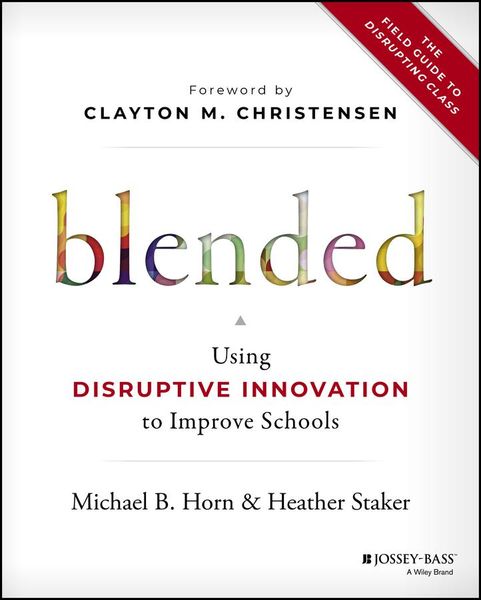
Produktbild: Blended

Blended Using Disruptive Innovation to Improve Schools

31,99 €

inkl. gesetzl. MwSt., Versandkostenfrei


Beschreibung

Produktdetails

Einband

Gebundene Ausgabe

Erscheinungsdatum

01.11.2014

Verlag

John Wiley & Sons Inc

Seitenzahl

336

Maße (L/B/H)

23,6/18,3/3 cm

Gewicht

658 g

Auflage

1. Auflage

Sprache

Englisch

ISBN

978-1-118-95515-4

Beschreibung

Produktdetails

Einband

Gebundene Ausgabe

Erscheinungsdatum

01.11.2014

Verlag

John Wiley & Sons Inc

Seitenzahl

336

Maße (L/B/H)

23,6/18,3/3 cm

Gewicht

658 g

Auflage

1. Auflage

Sprache

Englisch

ISBN

978-1-118-95515-4

Herstelleradresse

Libri GmbH
Europaallee 1
36244 Bad Hersfeld
DE

Email: GPSR Kontakt

Noch keine Bewertungen vorhanden

Verfassen Sie die erste Bewertung zu diesem Artikel

Helfen Sie anderen Kundinnen und Kunden durch Ihre Meinung.

Kundinnen und Kunden meinen

Bewertungen (0)

Die Leseprobe wird geladen.
  • Produktbild: Blended
  • List of Videos xi
     
    Foreword xv
    Clayton M. Christensen
     
    Acknowledgments xxi
     
    About the Authors xxv
     
    Introduction 1
     
    Pattern of Disruptive Innovation 2
     
    Disruptive Innovation and Online Learning 3
     
    The Factory-Based Model of Schooling 5
     
    Student-Centered Learning 8
     
    Why Schools Are Reaching a Tipping Point 11
     
    Building a Field of Experts 17
     
    What You'll Find in This Book 18
     
    PART 1 Understanding 29
     
    1 What Is Blended Learning? 31
     
    Online Learning's Upward March 32
     
    What Blended Learning Is--and Isn't 34
     
    Models of Blended Learning 37
     
    Mixing of Blended Models 52
     
    To Sum Up 53
     
    Appendix 1.1: Discussion of Key Terms 54
     
    Appendix 1.2: K-12 Blended-Learning Taxonomy 55
     
    2 Are All Classrooms Going to Blend? 67
     
    The Theory of Hybrids 69
     
    Is Blended Learning Disruptive? 71
     
    Hybrid Models of Blended Learning 73
     
    Disruptive Models of Blended Learning 76
     
    Foreseeing the K-12 Education Revolution 77
     
    What Is to Become of Schools? 79
     
    To Sum Up 85
     
    PART 2 Mobilizing 93
     
    3 Start with the Rallying Cry 95
     
    The Alternative to Cramming 98
     
    Defining the Problem or Stating the Goal 99
     
    Should Leaders Focus on Sustaining or Disruptive Rallying Cries? 103
     
    How to Identify Core Opportunities 104
     
    How to Identify Nonconsumption Opportunities 105
     
    Threats versus Opportunities 107
     
    To Sum Up 108
     
    4 Organize to Innovate 113
     
    A Framework for Team Design 114
     
    Applying the Team Framework to Schools 120
     
    Using Multiple Types of Teams 129
     
    The Cost of Getting ItWrong 130
     
    To Sum Up 131
     
    PART 3 Designing 135
     
    5 Motivate the Students 137
     
    The Importance of Student Willingness to Learn 138
     
    The Jobs-to-Be-Done Theory 139
     
    Students' Jobs to Be Done 143
     
    The Architecture of a Job 145
     
    Fulfilling the Job for Students 146
     
    What to Integrate, and How 152
     
    Blended Learning's Role in Fulfilling Student Jobs 155
     
    The Danger of Asking Students to Change Jobs 156
     
    To Sum Up 157
     
    6 Elevate Teaching 169
     
    Designing the Teacher Role from the Student Perspective 170
     
    Designing the Teacher Role from the Teacher Perspective 176
     
    Doing Right for Students and Teachers 181
     
    To Sum Up 182
     
    7 Design the Virtual and Physical Setup 189
     
    Product Architecture and Interfaces 190
     
    The Shift in Personal Computer Architecture 192
     
    The Shift toward Modularity in Education 194
     
    Integrated versus Modular Online Content 195
     
    Integrated versus Modular Operating Systems 203
     
    Integrated versus Modular Physical Space 205
     
    Aligning Your Strategy to Your Circumstances 208
     
    To Sum Up 209
     
    Appendix 7.1: Snapshot of Online Content in Use Among K-12
     
    Blended Programs 210
     
    8 Choose the Model 219
     
    Match the Model to the Type of Problem 221
     
    Match the Model to the Type of Team 224
     
    Match the Model to the Desired Student Experience 226
     
    Match the Model to the Role of the Teacher 229
     
    Match the Model to the Physical Space 232
     
    Match the Model to the Availability of Internet-Enabled Devices 234
     
    Prioritizing Options and Making the Selection 237
     
    Moving toward Multiple Models 237
     
    To Sum Up 240
     
    Appendix 8.1: Which Blended-Learning Model Matches Your Circu