Gutscheinbedingungen

**Gültig bis 06.07.2026 auf fremdsprachige Bücher online auf thalia.at, in der Thalia App ab einem Mindestbestellwert von 30€ und in allen Thalia Buchhandlungen in Österreich. In den Buchhandlungen nur gültig auf lagernde Ware. Einzelne Artikel können ausgeschlossen sein. Ausgenommen sind preisgebundene Artikel & eBooks. Pro Einkauf einmal einlösbar. Nur gültig gegen Vorlage oder im Onlineshop hinterlegter Bonuscard. Infos zur Einlösung in der Buchhandlung sind auf der Bonuscard-Vorteilspreisseite zu finden. Click & Collect nur bei Onlinevorabzahlung möglich. Keine Einlösung bei Scan & Go-Bezahlung. Keine Barauszahlung. Nicht kombinierbar mit anderen Aktionen und Gutscheinen. Gutschein wird auf max. 500€ Bestellwert angerechnet. Nicht gültig für Versandkosten und Services.

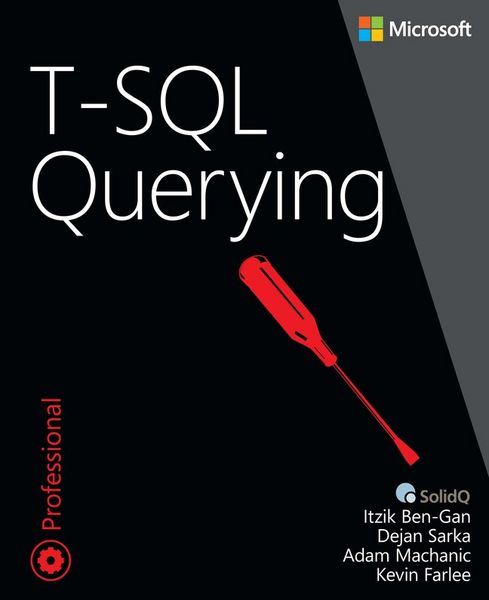
Produktbild: T-SQL Querying

T-SQL Querying

51,99 €

inkl. gesetzl. MwSt., Versandkostenfrei


Beschreibung

Produktdetails

Einband

Taschenbuch

Erscheinungsdatum

06.03.2015

Abbildungen

mit Illustrationen

Verlag

Pearson Studium

Seitenzahl

864

Maße (L/B/H)

22,6/18,4/4,5 cm

Gewicht

1383 g

Auflage

1

Sprache

Englisch

ISBN

978-0-7356-8504-8

Beschreibung

Produktdetails

Einband

Taschenbuch

Erscheinungsdatum

06.03.2015

Abbildungen

mit Illustrationen

Verlag

Pearson Studium

Seitenzahl

864

Maße (L/B/H)

22,6/18,4/4,5 cm

Gewicht

1383 g

Auflage

1

Sprache

Englisch

ISBN

978-0-7356-8504-8

Herstelleradresse

Pearson Education Limited
The Strand 80
WC2R 0RL London
GB
Email: buchhandel@pearson.de
Url: www.stark-verlag.de
Telephone: +49 811 600040
Fax: +49 811 60004601

Noch keine Bewertungen vorhanden

Verfassen Sie die erste Bewertung zu diesem Artikel

Helfen Sie anderen Kundinnen und Kunden durch Ihre Meinung.

Kundinnen und Kunden meinen

Bewertungen (0)

Die Leseprobe wird geladen.
  • Produktbild: T-SQL Querying
  • Foreword     xv

    Introduction     xvii

    Chapter 1: Logical query processing     1


    Logical query-processing phases     3

    Logical query-processing phases in brief     4

    Sample query based on customers/orders scenario     6

    Logical query-processing phase details     8

    Step 1: The FROM phase     8

    Step 2: The WHERE phase     14

    Step 3: The GROUP BY phase     15

    Step 4: The HAVING phase     16

    Step 5: The SELECT phase     17

    Step 6: The ORDER BY phase     20

    Step 7: Apply the TOP or OFFSET-FETCH filter     22

    Further aspects of logical query processing     26

    Table operators     26

    Window functions     35

    The UNION, EXCEPT, and INTERSECT operators     38

    Conclusion     39

    Chapter 2: Query tuning     41

    Internals     41

    Pages and extents     42

    Table organization     43

    Tools to measure query performance     53

    Access methods     57

    Table scan/unordered clustered index scan     57

    Unordered covering nonclustered index scan     60

    Ordered clustered index scan     62

    Ordered covering nonclustered index scan     63

    The storage engine’s treatment of scans     65

    Nonclustered index seek + range scan + lookups     81

    Unordered nonclustered index scan + lookups     91

    Clustered index seek + range scan     93

    Covering nonclustered index seek + range scan     94

    Cardinality estimates     97

    Legacy estimator vs. 2014 cardinality estimator     98

    Implications of underestimations and overestimations     99

    Statistics     101

    Estimates for multiple predicates     104

    Ascending key problem     107

    Unknowns     110

    Indexing features     115

    Descending indexes     115

    Included non-key columns     119

    Filtered indexes and statistics     120

    Columnstore indexes     123

    Inline index definition     130

    Prioritizing queries for tuning with extended events     131

    Index and query information and statistics     134

    Temporary objects     139

    Set-based vs. iterative solutions     149

    Query tuning with query revisions     153

    Parallel query execution     158

    How intraquery parallelism works     158

    Parallelism and query optimization     175

    The parallel APPLY query pattern     181

    Conclusion     186

    Chapter 3: Multi-table queries     187

    Subqueries     187

    Self-contained subqueries     187

    Correlated subqueries     189

    The EXISTS predicate     194

    Misbehaving subqueries     201

    Table expressions     204

    Derived tables     205

    CTEs     207

    Views     211

    Inline table-valued functions     215

    Generating numbers     215

    The APPLY operator     218

    The CROSS APPLY operator     219

    The OUTER APPLY operator     221

    Implicit APPLY     221

    Reuse of column aliases     222

    Joins          224

    Cross join     224

    Inner join     228

    Outer join     229

    Self join     230

    Equi and non-equi joins     230

    Multi-join queries     231

    Semi and anti semi joins     237

    Join algorithms     239

    Separating elements     245

    The UNION, EXCEPT, and INTERSECT operators     249

    The UNION ALL and UNION operators     250

    The INTERSECT operator     253

    The EXCEPT operator     255

    Conclusion     257

    Chapter 4: Grouping, pivoting, and windowing     259

    Window functions     259

    Aggregate window functions     260

    Ranking window functions     281

    Offset window functions     285

    Statistical window functions     288

    Gaps and islands     291

    Pivoting     299

    One-to-one pivot     300

    Many-to-one pivot     304

    Unpivoting     307

    Unpivoting with CROSS JOIN and VALUES     308

    Unpivoting with CROSS APPLY and VALUES     310

    Using the UNPIVOT operator     312

    Custom aggregations     313

    Using a cursor     314

    Using pivoting     315

    Specialized solutions     316

    Grouping sets     327

    GROUPING SETS subclause     328

    CUBE and ROLLUP clauses     331

    Grouping sets algebra     333

    Materializing grouping sets     334

    Sorting     337

    Conclusion     339

    Chapter 5: TOP and OFFSET-FETCH     341

    The TOP and OFFSET-FETCH filters     341

    The TOP filter     341

    The OFFSET-FETCH filter     345

    Optimization of filters demonstrated through paging     346

    Optimization of TOP     346

    Optimization of OFFSET-FETCH     354

    Optimization of ROW_NUMBER     358

    Using the TOP option with modifications     360

    TOP with modifications     360

    Modifying in chunks     361

    Top N per group     363

    Solution using ROW_NUMBER     364

    Solution using TOP and APPLY     365

    Solution using concatenation (a carry-along sort)     366

    Median     368

    Solution using PERCENTILE_CONT     369

    Solution using ROW_NUMBER     369

    Solution using OFFSET-FETCH and APPLY     370

    Conclusion     371

    Chapter 6: Data modification     373

    Inserting data     373

    SELECT INTO     373

    Bulk import     376

    Measuring the amount of logging     377

    BULK rowset provider     378

    Sequences     381

    Characteristics and inflexibilities of the identity property     381

    The sequence object     382

    Performance considerations     387

    Summarizing the comparison of identity with sequence     394

    Deleting data     395

    TRUNCATE TABLE     395

    Deleting duplicates     399

    Updating data     401

    Update using table expressions     402

    Update using variables     403

    Merging data     404

    MERGE examples     405

    Preventing MERGE conflicts     408

    ON isn't a filter     409

    USING is similar to FROM     410

    The OUTPUT clause     411

    Example with INSERT and identity     412

    Example for archiving deleted data     413

    Example with the MERGE statement     414

    Composable DML     417

    Conclusion     417

    Chapter 7: Working with date and time     419

    Date and time data types     419

    Date and time functions     422

    Challenges working with date and time     434

    Literals     434

    Identifying weekdays     436

    Handling date-only or time-only data with DATETIME and SMALLDATETIME     439

    First, last, previous, and next date calculations     440

    Search argument      445

    Rounding issues     447

    Querying date and time data     449

    Grouping by the week     449

    Intervals     450

    Conclusion     471

    Chapter 8: T-SQL for BI practitioners     473

    Data preparation     473

    Sales analysis view     474

    Frequencies     476

    Frequencies without window functions     476

    Frequencies with window functions     477

    Descriptive statistics for continuous variables     479

    Centers of a distribution     479

    Spread of a distribution     482

    Higher population moments     487

    Linear dependencies     495

    Two continuous variables     495

    Contingency tables and chi-squared     501

    Analysis of variance     505

    Definite integration     509

    Moving averages and entropy     512

    Moving averages     512

    Entropy     518

    Conclusion     522

    Chapter 9: Programmable objects     525

    Dynamic SQL     525

    Using the EXEC command     525

    Using the sp_executesql procedure     529

    Dynamic pivot     530

    Dynamic search conditions     535

    Dynamic sorting     542

    User-defined functions     546

    Scalar UDFs     546

    Multistatement TVFs     550

    Stored procedures     553

    Compilations, recompilations, and reuse of execution plans     554

    Table type and table-valued parameters     571

    EXECUTE WITH RESULT SETS     573

    Triggers     575

    Trigger types and uses     575

    Efficient trigger programming     581

    SQLCLR programming     585

    SQLCLR architecture     586

    CLR scalar functions and creating your first assembly     588

    Streaming table-valued functions     597

    SQLCLR stored procedures and triggers     605

    SQLCLR user-defined types     617

    SQLCLR user-defined aggregates     628

    Transaction and concurrency     632

    Transactions described     633

    Locks and blocking     636

    Lock escalation     641

    Delayed durability     643

    Isolation levels     645

    Deadlocks     657

    Error handling     662

    The TRY-CATCH construct     662

    Errors in transactions     666

    Retry logic     669

    Conclusion     670

    Chapter 10: In-Memory OLTP     671

    In-Memory OLTP overview     671

    Data is always in memory     672

    Native compilation     673

    Lock and latch-free architecture     673

    SQL Server integration     674

    Creating memory-optimized tables     675

    Creating indexes in memory-optimized tables     676

    Clustered vs. nonclustered indexes     677

    Nonclustered indexes     677

    Hash indexes     680

    Execution environments     690

    Query interop     690

    Natively compiled procedures     699

    Surface-area restrictions     703

    Table DDL     703

    DML     704

    Conclusion     705

    Chapter 11: Graphs and recursive queries     707

    Terminology     707

    Graphs     707

    Trees     708

    Hierarchies     709

    Scenarios     709

    Employee organizational chart     709

    Bill of materials (BOM)     711

    Road system     715

    Iteration/recursion     718

    Subgraph/descendants     719

    Ancestors/path     730

    Subgraph/descendants with path enumeration     733

    Sorting     736

    Cycles     740

    Materialized path     742

    Maintaining data     743

    Querying     749

    Materialized path with the HIERARCHYID data type     754

    Maintaining data     756

    Querying     763

    Further aspects of working with HIERARCHYID     767

    Nested sets     778

    Assigning left and right values     778

    Querying     784

    Transitive closure     787

    Directed acyclic graph     787

    Conclusion     801

    Index     803