KI-Beratung Beta

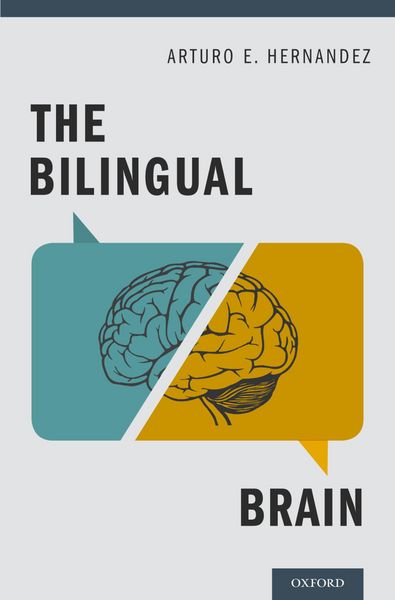
Produktbild: The Bilingual Brain

The Bilingual Brain

60,70 €

inkl. gesetzl. MwSt.

Beschreibung

Cases of language loss and recovery bring up an intriguing paradox. If two languages are stored in the brain, how can it be that a person can lose one of them, but not the other, and then gain one back without relearning it? The traditional models of how a language is represented in the brain suggest...

Beschreibung

Cases of language loss and recovery bring up an intriguing paradox. If two languages are stored in the brain, how can it be that a person can lose one of them, but not the other, and then gain one back without relearning it? The traditional models of how a language is represented in the brain suggest that languages can become inaccessible, even though they are not entirely lost. As the author demonstrates through fascinating cases, stress--whether due to foreign language immersion, sleep deprivation, or brain damage--can lead to the apparent loss of one language, but not the other. Arturo Hernandez presents the results of 25 years of research into the factors that might help us to understand how two (or more) languages are stored in one brain. It is clear that the brain is not egalitarian--some languages are privileged and others are not, but why?
Hernandez will extend recent work that has begun to take a biological or natural systems approach. He proposes that, in bilinguals, two languages live inside a brain almost like two species live in an ecosystem. For the most part they peacefully co-exist and often share resources. But they also compete for resources, particularly when under stress. Although there are still many questions to answer and many puzzles to solve, Hernandez argues that the nonlinear dynamical models, which have been used to uncover the underlying mechanisms seen in natural systems and more recently in language and cognition, can be used to shed considerable light on the neural bases of bilingualism.

Produktdetails

Format

PDF

Kopierschutz

Ja

Family Sharing

Nein

Text-to-Speech

Nein

Produktdetails

Format

PDF

Format

eBooks im PDF-Format haben eine festgelegte Seitengröße und eignen sich daher nur bedingt zum Lesen auf einem tolino eReader oder Smartphone. Für den vollen Lesegenuss empfehlen wir Ihnen bei PDF-eBooks die Verwendung eines Tablets oder Computers.

Kopierschutz

Ja

Kopierschutz

Zum Lesen dieses eBooks auf Geräten der tolino Familie sowie auf sonstigen eReadern und am PC benötigen Sie eine ByteBook-ID. Weitere Hinweise zum Lesen von kopiergeschützten eBooks finden Sie unter Hilfe/Downloads.

Family Sharing

Nein

Family Sharing

Mit Family Sharing können Sie eBooks innerhalb Ihrer Familie (max. sechs Mitglieder im gleichen Haushalt) teilen. Sie entscheiden selbst, welches Buch Sie mit welchem Familienmitglied teilen möchten. Auch das parallele Lesen durch verschiedene Familienmitglieder ist durch Family Sharing möglich. Um eBooks zu teilen oder geteilt zu bekommen, muss jedes Familienmitglied ein Konto bei Thalia oder einem anderen tolino-Buchhändler haben. Weitere Informationen finden Sie unter Hilfe/Family-Sharing.

Text-to-Speech

Nein

Text-to-Speech

Bedeutet Ihnen Stimme mehr als Text? Mit der Funktion Text-to-Speech können Sie sich im tolino webReader und in der aktuellen Thalia – Lesen & Hören App das eBook vorlesen lassen. Weitere Informationen finden Sie unter Hilfe/Text-to-Speech.

Erscheinungsdatum

22.08.2013

Verlag Oxford University Press
Seitenzahl

(Printausgabe)

Dateigröße

2297 KB

Sprache

Englisch

EAN

9780199828128

Barrierefreiheit
  • keine Information zur Barrierefreiheit bekannt

Noch keine Bewertungen vorhanden

Verfassen Sie die erste Bewertung zu diesem Artikel

Helfen Sie anderen Kundinnen und Kunden durch Ihre Meinung.

Kundinnen und Kunden meinen

Bewertungen (0)

Weitere Artikel finden Sie in

Die Leseprobe wird geladen.
  • Produktbild: The Bilingual Brain