KI-Beratung Beta

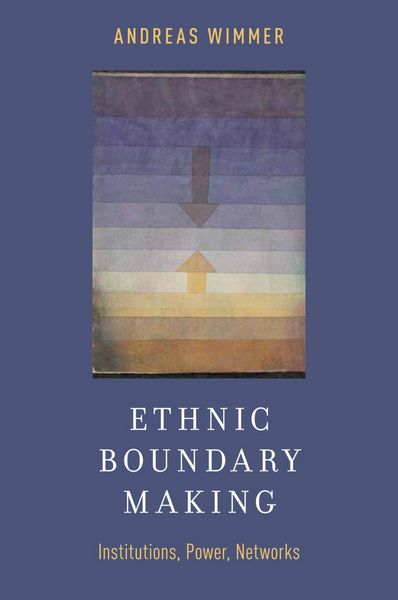
Produktbild: Ethnic Boundary Making

Ethnic Boundary Making Institutions, Power, Networks

40,60 €

inkl. gesetzl. MwSt.

Beschreibung

Why does ethnicity matter in certain societies and contexts but not in others? Drawing on the boundary-making perspective first championed by anthropologist Fredrick Barth, Andreas Wimmer introduces a comparative analytic of ethnic group formation. He analyzes how and why ethnic boundaries are sometimes...

Beschreibung

Why does ethnicity matter in certain societies and contexts but not in others? Drawing on the boundary-making perspective first championed by anthropologist Fredrick Barth, Andreas Wimmer introduces a comparative analytic of ethnic group formation. He analyzes how and why ethnic boundaries are sometimes associated with inequality and exclusion, with political salience and public debate, with enduring loyalty and thick identities, while in other cases ethnicity and race do not structure the allocation of resources, invite little political passion, and represent only secondary aspects of individual identity. Wimmer argues that three key mechanisms influence the dynamics and consequences of ethnic boundary-making: institutional incentives , the distribution of power between individuals, and the reach of pre-existing social networks.Cautioning against seeing ethnicity wherever one looks, Wimmer argues for disentangling ethnic and non-ethnic group formation processes and proposes a set of research designs, analytical principles, and strategies of interpretation appropriate for the task. Several qualitative and quantitative studies then apply this agenda : on how local residents in immigrant neighborhoods draw symbolic boundaries against each other, on the ethnic and racial composition of friendship networks, and how ethnic closure influences cultural values. By overcoming essentialist approaches to ethnicity while avoiding the pitfalls of excessive constructivism, Ethnic Boundary Making offers a new perspective on a topic of vital interest to sociologists, anthropologists, and ethnic studies scholars.

Produktdetails

Format

PDF

Kopierschutz

Ja

Family Sharing

Nein

Text-to-Speech

Nein

Produktdetails

Format

PDF

Format

eBooks im PDF-Format haben eine festgelegte Seitengröße und eignen sich daher nur bedingt zum Lesen auf einem tolino eReader oder Smartphone. Für den vollen Lesegenuss empfehlen wir Ihnen bei PDF-eBooks die Verwendung eines Tablets oder Computers.

Kopierschutz

Ja

Kopierschutz

Zum Lesen dieses eBooks auf eReadern außerhalb der tolino Familie sowie am PC benötigen Sie eine Adobe ID. Weitere Hinweise zum Lesen von kopiergeschützten eBooks finden Sie unter Hilfe/Downloads.

Family Sharing

Nein

Family Sharing

Mit Family Sharing können Sie eBooks innerhalb Ihrer Familie (max. sechs Mitglieder im gleichen Haushalt) teilen. Sie entscheiden selbst, welches Buch Sie mit welchem Familienmitglied teilen möchten. Auch das parallele Lesen durch verschiedene Familienmitglieder ist durch Family Sharing möglich. Um eBooks zu teilen oder geteilt zu bekommen, muss jedes Familienmitglied ein Konto bei Thalia oder einem anderen tolino-Buchhändler haben. Weitere Informationen finden Sie unter Hilfe/Family-Sharing.

Text-to-Speech

Nein

Text-to-Speech

Bedeutet Ihnen Stimme mehr als Text? Mit der Funktion Text-to-Speech können Sie sich im tolino webReader und in der aktuellen Thalia – Lesen & Hören App das eBook vorlesen lassen. Weitere Informationen finden Sie unter Hilfe/Text-to-Speech.

Erscheinungsdatum

18.12.2012

Verlag Oxford University Press
Seitenzahl

288 (Printausgabe)

Dateigröße

1887 KB

Sprache

Englisch

EAN

9780199927388

Barrierefreiheit
  • keine Information zur Barrierefreiheit bekannt

Noch keine Bewertungen vorhanden

Verfassen Sie die erste Bewertung zu diesem Artikel

Helfen Sie anderen Kundinnen und Kunden durch Ihre Meinung.

Kundinnen und Kunden meinen

Bewertungen (0)

Weitere Artikel finden Sie in

Die Leseprobe wird geladen.
  • Produktbild: Ethnic Boundary Making