Gutscheinbedingungen

**Gültig bis 14.09.2026 auf Spielzeug, Schreibwaren, Filme, Geschenke & Trends, Musik, tolino eReader & Zubehör, Hörbücher, nicht preisgebundene Bücher und Kalender in der Thalia App. Einzelne Artikel können ausgeschlossen sein. Aufgrund der Buchpreisbindung sind deutschsprachige Bücher und eBooks ausgenommen. Zusätzlich ausgenommen sind Abos & Flatrates, Games, Geschenkkarten/-boxen, Shelfies, Software, Zeitschriften sowie einzelne Artikel von tonies®. Pro Einkauf einmal einlösbar. Nur gültig mit im Onlineshop hinterlegter Bonuscard. Click & Collect nur bei Onlinevorabzahlung möglich. Keine Barauszahlung. Nicht kombinierbar mit anderen Aktionen und Gutscheinen. Gutschein wird auf max. 500€ Bestellwert angerechnet. Nicht gültig für Versandkosten und Services.

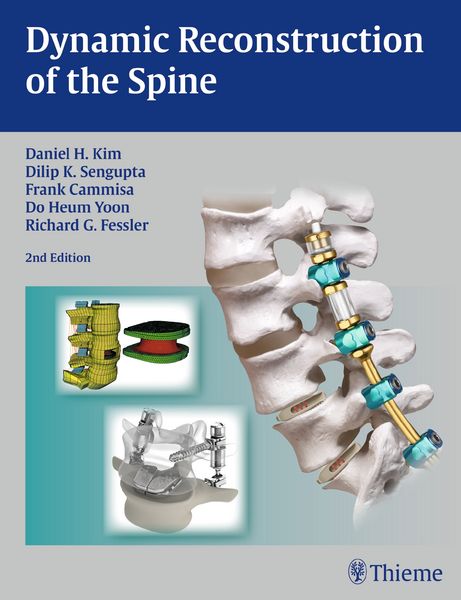
Produktbild: Dynamic Reconstruction of the Spine
- 13%

Dynamic Reconstruction of the Spine

13% sparen

218,99 € UVP 251,90 €

inkl. gesetzl. MwSt., Versandkostenfrei


Beschreibung

Produktdetails

Einband

Gebundene Ausgabe

Erscheinungsdatum

08.06.2015

Abbildungen

661 Abb.

Herausgeber

Daniel H. Kim + weitere

Verlag

Thieme Medical Publishers

Seitenzahl

480

Maße (L/B/H)

28,7/22,2/2,7 cm

Gewicht

1633 g

Auflage

2. Auflage

Sprache

Englisch

ISBN

978-1-60406-873-3

Beschreibung

Produktdetails

Einband

Gebundene Ausgabe

Erscheinungsdatum

08.06.2015

Abbildungen

661 Abb.

Herausgeber

Verlag

Thieme Medical Publishers

Seitenzahl

480

Maße (L/B/H)

28,7/22,2/2,7 cm

Gewicht

1633 g

Auflage

2. Auflage

Sprache

Englisch

ISBN

978-1-60406-873-3

EU-Ansprechpartner

Georg Thieme Verlag KG
Oswald-Hesse-Straße 50
70469 Stuttgart
DE
info@thieme.de

Herstelleradresse

Thieme Medical Publishers
333 Seventh Avenue, 18th Floor
10001 New York
US
customerservice@thieme.com

Noch keine Bewertungen vorhanden

Verfassen Sie die erste Bewertung zu diesem Artikel

Helfen Sie anderen Kundinnen und Kunden durch Ihre Meinung.

Kundinnen und Kunden meinen

Bewertungen (0)

Die Leseprobe wird geladen.
  • Produktbild: Dynamic Reconstruction of the Spine
  • Part 1 Motion Preservation of the Spine in Context

    1 Dynamic Stabilization of the Lumbar Spine

    2 Cervical and Lumbar Disc Replacement

    3 The Rationale behind Dynamic Posterior Spinal Instrumentation

    Part 2 Clinical Biomechanics of the Spine

    4 Basic Principles in Biomechanics: Force and Effects

    5 Basic Principles in Biomechanics: Loads and Motion (Kinematics)

    6 Center of Rotation

    7 Biomechanical Testing of the Lumbar Spine

    8 Kinematics of the Cervical Spine Motion

    9 Biomechanical Testing Protocol for Evaluating Cervical Disc Arthroplasty

    10 Finite Element Analysis

    11 Biomaterials and Design Engineering

    Part 3 Restoration of Cervical Motion Segment

    12 Biomechanical Aspects Associated with Cervical Disc Arthroplasty

    13 Rationale and Indications for Cervical Disc Arthroplasty

    14 Metal-on-Metal Cervical Disc Prostheses

    15 Design Rationale and Surgical Technique of Metal-on-Poly Cervical Disc Prostheses

    16 Bryan Cervical Disc Device

    17 M6-C Artificial Cervical Disc

    18 PEEK and Ceramic Cervical Disc Prostheses

    19 Complexities of Single- versus Multilevel Cervical Disc Arthroplasty

    20 Update on FDA IDE Trials on Cervical Disc Arthroplasty

    21 Complications of Cervical Disc Replacement

    22 Retrieval Analysis of Cervical Total Disc Replacement

    Part 4 Restoration of the Lumbar Motion Segment

    23 Kinematics of the Lumbar Spine

    24 Kinetics of the Lumbar Spine

    25 Rationale and Principles of Dynamic Stabilization in the Lumbar Spine

    26 Design Rationale, Indications, and Classification for Pedicle Screw–Based Posterior Dynamic Stabilization Devices

    27 Dynamic Stabilization with Graf Ligamentoplasty

    28 Clinical Application of Dynesys Dynamic Stabilization

    29 Dynamic Stabilization for Revision of Lumbar Spinal Pseudarthrosis with Transition

    30 Nonfusion Stabilization of the Degenerated Lumbar Spine with Cosmic

    31 Minimally Invasive Posterior Dynamic Stabilization System

    32 Clinical Results of IDE Trial of Dynesys for Dynamic Stabilization

    33 Classification, Design Rationale, and Mechanism of Action of Interspinous Process Distraction Systems

    34 Clinical Results of Interspinous Process Spacers and Complications

    35 Clinical Results of IDE Trial of X-Stop Interspinous Systems

    36 Clinical Biomechanics of Lumbar Facet Joints

    37 The Current Status of Facet Replacement Devices

    38 Biomechanics and Rationale of Prosthetic Nucleus Replacement

    39 The Raymedica Prosthetic Disc Nucleus (PDN)

    40 Classification of Lumbar Nucleus Replacement Systems, Mechanism of Action, and Surgical Technique

    41 Biomechanical Consideration for Total Lumbar Disc Replacement

    42 Indications for Total Lumbar Disc Replacement

    43 Anterior Exposure to the Lumbar Spine

    44 Classification of Total Lumbar Disc Replacement

    45 Charité Artificial Disc

    46 ProDisc-L Artificial Disc

    47 Polymer-on-Metal Lumbar TDR Design Rationale and Classification

    48 M6-L Artificial Lumbar Disc

    49 The Mobidisc Prosthesis

    50 Metal-on-Metal Lumbar Total Disc Replacements (Maverick, FlexiCore, Kineflex)

    51 Clinical Results of Total Lumbar Disc Replacement

    52 Long-Term Outcomes of Lumbar Total Disc Arthroplasty

    53 Complications of Lumbar Disc Arthroplasty

    54 Complications of Investigational Device Exemption Trial after Total Disc Replacement

    55 Complications of Total Lumbar Disc Replacement and Salvage Procedures

    56 Multilevel Total Lumbar Disc Replacement

    Part 5 Advancements in Lumbar Motion Preservation

    57 Advancements in the Design of Lumbar Prosthetic Discs—Theken Disc and Elastomeric Disc Physio-L

    58 Concept of Total Joint Replacement in the Lumbar Spine (Flexuspine—Total Disc with Posterior Approach)

    59 Assessment of Lumbar Motion Kinematics In Vivo

    60 Annulus Repair

    61 Minimally Invasive Technology for Lumbar Motion Preservation

    62 Molecular and Genetic Therapy in Repair of the Degenerative Disc