Gutscheinbedingungen

**Gültig bis 25.06.2026 auf fremdsprachige Bücher online auf thalia.at und in der Thalia App. Einzelne Artikel können ausgeschlossen sein. Ausgenommen sind preisgebundene Artikel & eBooks. Pro Einkauf einmal einlösbar. Click & Collect nur bei Onlinevorabzahlung möglich. Keine Barauszahlung. Nicht kombinierbar mit anderen Aktionen und Gutscheinen. Gutschein wird auf max. 500€ Bestellwert angerechnet. Nicht gültig für Geschenkkarten, Versandkosten und Services.

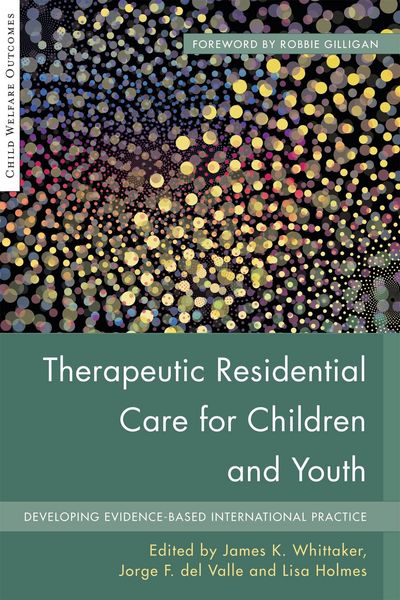
Produktbild: Therapeutic Residential Care for Children and Youth

Therapeutic Residential Care for Children and Youth Developing Evidence-Based International Practice

182,99 €

inkl. gesetzl. MwSt., Versandkostenfrei


Beschreibung

Produktdetails

Einband

Gebundene Ausgabe

Erscheinungsdatum

21.09.2014

Herausgeber

James K. Whittaker + weitere

Verlag

Jessica Kingsley Publishers Ltd

Seitenzahl

392

Maße (L/B/H)

22,9/15,5/2,8 cm

Gewicht

728 g

Sprache

Englisch

ISBN

978-1-84905-963-3

Beschreibung

Produktdetails

Einband

Gebundene Ausgabe

Erscheinungsdatum

21.09.2014

Herausgeber

Verlag

Jessica Kingsley Publishers Ltd

Seitenzahl

392

Maße (L/B/H)

22,9/15,5/2,8 cm

Gewicht

728 g

Sprache

Englisch

ISBN

978-1-84905-963-3

Herstelleradresse

Libri GmbH
Europaallee 1
36244 Bad Hersfeld
DE

Email: gpsr@libri.de

Kundinnen und Kunden meinen

0 Bewertungen

Informationen zu Bewertungen

Zur Abgabe einer Bewertung ist eine Anmeldung im Konto notwendig. Die Authentizität der Bewertungen wird von uns nicht überprüft. Wir behalten uns vor, Bewertungstexte, die unseren Richtlinien widersprechen, entsprechend zu kürzen oder zu löschen.

Die Bewertungen sind nach Format, Anzahl Sterne und Datum sortiert.

Verfassen Sie die erste Bewertung zu diesem Artikel

Helfen Sie anderen Kund*innen durch Ihre Meinung

Kundinnen und Kunden meinen

0 Bewertungen filtern

Die Leseprobe wird geladen.
  • Produktbild: Therapeutic Residential Care for Children and Youth
  • Foreword by Robbie Gilligan, Trinity College, Dublin. Part 1. Introduction. The Current Landscape of Therapeutic Residential Care: James K Whittaker, Jorge F. del Valle and Lisa Holmes. Part 1. Pathways to Therapeutic Residential Care. Chapter 1, Making Sense of Differential Cross-National Placement Rates for Therapeutic Residential Care: Some Take Away Messages for Policy, June Thoburn, Professor Emeritus, University of East Anglia and Frank Ainsworth, James Cook University, Queensland, Australia. Chapter 2. Needs and characteristics of high-resource users: Spain, Jorge F. del Valle, Amaia Bravo and Ana Sainero, University of Oviedo,Spain. Chapter 3. Needs and characteristics of high-resource using children and youth: North America, John Lyons, University of Ottawa, Canada, Chapter 4. Benarand characteristics of high-resource using children and youth: Denmark, Mette Lausten, Danish National Centre for Social Research, Chapter 5. Part 2. Promising Program Models and Innovative Practices. Varieties of Nordic Residential Care, Turf Jakobsen, Danish National Centre for Social Research, Chapter 6. MultifunC - Multifunctional Treatment in Residential and Community Settings: Norway, Tore Andreassen, Norwegian Directorate for Children, Youth and Family Affairs, Chapter 7. The Family Home Program: An Adaption of the Teaching Family Model at Boys Town, Ronald W. Thompson, Director, Boys Town National Research Institute and Dan Daly, Executive Vice President and Director of Youth Care, Boys Town, Nebraska, Chapter 8. A New Era in the Development of Therapeutic Residential Care in the State of Victoria: Australia, Patricia McNamara, La Trobe University, Australia, Chapter 9. Evidence-based Practices in Therapeutic Residential Care, Sigrid James, Loma Linda University, California, Chapter 10. Creating and maintaining family-staff partnerships in Residential Treatment Programs: Shared Decisions, Full Participationm Mutual Responsibilty, Richard W. Small, The Walker School, Massachusetts, Christopher Bellonci, MD, Tufts University, Massachusetts and President, American Association of Children's Residential Centers, Milwaukee, Wisconsin and Susan Ramsey, The Walker School. Part 4. Preparing Youth For Successful Transitions from Therapeutic Residential Care. Chapter 11. Relationship between Adult Outcomes of Young People Making the Transition to Adulthood from Out-of-Home Care and Prior Residential Care, Nathanael Okpych and Mark Courtney, University of Chicago, Chapter 12. Supportive Pathways for Young People Leaving Care: Lessons Learned from Four Decades of Research, Mike Stein, University of York, UK, Chapter 13. Listening to young people in care in Israel: a brief note from research about successful transitions to adulthood, Anat Zeira, The Hebrew University of Jerusalem. Part 5. Critically Examining the Current Research Base for Therapeutic Residential Care. Chapter 14. Uncovering What is Inside the 'Black Box' of Effective Therapeutic Residential Youth Care, Annemiek T. Harder, Assistant Professor and Erik Knorth, University of Groningen, Netherlands, Chapter 15. Improving the Research Base for Therapeutic Residential Care: Logistical and Analytic Challenges Meet Methodological Innovations, Bethany R. Lee and Richard P. Barth, University of Maryland, USA. Part 5. Calculating Costs for Therapeutic Residential Care. Chapter 16. Estimating Unit Costs for Therapeutic Residential Care, Lisa Holmes, Centre for Child and Family Research (CCFR), Loughborough University perspectives and commentaries by: Richard W. Small and Christopher Bellonci: North America, Laura Palareti, University of Bologna and Chiara Berti, University of Chieti-Pescara: Italy, Andrew Kendrick, University of Strathclyde: Scotland, Frank Ainsworth and Deirdre Cheers: Australia. Part 6. Linking Focused Training and Critical Evaluation in Therapeutic Residential Care: A Foundation for Staff Support. Chapter 17. Helping staff to connect quality, practice and evaluation in therapeutic residential care: the SERAR model in Spain, Amaia Bravo, Jorge F. del Valle & Iriana Santos, Child and Family Research Group, University of Oviedo, Spain, Chapter 18. A European perspective on the context and content for social pedagogy in therapeutic residential care, Hans Grietens, University of Groningen, Netherlands, Chapter 19: Engaging the total therapeutic residential care program in a process of quality improvement: Learning from the Care Model, Martha Holden, Michael Nunno and Charles Izzo, Cornell University, New York and James Anglin, University of Victoria, Canada, Chapter 20. Outcomes Management in Residential Treatment: The CANS Approach, John Lyons, University of Ottawa, Canada. Part 8. Conclusion. Shaping the Future for Therapeutic Residential Care, James K Whittaker, Jorge F. del Valle and Lisa Holmes