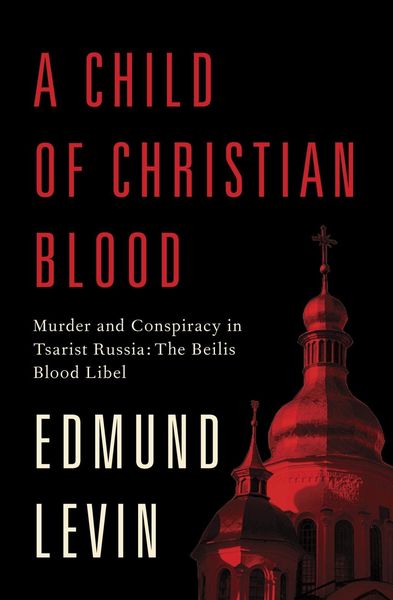
A Child of Christian Blood Murder and Conspiracy in Tsarist Russia: The Beilis Blood Libel
-
- Einzelkauf Download ausgewählt
-
Sprache:Englisch
5,70 €
inkl. gesetzl. MwSt.Beschreibung
Produktdetails
Format
ePUB
Kopierschutz
Ja
Family Sharing
Ja
Text-to-Speech
Ja
Erscheinungsdatum
25.02.2014
Verlag
Knopf Doubleday Publishing GroupSeitenzahl
448 (Printausgabe)
Dateigröße
7469 KB
Sprache
Englisch
EAN
9780805243246
A Jewish factory worker is falsely accused of ritually murdering a Christian boy in Russia in 1911, and his trial becomes an international cause célèbre. On March 20, 1911, thirteen-year-old Andrei Yushchinsky was found stabbed to death in a cave on the outskirts of Kiev. Four months later, Russian police arrested Mendel Beilis, a thirty-seven-year-old father of five who worked as a clerk in a brick factory nearby, and charged him not only with Andrei's murder but also with the Jewish ritual murder of a Christian child. Despite the fact that there was no evidence linking him to the crime, that he had a solid alibi, and that his main accuser was a professional criminal who was herself under suspicion for the murder, Beilis was imprisoned for more than two years before being brought to trial. As a handful of Russian officials and journalists diligently searched for the real killer, the rabid anti-Semites known as the Black Hundreds whipped into a frenzy men and women throughout the Russian Empire who firmly believed that this was only the latest example of centuries of Jewish ritual murder of Christian children-the age-old blood libel. With the full backing of Tsar Nicholas II's teetering government, the prosecution called an array of "expert witnesses"-pathologists, a theologian, a psychological profiler-whose laughably incompetent testimony horrified liberal Russians and brought to Beilis's side an array of international supporters who included Thomas Mann, H. G. Wells, Anatole France, Arthur Conan Doyle, the archbishop of Canterbury, and Jane Addams. The jury's split verdict allowed both sides to claim victory: they agreed with the prosecution's description of the wounds on the boy's body-a description that was worded to imply a ritual murder-but they determined that Beilis was not the murderer. After the fall of the Romanovs in 1917, a renewed effort to find Andrei's killer was not successful; in recent years his grave has become a pilgrimage site for those convinced that the boy was murdered by a Jew so that his blood could be used in making Passover matzo. Visitors today will find it covered with flowers. (With 24 pages of black-and-white illustrations.)
Kundinnen und Kunden meinen
Verfassen Sie die erste Bewertung zu diesem Artikel
Helfen Sie anderen Kund*innen durch Ihre Meinung
Kurze Frage zu unserer Seite
Vielen Dank für Ihr Feedback
Wir nutzen Ihr Feedback, um unsere Produktseiten zu verbessern. Bitte haben Sie Verständnis, dass wir Ihnen keine Rückmeldung geben können. Falls Sie Kontakt mit uns aufnehmen möchten, können Sie sich aber gerne an unseren Kund*innenservice wenden.
zum Kundenservice