Gutscheinbedingungen

**Gültig bis 04.08.2026 ab einem Mindestbestellwert von 30€ auf Spielzeug, Schreibwaren, Filme, Geschenke & Trends, Musik, tolino eReader & Zubehör, Hörbücher und Hörbuch-Downloads (außer Abo), nicht preisgebundene Bücher und Kalender online auf thalia.at und in der Thalia App. Einzelne Artikel können ausgeschlossen sein. Aufgrund der Buchpreisbindung sind deutschsprachige Bücher und eBooks ausgenommen. Zusätzlich ausgenommen sind preisgebundene Artikel, Abos & Flatrates, eBooks, Games, Geschenkkarten/-boxen, Shelfies, Software, Zeitschriften sowie einzelne Artikel von tonies®. Pro Einkauf einmal einlösbar. Click & Collect nur bei Onlinevorabzahlung möglich. Keine Barauszahlung. Nicht kombinierbar mit anderen Aktionen und Gutscheinen. Gutschein wird auf max. 500€ Bestellwert angerechnet. Nicht gültig für Versandkosten und Services. Preisgebundene Artikel sind vom Mindestbestellwert ausgeschlossen.

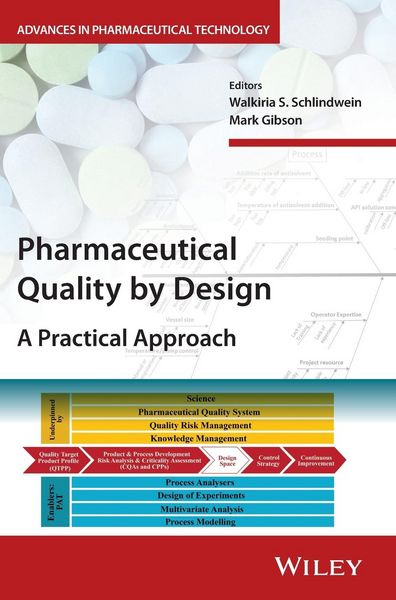
Produktbild: Pharmaceutical Quality by Design
- 14%

Pharmaceutical Quality by Design A Practical Approach

14% sparen

79,99 € UVP 93,40 €

inkl. gesetzl. MwSt., Versandkostenfrei


Beschreibung

Produktdetails

Einband

Gebundene Ausgabe

Erscheinungsdatum

26.03.2018

Herausgeber

Walkiria S. Schlindwein + weitere

Verlag

John Wiley & Sons

Seitenzahl

368

Maße (L/B/H)

25/17,5/2,5 cm

Gewicht

829 g

Auflage

1. Auflage

Sprache

Englisch

ISBN

978-1-118-89520-7

Beschreibung

Produktdetails

Einband

Gebundene Ausgabe

Erscheinungsdatum

26.03.2018

Herausgeber

Verlag

John Wiley & Sons

Seitenzahl

368

Maße (L/B/H)

25/17,5/2,5 cm

Gewicht

829 g

Auflage

1. Auflage

Sprache

Englisch

ISBN

978-1-118-89520-7

EU-Ansprechpartner

Zeitfracht Medien GmbH
Ferdinand-Jühlke-Straße 7
99095 Erfurt
DE
produktsicherheit@zeitfracht.de

Herstelleradresse

Wiley & Sons
1 Oldlands Way
PO22 9NQ Bognor Regis
GB
trade@wiley.com

Noch keine Bewertungen vorhanden

Verfassen Sie die erste Bewertung zu diesem Artikel

Helfen Sie anderen Kundinnen und Kunden durch Ihre Meinung.

Kundinnen und Kunden meinen

Bewertungen (0)

Die Leseprobe wird geladen.
  • Produktbild: Pharmaceutical Quality by Design
  • List of Figures xiii
     
    List of Tables xix
     
    List of Contributers xxi
     
    Series Preface xxiii
     
    Preface xxv
     
    1 Introduction to Quality by Design (QbD) 1
    Bruce Davis and Walkiria S. Schlindwein
     
    1.1 Introduction 1
     
    1.2 Background 2
     
    1.3 Science?] and Risk?]Based Approaches 4
     
    1.4 ICH Q8-Q12 5
     
    1.5 QbD Terminology 6
     
    1.6 QbD Framework 7
     
    1.7 QbD Application and Benefits 7
     
    1.8 Regulatory Aspects 8
     
    1.9 Summary 9
     
    1.10 References 9
     
    2 Quality Risk Management (QRM) 11
    Noel Baker
     
    2.1 Introduction 11
     
    2.2 Overview of ICH Q9 13
     
    2.2.1 Start QRM Process 15
     
    2.2.2 Risk Assessment 15
     
    2.2.3 Risk Control 16
     
    2.2.4 Risk Review 16
     
    2.3 Risk Management Tools 17
     
    2.4 Practical Examples of Use for QbD 22
     
    2.4.1 Case Study 26
     
    2.4.2 Pre?]work 26
     
    2.4.3 Scoring Meeting 32
     
    2.4.4 FMECA Tool 32
     
    2.4.5 Risk Score 32
     
    2.4.6 Detectability Score 34
     
    2.4.7 Communication 35
     
    2.5 Concluding Remarks 36
     
    2.6 References 44
     
    3 Quality Systems and Knowledge Management 47
    Siegfried Schmitt
     
    3.1 Introduction to Pharmaceutical Quality System 47
     
    3.1.1 Knowledge Management - What Is It and Why Do We Need It? 47
     
    3.2 The Regulatory Framework 48
     
    3.2.1 Knowledge Management in the Context of Quality by Design (QbD) 48
     
    3.2.2 Roles and Responsibilities for Quality System 49
     
    3.2.3 Roles and Responsibilities for Knowledge Management 50
     
    3.2.4 Implicit and Explicit Knowledge 50
     
    3.3 The Documentation Challenge 51
     
    3.4 From Data to Knowledge: An Example 56
     
    3.5 Data Integrity 58
     
    3.6 Quality Systems and Knowledge Management: Common Factors for Success 58
     
    3.7 Summary 59
     
    3.8 References 60
     
    4 Quality by Design (QbD) and the Development and Manufacture of Drug Substance 61
    Gerry Steele
     
    4.1 Introduction 61
     
    4.2 ICH Q11 and Drug Substance Quality 62
     
    4.2.1 Enhanced Approach 63
     
    4.2.2 Impurities 63
     
    4.2.3 Physical Properties of Drug Substance 64
     
    4.3 Linear and Convergent Synthetic Chemistry Routes 65
     
    4.4 Registered Starting Materials (RSMs) 67
     
    4.5 Definition of an Appropriate Manufacturing Process 68
     
    4.5.1 Crystallization, Isolation and Drying of APIs 68
     
    4.5.2 Types of Crystallization 69
     
    4.5.3 Design of Robust Cooling Crystallization 70
     
    4.6 In?]Line Process Analytical Technology and Crystallization Processes 78
     
    4.6.1 Other Unit Operations 80
     
    4.7 Applying the QbD Process 82
     
    4.7.1 Quality Risk Assessment (QRA) 83
     
    4.8 Design of Experiments (DoE) 87
     
    4.9 Critical Process Parameters (CPPs) 88
     
    4.10 Design Space 88
     
    4.11 Control Strategy 89
     
    4.12 References 91
     
    5 The Role of Excipients in Quality by Design (QbD) 97
    Brian Carlin
     
    5.1 Introduction 97
     
    5.2 Quality of Design (QbD) 98
     
    5.3 Design of Experiments (DoE) 100
     
    5.4 Excipient Complexity 102
     
    5.5 Composition 105
     
    5.6 Drivers of Functionality or Performance 105
     
    5.7 Limited Utility of Pharmacopoeial Attributes 106
     
    5.8 Other Unspecified Attributes 107
     
    5.9 Variability 107
     
    5.10 Criticalities or Latent Conditions in the Finished Product 108
     
    5.11 Direct or Indirect Impact of Excipient Variability 110
     
    5.12 Control Strategy 111
     
    5.13 Communic