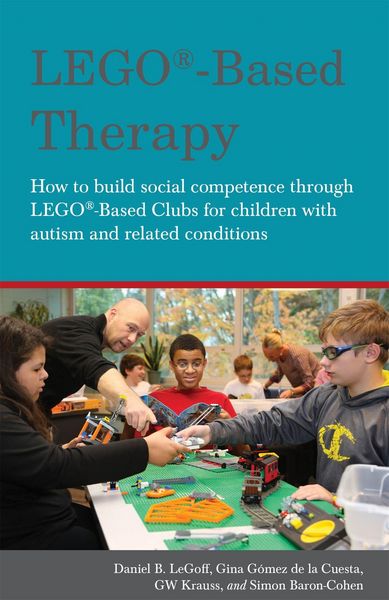
LEGO®-Based Therapy How to build social competence through LEGO®-based Clubs for children with autism and related conditions
-
- Taschenbuch ausgewählt
- eBook
-
Sprache:Englisch
-
Verlag:Jessica Kingsley Publications
27,99 €
inkl. gesetzl. MwSt.,
- Kostenlose Lieferung ab 30 € Einkaufswert
- Versandkostenfrei für Bonuscard-Kund*innen
Beschreibung
Produktdetails
Einband
Taschenbuch
Erscheinungsdatum
21.06.2014
Verlag
Jessica Kingsley PublicationsSeitenzahl
144
Maße (L/B/H)
21,6/17,2/1 cm
Gewicht
183 g
Sprache
Englisch
ISBN
978-1-84905-537-6
This complete guide to LEGO® Therapy contains everything you need to know in order to set up and run a LEGO® Club for children with autism spectrum disorders or related social communication difficulties and anxiety conditions.
By providing a joint interest and goal, LEGO® building can become a medium for social development such as sharing, turn-taking, making eye-contact, and following social rules. This book outlines the theory and research base of the approach and gives advice on all practical considerations including space, the physical layout of the room and choosing and maintaining materials, as well as strategies for managing behaviour, further skill development, and how to assess progress.
Written by the pioneer of the approach alongside those who helped form it through their research and evaluation, this evidence-based manual is essential reading for professionals working with autism who are interested in running a LEGO® Club or learning more about the therapy.
Noch keine Bewertungen vorhanden
Verfassen Sie die erste Bewertung zu diesem Artikel
Helfen Sie anderen Kundinnen und Kunden durch Ihre Meinung.
Kurze Frage zu unserer Seite
Vielen Dank für Ihr Feedback
Wir nutzen Ihr Feedback, um unsere Produktseiten zu verbessern. Bitte haben Sie Verständnis, dass wir Ihnen keine Rückmeldung geben können. Falls Sie Kontakt mit uns aufnehmen möchten, können Sie sich aber gerne an unseren Kund*innenservice wenden.
zum Kundenservice