
Gutscheinbedingungen

**Gültig bis 14.09.2026 auf Spielzeug, Schreibwaren, Filme, Geschenke & Trends, Musik, tolino eReader & Zubehör, Hörbücher, nicht preisgebundene Bücher und Kalender in der Thalia App. Einzelne Artikel können ausgeschlossen sein. Aufgrund der Buchpreisbindung sind deutschsprachige Bücher und eBooks ausgenommen. Zusätzlich ausgenommen sind Abos & Flatrates, Games, Geschenkkarten/-boxen, Shelfies, Software, Zeitschriften sowie einzelne Artikel von tonies®. Pro Einkauf einmal einlösbar. Nur gültig mit im Onlineshop hinterlegter Bonuscard. Click & Collect nur bei Onlinevorabzahlung möglich. Keine Barauszahlung. Nicht kombinierbar mit anderen Aktionen und Gutscheinen. Gutschein wird auf max. 500€ Bestellwert angerechnet. Nicht gültig für Versandkosten und Services.

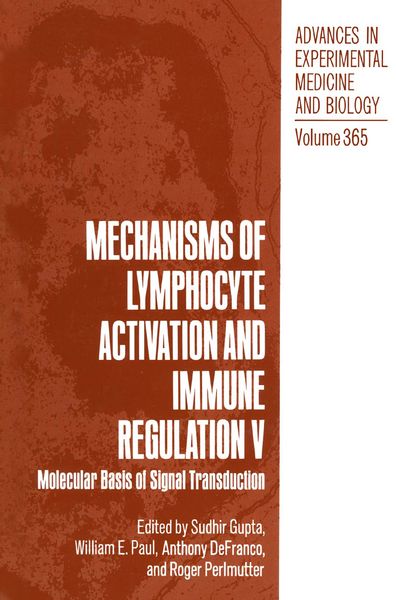
  • Produktbild: Mechanisms of Lymphocyte Activation and Immune Regulation V
  • Produktbild: Mechanisms of Lymphocyte Activation and Immune Regulation V
Band 365

Mechanisms of Lymphocyte Activation and Immune Regulation V Molecular Basis of Signal Transduction

148,99 €

inkl. gesetzl. MwSt., Versandkostenfrei


Beschreibung

Produktdetails

Einband

Taschenbuch

Erscheinungsdatum

06.06.2013

Abbildungen

IX, 264 p.

Herausgeber

Sudhir Gupta + weitere

Verlag

Springer Us

Seitenzahl

264

Maße (L/B/H)

23,5/15,5/1,6 cm

Gewicht

423 g

Auflage

Softcover reprint of the original 1st ed. 1994

Sprache

Englisch

ISBN

978-1-4899-0989-3

Beschreibung

Produktdetails

Einband

Taschenbuch

Erscheinungsdatum

06.06.2013

Abbildungen

IX, 264 p.

Herausgeber

Verlag

Springer Us

Seitenzahl

264

Maße (L/B/H)

23,5/15,5/1,6 cm

Gewicht

423 g

Auflage

Softcover reprint of the original 1st ed. 1994

Sprache

Englisch

ISBN

978-1-4899-0989-3

Herstelleradresse

Springer-Verlag GmbH
Tiergartenstr. 17
69121 Heidelberg
DE

Email: ProductSafety@springernature.com

Noch keine Bewertungen vorhanden

Verfassen Sie die erste Bewertung zu diesem Artikel

Helfen Sie anderen Kundinnen und Kunden durch Ihre Meinung.

Kundinnen und Kunden meinen

Bewertungen (0)

  • Produktbild: Mechanisms of Lymphocyte Activation and Immune Regulation V
  • Produktbild: Mechanisms of Lymphocyte Activation and Immune Regulation V
  • Section I: Signaling by Antigen Receptors of B Cells.- Signaling and Internalisation Function of the B Cell Antigen Receptor Complex.- Mechanism of B Cell Antigen Receptor Function: Transmembrane Signaling and Triggering of Apoptosis.- B-Cell Activation by Wild Type and Mutant Ig-? Cytoplasmic Domains.- Accessory Molecules Which Influence Signaling Through B Lymphocyte Antigen Receptors.- Section II: Signaling by Antigen Receptors of T Cells.- Analysis of the (YXXL/I)2 Signalling Motifs Found in the Cytoplasmic Segment of the Mouse CD3-? Chain.- Molecular and Genetic Insights Into T Cell Antigen Receptor Signal Transduction.- Signal Transduction During T Cell Development.- The Regulation and Function of p21Ras in Signal Transduction by the T Cell Antigen Receptor.- Immunological Tolerance by Antigen-Induced Apoptosis of Mature T Lymphocytes.- Section III: Signaling Components of Lymphocytes.- Properties of Ca Currents Activated by T Cell Receptor Signaling.- The Role of Syk in Cell Signaling.- Nonreceptor Tyrosine Kinases in Aggregation-Mediated Cell Activation.- Control of Lymphopoiesis by Non-Receptor Protein Tyrosine Kinases.- Involvement of Nonreceptor Protein Tyrosine Kinases in Multichain Immune Recognition Receptor Signal Transduction.- Phorbol Myristate Acetate-Induced Changes in Protein Kinase C Isozymes (?, ?, and ?) in Human T Cell Subsets.- Specific CD45 Isoforms Regulate T Cell Ontogeny and Are Functionally Distinct in Modifying Immune Activation.- Cloning and Characterization of NF-ATc and NF-ATp: The Cytoplasmic Components of NF-AT.- Section IV: Signaling VIA Fc Receptors and Cytokine Receptors.- Quantitative Aspects of Receptor Aggregation.- Fc Receptor Signaling.- Proximal Signals and the Control of S-Phase Entry in Interleukin-2-Stimulated TLymphocytes.- The IL-4 Receptor — Signaling Mechanisms.- Function of the Common ? Subunit of the GM-CSF/IL-3/IL-5 Receptors.- Section V: Molecular Basis of X-Linked Immunodeficiencies.- Sharing of a Common ? Chain, ?c, by the IL-2, IL-4, and IL-7 Receptors: Implications for X-Linked Severe Combined Immunodeficiency.- X-Linked Agammaglobulinemia and Bruton’s Tyrosine Kinase.- The Role of CD40 Ligand in Human Disease.- Involvement of the Protein Tyrosine Phosphatase PTP1C in Cellular Physiology, Autoimmunity and Oncogenesis.- Contributors.