KI-Beratung Beta

Gutscheinbedingungen

**Gültig bis 11.11.2026 auf Spielzeug, Schreibwaren, Filme, Geschenke & Trends, Musik, tolino eReader & Zubehör, Hörbücher und Hörbuch-Downloads, nicht preisgebundene Bücher und Kalender online auf thalia.at und in der Thalia App. Einzelne Artikel können ausgeschlossen sein. Aufgrund der Buchpreisbindung sind deutschsprachige Bücher und eBooks ausgenommen. Zusätzlich ausgenommen sind Abos & Flatrates, Games, Geschenkkarten/-boxen, Shelfies, Software, Zeitschriften sowie einzelne Artikel von tonies®. Pro Einkauf einmal einlösbar. Click & Collect nur bei Onlinevorabzahlung möglich. Keine Barauszahlung. Nicht kombinierbar mit anderen Aktionen und Gutscheinen. Gutschein wird auf max. 500€ Bestellwert angerechnet. Nicht gültig für Versandkosten und Services.

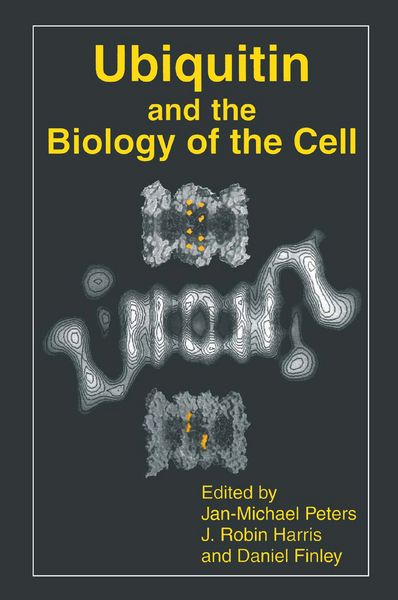
  • Produktbild: Ubiquitin and the Biology of the Cell
  • Produktbild: Ubiquitin and the Biology of the Cell
- 13%

Ubiquitin and the Biology of the Cell

13% sparen

189,99 € UVP 219,99 €

inkl. gesetzl. MwSt., Versandkostenfrei


Beschreibung

The last several years have been a landmark period in the ubiquitin field. The breadth of ubiquitin's roles in cell biology was first sketched, and the importance of ubiquitin-dependent proteolysis as a regulatory mechanism gained general acceptance. The many strands of work that led to this new perception...

Beschreibung

The last several years have been a landmark period in the ubiquitin field. The breadth of ubiquitin's roles in cell biology was first sketched, and the importance of ubiquitin-dependent proteolysis as a regulatory mechanism gained general acceptance. The many strands of work that led to this new perception are re counted in this book. A consequence of this progress is that the field has grown dramatically since the first book on ubiquitin was published almost a decade ago [M. Rechsteiner (ed. ), Ubiquitin, Plenum Press, 1988]. In this span, students of the cell cycle, transcription, signal transduction, protein sorting, neuropathology, cancer, virology, and immunology have attempted to chart the role of ubi quit in in their particular experimental systems, and this integration of the field into cell biology as a whole continues at a remarkable pace. We hope that for active researchers in the field as well as for newcomers and those on the fence, this book will prove helpful for its breadth, historical perspective, and practical tips. Structural data are now available on many of the components of the ubiquitin pathway. The structures have provided basic insights into the unusual biochemical mechanisms of ubiquitination and proteasome-mediated proteolysis. Because high-speed computer graphics can convey structures more effectively than print media, we have supplemented the figures of the book with a Worldwide Web site that can display the structures in a flexible, viewer-controlled format.

Produktdetails

Einband

Taschenbuch

Erscheinungsdatum

11.06.2013

Abbildungen

XXII, 472 p.

Herausgeber Jan-Michael Peters + weitere

Produktdetails

Einband

Taschenbuch

Erscheinungsdatum

11.06.2013

Abbildungen

XXII, 472 p.

Herausgeber
Verlag Springer Us
Seitenzahl

472

Maße (L/B/H)

22,9/15,2/2,7 cm

Gewicht

711 g

Sprache

Englisch

ISBN

978-1-4899-1924-3

Herstelleradresse

Springer-Verlag KG
Sachsenplatz 4-6
1201 Wien
AT

Email: ProductSafety@springernature.com

Noch keine Bewertungen vorhanden

Verfassen Sie die erste Bewertung zu diesem Artikel

Helfen Sie anderen Kundinnen und Kunden durch Ihre Meinung.

Kundinnen und Kunden meinen

Bewertungen (0)

  • Produktbild: Ubiquitin and the Biology of the Cell
  • Produktbild: Ubiquitin and the Biology of the Cell
  • The Ubiquitin System.- Polyubiquitin Chains.- The Ubiquitin-Conjugation System.- The Deubiquitinating Enzymes.- The 20 S Proteasome.- The 26 S Proteasome.- Function of the Proteasome in Antigen Presentation.- The N-End Rule Pathway.- Ubiquitin-Dependent Degradation of Transcription Regulators.- Role of the Ubiquitin—Proteasome Pathway in NF-?B Activation.- Ubiquitination of the p53 Tumor Suppressor.- Cell Cycle Control by Ubiquitin-Dependent Proteolysis.- Ubiquitination of Integral Membrane Proteins and Proteins in the Secretory Pathway.- Degradation of Ornithine Decarboxylase.- Ubiquitin and the Molecular Pathology of Human Disease.