KI-Beratung Beta

Gutscheinbedingungen

**Gültig bis 03.11.2026 auf fremdsprachige Bücher online auf thalia.at und in der Thalia App. Einzelne Artikel können ausgeschlossen sein. Ausgenommen sind preisgebundene Artikel & eBooks. Pro Einkauf einmal einlösbar. Click & Collect nur bei Onlinevorabzahlung möglich. Keine Barauszahlung. Nicht kombinierbar mit anderen Aktionen und Gutscheinen. Gutschein wird auf max. 500€ Bestellwert angerechnet. Nicht gültig für Geschenkkarten, Versandkosten und Services.

Produktbild: Antiarrhythmic Drugs

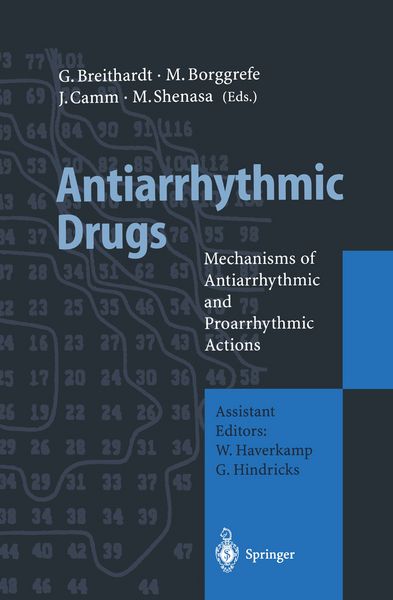
Antiarrhythmic Drugs Mechanisms of Antiarrhythmic and Proarrhythmic Actions

99,99 €

inkl. gesetzl. MwSt., Versandkostenfrei


Beschreibung

Produktdetails

Einband

Taschenbuch

Erscheinungsdatum

19.08.2012

Abbildungen

XII, 410 p. 300 illus.

Herausgeber

Günter Breithardt + weitere

Verlag

Springer Berlin

Seitenzahl

410

Maße (L/B/H)

23,5/15,5/2,3 cm

Gewicht

639 g

Auflage

Softcover reprint of the original 1st edition 1995

Sprache

Englisch

ISBN

978-3-642-85626-6

Beschreibung

Produktdetails

Einband

Taschenbuch

Erscheinungsdatum

19.08.2012

Abbildungen

XII, 410 p. 300 illus.

Herausgeber

Verlag

Springer Berlin

Seitenzahl

410

Maße (L/B/H)

23,5/15,5/2,3 cm

Gewicht

639 g

Auflage

Softcover reprint of the original 1st edition 1995

Sprache

Englisch

ISBN

978-3-642-85626-6

Herstelleradresse

Springer-Verlag GmbH
Tiergartenstr. 17
69121 Heidelberg
DE

Email: ProductSafety@springernature.com

Noch keine Bewertungen vorhanden

Verfassen Sie die erste Bewertung zu diesem Artikel

Helfen Sie anderen Kundinnen und Kunden durch Ihre Meinung.

Kundinnen und Kunden meinen

Bewertungen (0)

  • Produktbild: Antiarrhythmic Drugs
  • Basic Mechanisms of Antiarrhythmic Drug Action.- Sodium Channel Blockade as an Antiarrhythmic Mechanism.- Pharmacology of T and L type Ca2+ Channels in Cardiac Tissue.- Molecular Biology and Ion Channel Biophysics: Their Role in Rational Pharmacological Antiarrhythmic Therapy.- Selective Pharmacological Modification of Repolarizing Currents: Antiarrhythmic and Proarrhythmic Actions of Agents that Influence Repolarization of the Heart.- A Shift from Class to Class III Drugs in the Medical Treatment of Arrhythmias: Wishful Thinking?.- Use Dependence and Reverse Use Dependence of Antiarrhythmic Agents: Pro-and Antiarrhythmic Actions.- Modulation of Antiarrhythmic Drug Action by Disease and Injury.- Interaction of Transient Ischemia with Antiarrhythmic Drugs.- Management of Patients with Sustained Ventricular Tachyarrhythmias: Differnt Clinical Studies, Different Patients.- Antiarrhythmic Drug Action: Modulation by Disease and Injury.- Reentrant Excitation: Pharmacological Interactions.- Pharmacological Modulation of Reentrant Excitation in Experimental Models.- Reentry in Clinical Arrhythmias: Mechanisms Responsible for Antiarrhythmic Drug Efficacy.- Variability of the Arrhythmogenic Substrate: Drug Influences.- Experimental Models for the Assessment of Antiarrhythmic and Proarrhythmic Drug Action: Traditional and Newer Models.- Influence of the Autonomic Nervous System on the Action of Antiarrhythmic Drugs.- Role of Drugs in Torsade de Pointes and Triggered Activity.- The Study of Pharmacokinetics and Pharmacodynamics as a Tool for Understanding Mechanisms of Antiarrhythmic Drug Action.- Electrophysiologic Effects, Clinical Efficacy and Antiarrhythmic and Proarrhythmic Effects of Sodium Channel Blockers in Patients with Ventricular Tachyarrhythmias.- Antiarrhythmic VersusProarrhythmic Effects of Class III Agents.- “Novel” Antiarrhythmic Drugs.- Electrophysiologic Properties and Antiarrhythmic Effects of Adenosine and Adenosine Triphosphate.- Magnesium-Electrophysiological Effects, Antiarrhythmic Properties and Clinical Applications.- Future Perspectives.- The Classification of Antiarrhythmic Drugs: How do we Educate the Scientist and the Clinician?.