KI-Beratung Beta

Gutscheinbedingungen

**Gültig bis 30.11.2026 auf Spielzeug, Schreibwaren, Filme, Geschenke & Trends, Musik, tolino eReader & Zubehör, Hörbücher und Hörbuch-Downloads, nicht preisgebundene Bücher und Kalender online auf thalia.at und in der Thalia App. Einzelne Artikel können ausgeschlossen sein. Aufgrund der Buchpreisbindung sind deutschsprachige Bücher und eBooks ausgenommen. Zusätzlich ausgenommen sind Abos & Flatrates, Games, Geschenkkarten/-boxen, Shelfies, Software, Zeitschriften sowie einzelne Artikel von tonies®. Pro Einkauf einmal einlösbar. Nur gültig mit im Onlineshop hinterlegter Bonuscard. Click & Collect nur bei Onlinevorabzahlung möglich. Keine Barauszahlung. Nicht kombinierbar mit anderen Aktionen und Gutscheinen. Gutschein wird auf max. 500€ Bestellwert angerechnet. Nicht gültig für Versandkosten und Services.

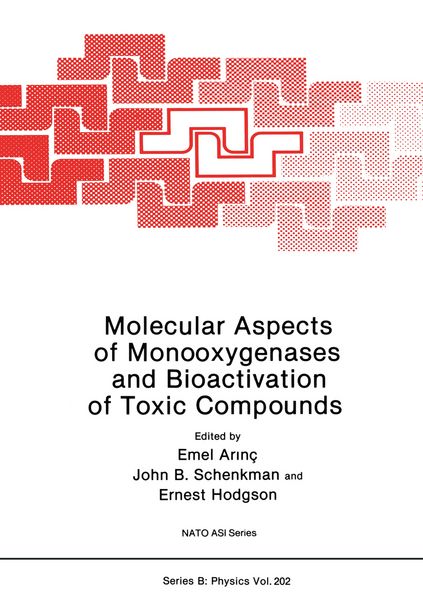
  • Produktbild: Molecular Aspects of Monooxygenases and Bioactivation of Toxic Compounds
  • Produktbild: Molecular Aspects of Monooxygenases and Bioactivation of Toxic Compounds
Band 202

Molecular Aspects of Monooxygenases and Bioactivation of Toxic Compounds

Aus der Reihe NATO Science Series A:

51,99 €

inkl. gesetzl. MwSt., Versandkostenfrei


Beschreibung

This volume represents the proceedings of a NATO Advanced Study Institute on "Molecular Aspects of Monooxygenases and Bioactivation of Toxic Compounds" which was held in ~e me (Izmir) Turkey, August 27 to September 7, 1989. The Institute emphasized the potential dangers of drugs, pollutants, pesticides,...

Beschreibung

This volume represents the proceedings of a NATO Advanced Study Institute on "Molecular Aspects of Monooxygenases and Bioactivation of Toxic Compounds" which was held in ~e
me (Izmir) Turkey, August 27 to September 7, 1989. The Institute emphasized the potential dangers of drugs, pollutants, pesticides, carcinogens, and both nutrient and non-nutrient food additives and their interactions at the molecular level. These xenobiotics are metabolized in phase I reactions by monooxygenases, primarly cytochrome P450-isozyme dependent, followed by phase II conjugation enzymes. The versatility of these enzymes is unique in biochemistry since they catalyze the metabolism of an almost limitless number of compounds through a diverse array of reactions. Although these metabolic sequences are usually detoxication mechanisms, in some cases the reactive intermediates are more mutagenic, more carcinogenic and ultimately more toxic than the parent compound. The Institute was devoted to recent scientific progress in the understanding of the biochemical and molecular properties of these enzymes and factors that influence the metabolism of chemicals to toxic and non-toxic compounds. Overview lectures focused on xenobiotic metabolism by cytochrome P450, the flavin-containing monooxygenase, cytochrome b5, epoxide hydrolase, glutathione S-transferase and UDP-glucuronosyl transferase. Several additional presentations stressed various aspects of cytochrome P450 mediated metabolism including: specific forms in the rabbit and insects; topology in membranes; posttranslational modification; control of constitutive forms in the rat; hormonal and xenobiotic regulation; prostanoid metabolism; endogenous substrate metabolism; interaction with estrogenic pesticides; pesticide bioactivation. The Institute also included talks on interactions between enzymes and on benzene metabolism and toxicity.

Produktdetails

Einband

Taschenbuch

Erscheinungsdatum

12.12.2012

Abbildungen

508 p. 55 illus.

Herausgeber Emel Arinç + weitere

Produktdetails

Einband

Taschenbuch

Erscheinungsdatum

12.12.2012

Abbildungen

508 p. 55 illus.

Herausgeber
Verlag Springer Us
Seitenzahl

508

Maße (L/B/H)

25,4/17,8/2,8 cm

Gewicht

953 g

Auflage

Softcover reprint of the original 1st ed. 1991

Sprache

Englisch

ISBN

978-1-4684-7286-8

Herstelleradresse

Springer-Verlag KG
Sachsenplatz 4-6
1201 Wien
AT

Email: ProductSafety@springernature.com

Noch keine Bewertungen vorhanden

Verfassen Sie die erste Bewertung zu diesem Artikel

Helfen Sie anderen Kundinnen und Kunden durch Ihre Meinung.

Kundinnen und Kunden meinen

Bewertungen (0)

  • Produktbild: Molecular Aspects of Monooxygenases and Bioactivation of Toxic Compounds
  • Produktbild: Molecular Aspects of Monooxygenases and Bioactivation of Toxic Compounds
  • Cytochrome P450-Dependent Monooxygenase: An Overview.- The Flavin-Containing Monooxygenase (EC 1.14.13.8).- Multiple Forms of Rabbit Cytochrome P450: Comparison of Chemical, Physical, Immunological and Biocatalytic Properties.- Primary Structures and Regulation of Cytochrome P450 Isozymes 2 (IIB) and 5 (IVB) and the Flavin-Containing Monooxygenase in Rabbit Liver and Lung.- Insect Cytochrome P450.- I. Membrane Topology of Cytochromes P450: Elements and Measurement by Spectroscopic Techniques.- II. Membrane Topology of Cytochromes P450: Oligomers and Cooperativity.- NADPH-Dependent Cytochrome P450 Reductase A. Y. H. Lu.- Essential Features of NADH Dependent Cytochrome b5 Reductase and Cytochrome b5 of Liver and Lung Microsomes.- Electron Transfer from Cytochrome b5 to Cytochrome P450.- Functional Aspects of Protein-Protein Interactions of Cytochrome P450, Cytochrome b5 and Cytochrome P450 Reductase.- Posttranslational Modification by Phosphorylation: Control of Cytochrome P450 and Associated Enzymes.- Physiological and Pathophysiological Alterations in Rat Hepatic Cytochrome P450.- Ontogenesis of Liver Cytochromes P450.- Mechanism of Steroid Hormome Action A. Berkenstam.- Xenobiotic Regulation of Cytochrome P450 Gene Expression.- Prostanoid Metabolism and Biologically Active Product Formation.- Role of Cytochrome P450 in the Anabolism and Catabolism of Endobiotics.- Interactions of Estrogenic Pesticides with Cytochrome P450.- Effects of Inhibitors on the P450-Dependent Metabolism of Endogenous Compounds in Fungi, Protozoa, Plants and Vertebrates.- Mechanism of Metabolic Activation of Nitroimidozoles.- Benzene Metabolism R. Snyder.- Mechanisms of Benzene Toxicity.- Hematotoxicity, Leukemogenecity and Carcinogenecity of Chronic Exposure to Benzene.- Epoxide Hydrolase Isoenzymes and Their Individual Contribution to the Control of Toxic Metabolites.- Role of the Weil-Known Basic and Recently Discovered Acidic Glutathione S-Transferases in the Control of Genotoxic Metabolites.- Characterisation and Regulation of UDP-Glucuronosyltransferases.- Molecular Cloning, Expression and Genetic Deficiencies of UDP-Glucuronosyltransferases.- Contributors.