Beschreibung

Produktdetails

Einband

Taschenbuch

Erscheinungsdatum

09.05.2013

Herausgeber

Ernest J. Henley

Verlag

Springer Us

Seitenzahl

565

Maße (L/B/H)

23,5/15,5/3,1 cm

Gewicht

861 g

Auflage

Softcover reprint of the original 1st ed. 1979

Sprache

Englisch

ISBN

978-1-4613-2864-3

Beschreibung

Produktdetails

Einband

Taschenbuch

Erscheinungsdatum

09.05.2013

Herausgeber

Ernest J. Henley

Verlag

Springer Us

Seitenzahl

565

Maße (L/B/H)

23,5/15,5/3,1 cm

Gewicht

861 g

Auflage

Softcover reprint of the original 1st ed. 1979

Sprache

Englisch

ISBN

978-1-4613-2864-3

Herstelleradresse

Springer-Verlag GmbH
Tiergartenstr. 17
69121 Heidelberg
DE

Email: GPSR Kontakt

Noch keine Bewertungen vorhanden

Verfassen Sie die erste Bewertung zu diesem Artikel

Helfen Sie anderen Kundinnen und Kunden durch Ihre Meinung.

Kundinnen und Kunden meinen

Bewertungen (0)

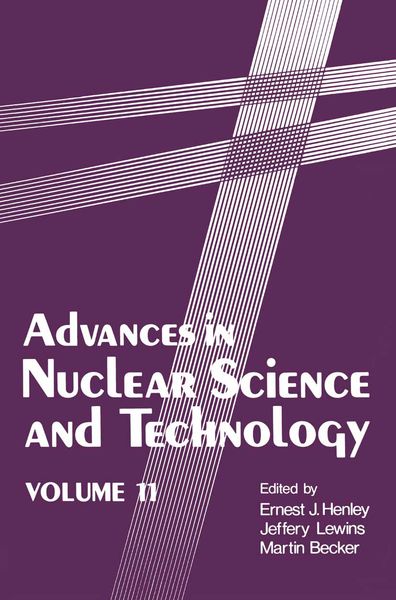
  • Produktbild: Advances in Nuclear Science and Technology
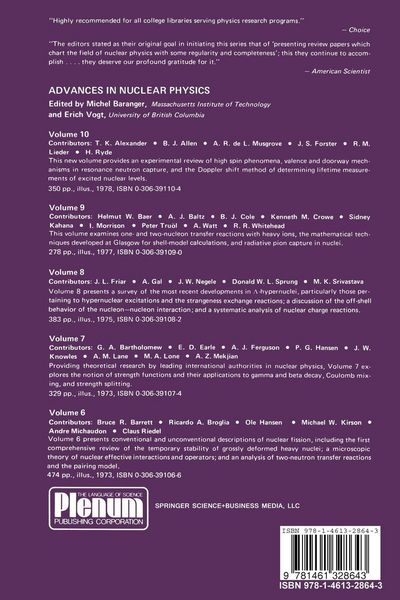
  • Produktbild: Advances in Nuclear Science and Technology
  • Nuclear Physics Data for Reactor Kinetics.- I. Principles of Reactor Kinetics and Data Requirements.- II. Evaluated Nuclear Data Libraries.- III. Fission-Product Nuclear Data.- IV. Data on Delayed Neutrons.- V. Data on Heavy Elements.- Acknowledgments.- References.- The Analysis of Reactor Noise: Measuring Statistical Fluctuations in Nuclear Systems.- I. Introduction.- II. Theory.- III. Models for Interpreting Experiments.- IV. Epilogue.- Acknowledgments.- References.- On-Line Computers in Nuclear Power Plants — A Review.- Abstract.- I. Introduction.- II. Computer Functions and Application Classes.- III. Functions.- IV. Applications Classes.- V. Computer Hardware and Software.- VI. Examples of Systems in Operation.- VII. Ergonomic Factors and Operator Acceptance.- VIII. Reliability.- IX. Obsolescence and Designing for Replaceability.- X. Project Management.- XI. Program and Data Security.- XII. Licensing of Initial Design and Modification During Life.- XIII. Future Development.- XIV. Concluding Remarks.- Acknowledgments.- References.- Fuel for the SGHWR.- I. Introduction.- II. Fuel Design.- III. Operational Experience.- IV. Performance Models: The Seer-Sleuth Computer Code.- V. Behavior in Accident Conditions.- VI. Transient Modeling.- VII. Future Development.- References.- The Nuclear Safety Research Reactor (NSRR) in Japan.- I. Introduction.- II. NSRR Facility and Experimental Capability.- III. Experimental Research Program.- IV. Some Results of the Fuel Failure Experiments.- V. Future Plans.- References.- Practical Usage of Plutonium in Power Reactor Systems.- I. Popular Notions about Plutonium.- II. Historical Perspective and Review of Plutonium Properties.- III. Plutonium Recycle Alternatives.- IV. Current Status and Conclusions.- References.- Computer Assisted Learning in Nuclear Engineering.- I. Introduction.- II. Educational Roles of the Digital Computer.- III. Claims for CAL.- IV. Computers in Nuclear Engineering Education.- V. The Role of Graphics in Computer-Assisted Learning.- VI. Current CAL Projects.- VII. A Typical CAL Program.- VIII. Transferring CAL Materials.- IX. Implementation.- X. Evaluation.- XI. Future Prospects for CAL in Nuclear Engineering.- XII. Summary and Conclusions.- References.- Nuclear Energy Centers.- I. Introduction.- II. Fuel Cycle and Facility Integration.- III. Modular Construction.- IV. Heat Rejection.- V. Conclusions.- References.