KI-Beratung Beta

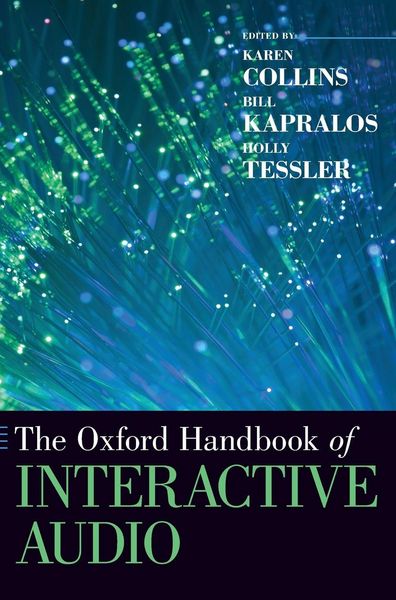
Produktbild: Oxford Handbook of Interactive Audio

Oxford Handbook of Interactive Audio

Aus der Reihe Oxford Handbooks

138,99 €

inkl. gesetzl. MwSt., Versandkostenfrei


Beschreibung

Produktdetails

Einband

Gebundene Ausgabe

Erscheinungsdatum

02.05.2014

Abbildungen

64 illustrations, 6 b&w half tones

Herausgeber

Collins Karen + weitere

Verlag

Oxford University Press

Seitenzahl

626

Maße (L/B/H)

25/17,5/3,8 cm

Gewicht

1243 g

Sprache

Englisch

ISBN

978-0-19-979722-6

Beschreibung

Produktdetails

Einband

Gebundene Ausgabe

Erscheinungsdatum

02.05.2014

Abbildungen

64 illustrations, 6 b&w half tones

Herausgeber

Verlag

Oxford University Press

Seitenzahl

626

Maße (L/B/H)

25/17,5/3,8 cm

Gewicht

1243 g

Sprache

Englisch

ISBN

978-0-19-979722-6

Herstelleradresse

Libri GmbH
Europaallee 1
36244 Bad Hersfeld
DE

Email: gpsr@libri.de

Noch keine Bewertungen vorhanden

Verfassen Sie die erste Bewertung zu diesem Artikel

Helfen Sie anderen Kundinnen und Kunden durch Ihre Meinung.

Kundinnen und Kunden meinen

Bewertungen (0)

  • Produktbild: Oxford Handbook of Interactive Audio
    • Introduction (Karen Collins, Holly Tessler and Bill Kapralos)

    • List of Acronyms Commonly Found in the Handbook

    • List of Software Found in the Handbook

    • List of Games Found in the Handbook

    • List of Contributors

    • Section 1: Interactive Sound in Practice

    • Chapter 1 Spatial Reconfiguration in Interactive Video Art (Holly Rogers)

    • Chapter 2 Navigating Sound: Locative and Translocational Approaches to Interactive Audio (Nye Parry)

    • Chapter 3 Defining Sound Toys: Play as Composition (Andrew Dolphin)

    • Chapter 4 Thinking More Dynamically about Using Sound to Enhance Learning from Instructional Technologies (M.J. Bishop)

    • Chapter 5 Acoustic Scenography and Interactive Audio: Sound Design for Built Environments (Jan Paul Herzer )

    • Section 2: Videogames and Virtual Worlds

    • Chapter 6 The Unanswered Question of Musical Meaning: A Cross-Domain Approach (Tom Langhorst)

    • Chapter 7 How can Interactive Music be Used in Virtual Worlds like World of Warcraft? (Jon Inge Lomeland)

    • Chapter 8 Sound and the Videoludic Experience (Guillaume Roux-Girard)

    • Chapter 9 Designing a Game for Music: Integrated Design Approaches for Ludic Music and Interactivity. (Richard Stevens and Dave Raybould)

    • Chapter 10 Worlds of music: Strategies for creating music-based experiences in videogames (Melanie Fritsch)

    • Section 3: The Psychology and Emotional Impact of Interactive Audio

    • Chapter 11 Embodied Virtual Acoustic Ecologies of Computer Games (Mark Grimshaw and Tom Garner)

    • Chapter 12 A Cognitive Approach to the Emotional Function of Game Sound (Inger Ekman)

    • Chapter 13 The Sound of Being There: Presence and Interactive Audio in Immersive Virtual Reality (Rolf Nordahl and Niels C. Nilsson)

    • Chapter 14 Sonic interactions in multimodal environments: An overview (Stefania Serafin)

    • Chapter 15 Musical Interaction for Health Improvement (Anders-Petter Andersson and Birgitta Cappelen)

    • Chapter 16 Engagement, Immersion and Presence: The role of audio interactivity in location-aware sound design (Natasa Paterson and Fionnuala Conway)

    • Section 4: Performance and Interactive Instruments

    • Chapter 17 Multisensory Musicality in Dance Central (Kiri Miller)

    • Chapter 18 Interactivity and Liveness in Electroacoustic Concert Music (Mike Frengel)

    • Chapter 19 Skill in Interactive Digital Music Systems (Michael Gurevich)

    • Chapter 20 Gesture in the Design of Interactive Sound Models (Marc Ainger and Benjamin Schroeder)

    • Chapter 21 Virtual Musicians and Machine Learning (Nick Collins)

    • Chapter 22 Musical Behavior and Amergence in Technoetic and Media Arts (Norbert Herber)

    • Section 5 Tools and Techniques

    • Chapter 23 Flow of Creative Interaction with Digital Music Notations (Chris Nash and Alan F. Blackwell)

    • Chapter 24 Blurring Boundaries, Trends and Implications in Audio Production Software Developments. (David Bessell)

    • Chapter 25 Delivering Interactive Experiences Through the Emotional Adaptation of Automatically Composed Music (Maia Hoeberechts, Jeff Shantz, and Michael Katchabaw)