KI-Beratung Beta

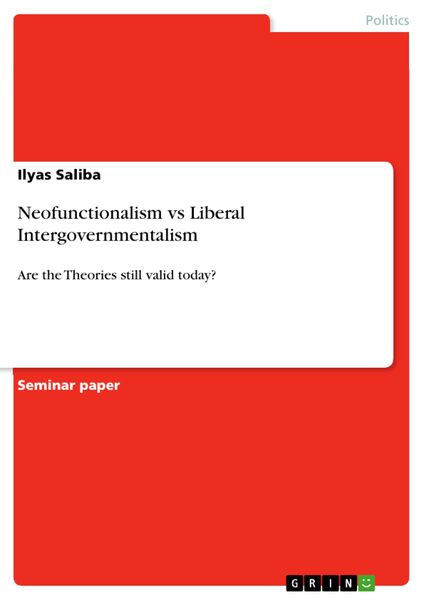
Produktbild: Neofunctionalism vs Liberal Intergovernmentalism

Neofunctionalism vs Liberal Intergovernmentalism Are the Theories still valid today?

  • Form:Einzelkauf Download
  • Sprache:Englisch

13,99 €

inkl. gesetzl. MwSt.

Beschreibung

Neofunctionalism and Liberal Intergovernmentalism (from now on I will use the abbreviations: NF and LIG in this paper) have been predominant approaches to theorizing Integration processes, especially in the first phase of theorizing European Integration. In the following essay I will begin by briefly...

Beschreibung

Neofunctionalism and Liberal Intergovernmentalism (from now on I will use the abbreviations: NF and LIG in this paper) have been predominant approaches to theorizing Integration processes, especially in the first phase of theorizing European Integration. In the following essay I will begin by briefly lay out the main assumptions of the two approaches, drawing especially on their differences and similarities. In a second part I will discuss what these theories set out to do and raise questions about the actual accomplishments. Thirdly, I will turn to a critique of LIG and NF identifying their weaknesses, refering to Thomas Risse`s argument that Liberal Intergovernmentalism and Neofunctionalism are both lacking `...some categories necessary to capture distinctive features of the EU`2. This will lead me to the fourth part of my analysis in which I will demonstrate what and how other approaches can fill in the theoretical gaps and wholes that I have pointed out in my critique. In My conclusion I argue that European Integration Theory does not need overarching, universal theories, but rather is a useful conglomerate of different theories3, that might be combined in eclectically, and offer various toolkits for different suitable areas and levels of analysing and explaining Integration.

Produktdetails

Format

ePUB

Kopierschutz

Nein

Family Sharing

Nein

Text-to-Speech

Ja

Produktdetails

Format

ePUB

Format

eBooks im ePUB-Format erlauben eine dynamische Anpassung des Inhalts an die jeweilige Display-Größe des Lesegeräts. Das Format eignet sich daher besonders für das Lesen auf mobilen Geräten, wie z.B. Ihrem tolino, Tablets oder Smartphones.

Kopierschutz

Nein

Kopierschutz

Dieses eBook können Sie uneingeschränkt auf allen Geräten der tolino Familie, allen sonstigen eReadern und am PC lesen. Das eBook ist nicht kopiergeschützt und kann ein personalisiertes Wasserzeichen enthalten. Weitere Hinweise zum Lesen von eBooks mit einem personalisierten Wasserzeichen finden Sie unter Hilfe/Downloads.

Family Sharing

Nein

Family Sharing

Mit Family Sharing können Sie eBooks innerhalb Ihrer Familie (max. sechs Mitglieder im gleichen Haushalt) teilen. Sie entscheiden selbst, welches Buch Sie mit welchem Familienmitglied teilen möchten. Auch das parallele Lesen durch verschiedene Familienmitglieder ist durch Family Sharing möglich. Um eBooks zu teilen oder geteilt zu bekommen, muss jedes Familienmitglied ein Konto bei Thalia oder einem anderen tolino-Buchhändler haben. Weitere Informationen finden Sie unter Hilfe/Family-Sharing.

Text-to-Speech

Ja

Text-to-Speech

Bedeutet Ihnen Stimme mehr als Text? Mit der Funktion Text-to-Speech können Sie sich im tolino webReader und in der aktuellen Thalia – Lesen & Hören App das eBook vorlesen lassen. Weitere Informationen finden Sie unter Hilfe/Text-to-Speech.

Erscheinungsdatum

18.08.2010

Verlag GRIN
Seitenzahl

15 (Printausgabe)

Dateigröße

259 KB

Auflage

1. Auflage

Sprache

Englisch

EAN

9783640684045

Barrierefreiheit
  • keine Information zur Barrierefreiheit bekannt

Noch keine Bewertungen vorhanden

Verfassen Sie die erste Bewertung zu diesem Artikel

Helfen Sie anderen Kundinnen und Kunden durch Ihre Meinung.

Kundinnen und Kunden meinen

Bewertungen (0)

Die Leseprobe wird geladen.
  • Produktbild: Neofunctionalism vs Liberal Intergovernmentalism