
Gutscheinbedingungen

**Gültig bis 14.09.2026 auf Spielzeug, Schreibwaren, Filme, Geschenke & Trends, Musik, tolino eReader & Zubehör, Hörbücher, nicht preisgebundene Bücher und Kalender in der Thalia App. Einzelne Artikel können ausgeschlossen sein. Aufgrund der Buchpreisbindung sind deutschsprachige Bücher und eBooks ausgenommen. Zusätzlich ausgenommen sind Abos & Flatrates, Games, Geschenkkarten/-boxen, Shelfies, Software, Zeitschriften sowie einzelne Artikel von tonies®. Pro Einkauf einmal einlösbar. Nur gültig mit im Onlineshop hinterlegter Bonuscard. Click & Collect nur bei Onlinevorabzahlung möglich. Keine Barauszahlung. Nicht kombinierbar mit anderen Aktionen und Gutscheinen. Gutschein wird auf max. 500€ Bestellwert angerechnet. Nicht gültig für Versandkosten und Services.

  • Produktbild: Brain Injury and Recovery
  • Produktbild: Brain Injury and Recovery

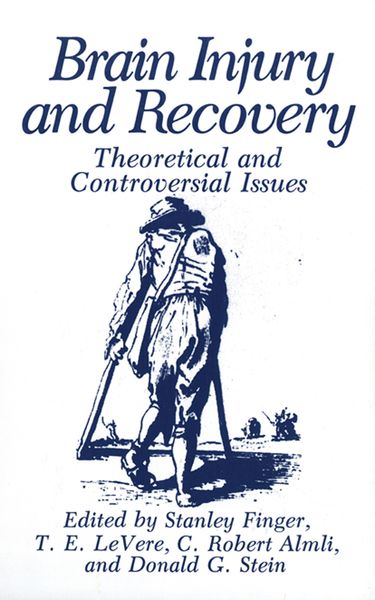
Brain Injury and Recovery Theoretical and Controversial Issues

49,99 €

inkl. gesetzl. MwSt., Versandkostenfrei


Beschreibung

Produktdetails

Einband

Taschenbuch

Erscheinungsdatum

30.01.2012

Abbildungen

362 p.

Herausgeber

C. Robert Almli + weitere

Verlag

Springer Us

Seitenzahl

362

Maße (L/B/H)

22,9/15,2/2,2 cm

Gewicht

566 g

Auflage

Softcover reprint of the original 1st ed. 1988

Sprache

Englisch

ISBN

978-1-4612-8256-3

Beschreibung

Produktdetails

Einband

Taschenbuch

Erscheinungsdatum

30.01.2012

Abbildungen

362 p.

Herausgeber

Verlag

Springer Us

Seitenzahl

362

Maße (L/B/H)

22,9/15,2/2,2 cm

Gewicht

566 g

Auflage

Softcover reprint of the original 1st ed. 1988

Sprache

Englisch

ISBN

978-1-4612-8256-3

Herstelleradresse

Springer-Verlag KG
Sachsenplatz 4-6
1201 Wien
AT

Email: ProductSafety@springernature.com

Noch keine Bewertungen vorhanden

Verfassen Sie die erste Bewertung zu diesem Artikel

Helfen Sie anderen Kundinnen und Kunden durch Ihre Meinung.

Kundinnen und Kunden meinen

Bewertungen (0)

  • Produktbild: Brain Injury and Recovery
  • Produktbild: Brain Injury and Recovery
  • 1 Toward a Definition of Recovery of Function.- 2 Neural System Imbalances and the Consequence of Large Brain Injuries.- 3 Bases of Inductions of Recoveries and Protections from Amnesias.- 4 Neural Spare Capacity and the Concept of Diaschisis: Functional and Evolutionary Models.- 5 Kurt Goldstein and Recovery of Function.- 6 Assumptions about the Brain and Its Recovery from Damage.- 7 Mass Action and Equipotentiality Reconsidered.- 8 Margaret Kennard and Her “Principle” in Historical Perspective.- 9 Infant Brain Injury: The Benefit of Relocation and the Cost of Crowding.- 10 Arguments against Redundant Brain Structures.- 11 Another Look at Vicariation.- 12 Hughlings Jackson’s Theory of Localization and Compensation.- 13 The Parcellation Theory and Alterations in Brain Circuitry after Injury.- 14 Trophic Hypothesis of Neuronal Cell Death and Survival.- 15 Sensory Cortical Reorganization following Peripheral Nerve Injury.- 16 Is Dendritic Proliferation of Surviving Neurons a Compensatory Response to Loss of Neighbors in the Aging Brain?.- 17 Practical and Theoretical lssues in the Use of Fetal Brain Tissue Transplants to Promote Recovery from Brain Injury.- 18 Functional Electrical Stimulation and Its Application for the Rehabilitation of Neurologically Injured Individuals.- 19 Recovery of Language Disorders: Homologous Contralateral or Connected Ipsilateral Compensation?.- 20 Sensory Substitution and Recovery from “Brain Damage”.- 21 Emotion and Motivation in Recovery and Adaptation after Brain Damage.- 22 Recovery of Function: Sources of Controversy.