
Gutscheinbedingungen

**Gültig bis 06.07.2026 auf fremdsprachige Bücher online auf thalia.at, in der Thalia App ab einem Mindestbestellwert von 30€ und in allen Thalia Buchhandlungen in Österreich. In den Buchhandlungen nur gültig auf lagernde Ware. Einzelne Artikel können ausgeschlossen sein. Ausgenommen sind preisgebundene Artikel & eBooks. Pro Einkauf einmal einlösbar. Nur gültig gegen Vorlage oder im Onlineshop hinterlegter Bonuscard. Infos zur Einlösung in der Buchhandlung sind auf der Bonuscard-Vorteilspreisseite zu finden. Click & Collect nur bei Onlinevorabzahlung möglich. Keine Einlösung bei Scan & Go-Bezahlung. Keine Barauszahlung. Nicht kombinierbar mit anderen Aktionen und Gutscheinen. Gutschein wird auf max. 500€ Bestellwert angerechnet. Nicht gültig für Versandkosten und Services.

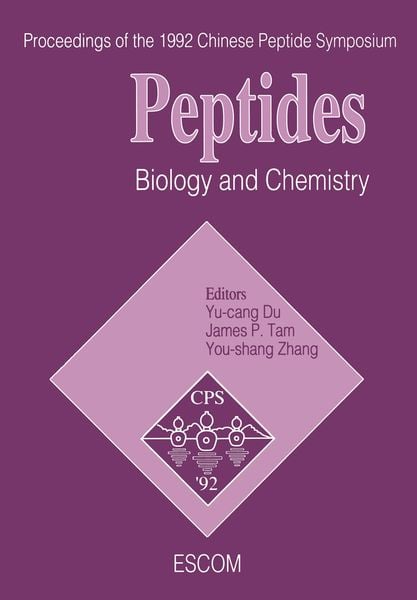
  • Produktbild: Peptides
  • Produktbild: Peptides
Band 5

Peptides Biology and Chemistry

Aus der Reihe Chinese Peptide Symposia

49,99 €

inkl. gesetzl. MwSt., Versandkostenfrei


Beschreibung

Produktdetails

Einband

Taschenbuch

Erscheinungsdatum

28.12.2011

Herausgeber

Yu-Cang Du + weitere

Verlag

Springer Netherland

Seitenzahl

352

Maße (L/B/H)

24,4/17/2 cm

Gewicht

615 g

Auflage

Softcover reprint of the original 1st ed. 1993

Sprache

Englisch

ISBN

978-94-010-9068-1

Beschreibung

Produktdetails

Einband

Taschenbuch

Erscheinungsdatum

28.12.2011

Herausgeber

Verlag

Springer Netherland

Seitenzahl

352

Maße (L/B/H)

24,4/17/2 cm

Gewicht

615 g

Auflage

Softcover reprint of the original 1st ed. 1993

Sprache

Englisch

ISBN

978-94-010-9068-1

Herstelleradresse

Springer-Verlag GmbH
Tiergartenstr. 17
69121 Heidelberg
DE

Email: ProductSafety@springernature.com

Noch keine Bewertungen vorhanden

Verfassen Sie die erste Bewertung zu diesem Artikel

Helfen Sie anderen Kundinnen und Kunden durch Ihre Meinung.

Kundinnen und Kunden meinen

Bewertungen (0)

  • Produktbild: Peptides
  • Produktbild: Peptides
  • Session I: Peptide hormones.- Insulin analogue with substitutions at the C-terminus of the A-chain.- Insulin and IGF-I analogs: novel approaches to improved insulin pharmacokinetics.- Preparation and properties of [B2,Lys]-insulin and [B3,Lys]-insulin.- Biological activities of thymopentin, tuftsin and neurotensin(8–13) are profoundly influenced by metabolites resulting from enzymatic degradation of their retro-inverso analogues.- Production of inhibin by human luteal cells.- Synthesis of B22 Asp human insulin and its biological activity.- High level expression of human insulin genes in Escherichia coli.- Preparation and properties of [des(B1–3),B4-pGlu]-insulin and [des(B1–4)]-insulin.- Semisynthesis of insulin/IGF-I hybrid from desalanylinsulin.- Insulin analogues with alteration at two regions of the A chain.- Angiotensin II in the myocardium and aging.- Preparation and identification of [B1,2-Ala, Ala]-insulin.- Session II: Neuropeptides.- Structure-activity studies of LHRH antagonists with side-chain modified D-Lysine in position 6.- Effect of GABA on LHRH release in median eminence of rats.- Melanotropic peptides for the identification, localization (imaging) and chemotherapy of melanoma.- Binding capability of ZNC(C)PR and its effects on potentiation of synaptic transmission in rat hippocampus.- Novel oxytocin antagonists.- Mechanisms underlying the anti-opioid effect of cholesystokinin octapeptide (CCK-8) in central nervous system.- B-50/GAP-43 mRNA expression in adult rat hippocampus.- Interaction of Met-enkephalin-Arg6-Phe7 with phosphatidylserine.- Effects of central and peripheral brain natriuretic peptide (BNP) on aldosterone secretion.- Synthesis of human growth hormone releasing factor (GHRF) analogue with high activity.- Pyrogenic effect and muramyl peptides.- The interactions between human recombinant interleukin-2 (hrIL-2) and opioid receptors.- Session III: Immunopeptides.- Design of HIV protease inhibitors based on the transition state concept.- Studies on the detection of antibodies of HIV-1 by synthetic peptides.- Conformational studies on synthetic peptides from the principal neutralizing domain of HIV-1 Gp120 that bind to CD4 and enhance viral infectivity.- Synthetic gp41 peptides as sensitive and specific diagnostic reagents in HIV-1 infection.- The sporozoite surface antigen 2 of plasmodium yoelii contains a T and B cell epitope cross reacting with the repetitive sequence of the Plasmodium falciparum circumsporozoite protein.- Comparison of the antigenic activity of five hendecapeptides on trichosanthin and ?-momorcharin.- Effects of methionine enkephalin on splenocytes proliferation and electrophoresis rate in liver impaired mice.- Evidence for in vitro effect of methionine enkephalin on macrophages from liver impaired mice.- Regulatory effects of substance p and somatostatin on natural killer activity and macrophage tumoricidal activity in vitro.- Knowledge-based computer modelling for the N-terminal domain of carcinoembryonic antigen(CEA).- Poly(ethylene glycol) hybrids of RGD and YIGSR and theirinhibitory effect on experimental metastasis.- Session IV: Receptor and regulation.- Oligomerization in vitro of the extracellular domain of the insulin receptor by non-covalent interactions is accompanied by increased binding affinity, decreased binding capacity and curvilinear Scatchard plots.- Synthesis and insulin-receptor binding activity of two insulin-related peptides.- The studies on synthesis, bioactivity and paramagnetism application of spin labelled angiotensin (AngII•R).- Insulin receptor binding, insulin receptor kinase activity, and stimulation of insulin-like growth factor II binding to isolated rat adipocytes.- Structure-function relationships in the thrombin receptor agonist peptides.- Melanotropic peptides and melanoma cell receptors.- Isolation and purification of ?-opioid binding protein from rat brain.- Recognition and binding of anti-idiotypic anti-ohmefentanyl antibody to ?-opioid receptor.- A nonlysosomal endocytic pathway of high density lipoprotein(HDL) by rat sinusoidal liver cell.- Characterization of insulin binding to rat spinal cord cell membrane.- Characterization of bacterial membrane transport peptides using toxophoric agent, N-OH-Ala.- Session V: New bioactive peptides.- Isolation and sequencing of a new active peptide from the skin of Chinese frog Rana Kuangwuensis.- The structure modifications and functions of P6A.- “Classical” and “non-classical” endothelin analogues.- Type 1 DNA topoisomerase-like activities of trichosanthin and momorcharin.- Purification and characterization of mammalian neurotoxins from the venom of the spider Selenocosmia huwena.- Antiplatelet and vasodilation effects of RGDS.- Studies on squash family protease inhibitors.- The function of vasoactive protected L-arginine.- Studies on the interconversions of the neuroexcitotoxin ?-N-oxalo-L-?, ?-diaminopropionic acid from Panax species and its isomer ?-N-oxalo-L-?, ?-diaminopropionic acid.- Somnogenic effects of isometric oxidized glutathione (IGSSG) and oxidized glutathione (GSSG) isolated from roots of panax ginseng(pg-r).- Session VI: Peptide conformation and mimetics.- The Insulin A and B chains contain sufficient structural information to form the native molecule.- The expansion of core group interaction that drives protein folding: A hypothesis based on the cytochrome c fragment complex.- The conformational restriction of synthetic peptides to the a-helix, reverse turn and loops with covalent hydrogen bond mimics.- Topographical considerations in computerized peptide design.- Main chain and side chain chiral methylated somatostatin analogs.- Importance of infra-chain ionic interactions in stabilizing ?-helices in proteins.- (?Me)Val and (?Me)Phe peptides fold into turns and helices of opposite handedness.- Conformational studies in solution on cyclolinopeptide A analogs. A 2D NMR study of cyclo{Pro1-Pro-phe-Phe-Ac6c-lle-ala-Va18}.- Conformational studies of a dodecacyclopeptide in solution.- Low temperature NMR studies of an antigentic peptide of trichosanthin.- Secondary structure transitions of trichosanthin fragment.- Studies on the conformation of HBeAg P3 peptide by NMR.- Structure-activity relationship studies of memory enhancing peptide ZNC(C)PR.- A new structural type of zinc insulin observed in a mutant of [A21, Ser]-human insulin.- Conformational analysis of dynorphin(1–13).- The synthesis and 2D NMR study of Deltorphins.- Session VII: Peptide synthesis.- The design and synthesis of glucagon antagonists.- Solid phase synthesis of cyclic peptides: effects of ring size on biological activity of growth hormone releasing factor.- Synthesis of muramyl peptides.- Synthesis of peptide fragment of the principal neutralizing determinant of HIV-1mn.- Synthesis and structure revision of the scorpion toxin noxiustoxin.- Synthesis and function of unclassical hormone.- Syntheses of iberiotoxin and its related peptides.- Partially protected peptide thioesters as building blocks for protein synthesis.- Kinetic investigation of the chromogenic peptide substrates for chymotrypsin.- Synthesis and kinetics of fluorogenic substrates containing 7-amino-4- methyl-coumarin.- Session VIII: Synthetic methodologies.- Improved synthesis of N-methyl arginine, N-methyl lysine and the ?CH2NH surrogates for solid phase peptide synthesis.- Application of BOP reagent in synthesis of head-to-tail cyclized peptide on solid supports.- Urethane n-carboxy anhydrides (UNCA’s) and “allyl” side-chain protection for efficient peptide synthesis.- Attachment of obstinate amino acid to the chloromethyl resin.- Novel cyclic organophosphorus compounds as coupling reagents for peptide synthdesis.- A novel Fmoc-based anchorage for the synthesis of protected peptide on solid phase.- Preparation and applications of xanthenylamide (XAL) handles for mild Fmoc solid-phase synthesis of C-terminal peptide amides.- Enzymatic synthesis of peptides using racemic amino acids as carboxyl components.- Exploratory studies on sequence-dependence in solid phase peptide synthesis.- Carboxyl catalyzed phosphoryl group migration in phosphorylated glutathion.- Application of BBC reagent for peptide synthesis.- Author index.