KI-Beratung Beta

Gutscheinbedingungen

**Gültig bis 09.11.2026 auf tolino shine color (4016621130473), tolino vision color (4016621130183) und tolino vision color weiß (4016621131456) online auf thalia.at, in der Thalia App und in allen Thalia Buchhandlungen in Österreich. In den Buchhandlungen nur gültig auf lagernde Ware. Pro Einkauf einmal einlösbar. Nur gültig gegen Vorlage oder im Onlineshop hinterlegter Bonuscard. Infos zur Einlösung in der Buchhandlung sind auf der Bonuscard-Vorteilspreisseite zu finden. Click & Collect nur bei Onlinevorabzahlung möglich. Keine Einlösung bei Scan & Go-Bezahlung. Keine Barauszahlung. Nicht kombinierbar mit anderen Aktionen und Gutscheinen. Nicht gültig für Geschenkkarten, Versandkosten und Services. Nur solange der Vorrat reicht.

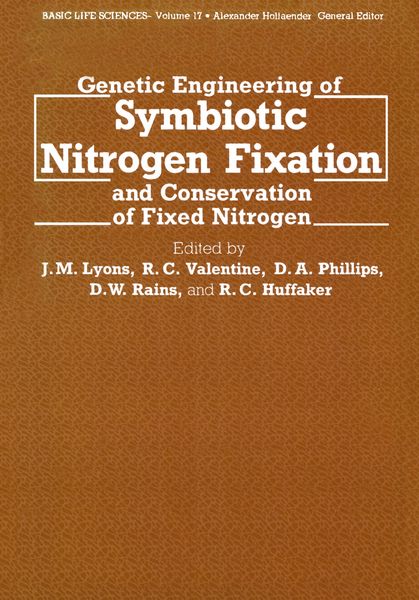
  • Produktbild: Genetic Engineering of Symbiotic Nitrogen Fixation and Conservation of Fixed Nitrogen
  • Produktbild: Genetic Engineering of Symbiotic Nitrogen Fixation and Conservation of Fixed Nitrogen
Band 17 - 12%

Genetic Engineering of Symbiotic Nitrogen Fixation and Conservation of Fixed Nitrogen

Aus der Reihe Basic Life Sciences
12% sparen

95,99 € UVP 109,99 €

inkl. gesetzl. MwSt., Versandkostenfrei


Beschreibung

Produktdetails

Einband

Taschenbuch

Erscheinungsdatum

29.03.2012

Abbildungen

XIV, 698 p.

Herausgeber

J. M. Lyons

Verlag

Springer Us

Seitenzahl

698

Maße (L/B/H)

24,4/17/3,9 cm

Gewicht

1213 g

Auflage

Softcover Reprint of the Original 1st 1981 edition

Sprache

Englisch

ISBN

978-1-4684-3955-7

Herstelleradresse

Libri GmbH
Europaallee 1
36244 Bad Hersfeld
DE

Email: gpsr@libri.de

Noch keine Bewertungen vorhanden

Verfassen Sie die erste Bewertung zu diesem Artikel

Helfen Sie anderen Kundinnen und Kunden durch Ihre Meinung.

Kundinnen und Kunden meinen

Bewertungen (0)

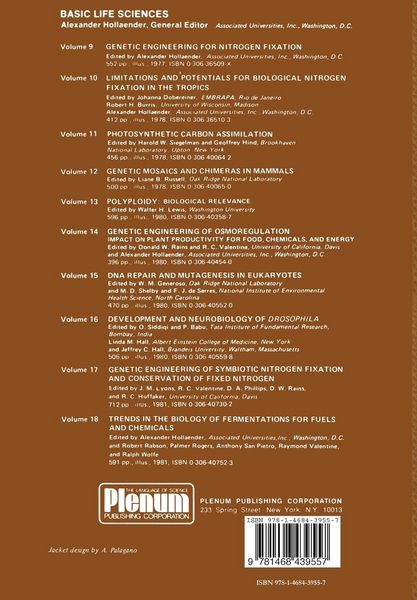
  • Produktbild: Genetic Engineering of Symbiotic Nitrogen Fixation and Conservation of Fixed Nitrogen
  • Produktbild: Genetic Engineering of Symbiotic Nitrogen Fixation and Conservation of Fixed Nitrogen
  • I. Introduction.- Prefatory Chapter: Enhancing Biological Production of Ammonia From Atmospheric Nitrogen and Soil Nitrate.- Support of Problem Focused Nitrogen Fixation Research at the National Science Foundation.- Biological Nitrogen Fixation Research at the University of California, Davis.- II. Genetics and Regulation of Nitrogen Fixation.- A. Molecular Cloning of Nitrogen Fixation Genes.- Molecular Cloning of Nitrogen Fixation Genes from Rhizobium meliloti.- Cloning DNA from Rhizobium meliloti Using a New Broad Host Range, Binary Vehicle System.- Molecular Cloning of Rhizobium japonicum DNA in E. coli and Identification of Nitrogen Fixation (Nif) Genes.- B. Genetics and Regulation of Nitrogen Fixation Genes.- The Identification, Location and Manipulation of Genes in Rhizobium.- The Role of Rhizobium Plasmids in Host Specificity.- “Redox Control” of Nitrogen Fixation: An Overview.- A Mutant of Rhizobium japonicum 110 with Elevated Nif Activity in Free-Living Culture.- C. Hydrogen Uptake and Energetics.- Detrimental and Beneficial Effects of Oxygen Exerted on Hydrogen-Oxidizing Bacteria.- Hydrogen Uptake (Hup) Plasmids: Characterization of Mutants and Regulation of the Expression of Hydrogenase.- Detection of Plasmids in Rhizobium japonicum.- Chemolithotrophy in Rhizobium.- Hydrogen Uptake (Hydrogenase) Activity of Rhizobium japonicum Strains Forming Nodules in Soybean Production Areas of the U.S.A.- D. Genetic Regulation of Stress Tolerance.- Proline Over-Production Enhances Nitrogenase Activity Under Osmotic Stress in Klebsiella pneumoniae.- Selection of Naturally Occurring Stress Tolerant Rhizobium.- III. Plant Factors Impacting Nitrogen Assimilation.- A. Measurements and Efficiency of N2 Fixation.- Evaluating Potentially Superior Rhizobium Strains inSoybeans.- Physiological Interactions Between Alaska Peas and Strains of Rhizobium leguminosarum That Differ in Plasmid-Like Genes.- Evaluating Elite Alfalfa Lines for N2-Fixation Under Field Conditions.- Successes and Problems Encountered While Breeding for Enhanced N2 Fixation in Alfalfa.- B. Photosynthesis and Nitrogen Utilization.- Biochemical Genetics of Ribulose Bisphosphate Carboxylase/Oxygenase: High Frequency Transfer and Chromosome Mobilization by Broad Host-Range R-Factors in CO2?Fixing Bacteria.- Photosynthetic Enzyme Regulation by the Ferredoxin/ Thioredoxin and the Ferralterin Mechanisms.- Regulation of Photosynthetic CO2 Fixation.- Hydrolysis of Ribulose-1, 5-Bisphosphate Carboxylase by Partially Purified Endoproteinases of Senescing Primary Barley Leaves.- The Relationship Between Ribulose Bisphosphate Carboxylase Concentration and Photosynthesis.- IV. Nitrogen Fixation by Nonlegumes.- Nitrogen Fixation by Cyanobacterial Heterocysts.- Photosynthate Limitation of Nitrogen Fixation in the Blue-Green Alga, Anabaena variabilis.- Physiological Studies on N2-Fixing Azolla.- Application of Azolla in Crop Production.- A New Woody Plant Which Fixes Nitrogen: Chamaebatia foliolosa (Rosaceae).- Soil Factors Limiting Nodulation and Nitrogen Fixation in Purshia.- V. Conservation of Fixed Nitrogen.- A. Denitrification.- Overview of Denitrification.- The Physiological Genetics of Denitrification in Pseudomonas.- On Regulating the Synthesis of Nitrate Reductase.- The Conversion of NO3? to NH4+ in Klebsiellapneumoniae.- Denitrification by the Photosynthetic Bacterium, Rhodopseudomonas sphaeroides Forma Sp. Denitrificans; Mechanism of Electron Transport to Nitrate and Nitrite Reduction.- Production of Nitrous Oxide as a Product of Nitrite Metabolism by EntericBacteria.- Use of Nitrogen-13 and Nitrogen 15 in Studies on the Dissimilatory Fate of Nitrate.- Soil Denitrification.- B. Acquisition and Assimilation of Plant Nitrogen.- Nitrate Transport Processes and Compartmentation in Root Systems.- Reduction of Nitrate and Nitrite in Barley Leaves in Darkness.- Influence of Light and CO2 on Nitrate Assimilation by Barley Seedlings.- Light Interaction With Nitrate Reduction.- Interaction Between NO3?, NO2?, and NH4+ During Assimilation in Detached Barley Leaves.- Vacuolar Nitrate and the Isolation of Vacuoles for Localization and Transport Studies.- The Effect of pH, Temperature, and NO3? Concentration on NH4+ Absorption and N2 (C2H2)- Fixation by Soybeans.- Recurrent Divergent and Mass Selections in Maize With Physiological and Biochemical Traits: Preliminary and Projected Application.- Inheritance of Nitrate Reductase.- Modelling Dynamic Aspects of Nitrogen in Soils and Plants.- Integration of Nitrate and Ammonium Assimilation in Higher Plants.- A New Approach to the Analysis of Reductive and Dissipative Costs in Nitrogen Assimilation.- Strategies for Achieving Self Sufficiency in Nitrogen on a Mixed Farm in Eastern Canada Based on Use of the Faba Bean.- List of Participants.