Gutscheinbedingungen

**Gültig bis 06.07.2026 auf fremdsprachige Bücher online auf thalia.at, in der Thalia App ab einem Mindestbestellwert von 30€ und in allen Thalia Buchhandlungen in Österreich. In den Buchhandlungen nur gültig auf lagernde Ware. Einzelne Artikel können ausgeschlossen sein. Ausgenommen sind preisgebundene Artikel & eBooks. Pro Einkauf einmal einlösbar. Nur gültig gegen Vorlage oder im Onlineshop hinterlegter Bonuscard. Infos zur Einlösung in der Buchhandlung sind auf der Bonuscard-Vorteilspreisseite zu finden. Click & Collect nur bei Onlinevorabzahlung möglich. Keine Einlösung bei Scan & Go-Bezahlung. Keine Barauszahlung. Nicht kombinierbar mit anderen Aktionen und Gutscheinen. Gutschein wird auf max. 500€ Bestellwert angerechnet. Nicht gültig für Versandkosten und Services.

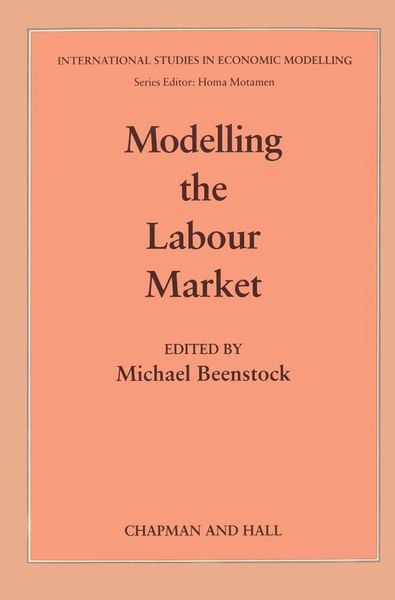
  • Produktbild: Modelling the Labour Market
  • Produktbild: Modelling the Labour Market

Modelling the Labour Market

49,99 €

inkl. gesetzl. MwSt., Versandkostenfrei


Beschreibung

Produktdetails

Einband

Taschenbuch

Erscheinungsdatum

30.10.2011

Herausgeber

Michael Beenstock

Verlag

Springer Netherland

Seitenzahl

206

Maße (L/B/H)

23,5/15,5/1,3 cm

Gewicht

347 g

Auflage

Softcover reprint of the original 1st ed. 1988

Sprache

Englisch

ISBN

978-94-010-7035-5

Beschreibung

Produktdetails

Einband

Taschenbuch

Erscheinungsdatum

30.10.2011

Herausgeber

Michael Beenstock

Verlag

Springer Netherland

Seitenzahl

206

Maße (L/B/H)

23,5/15,5/1,3 cm

Gewicht

347 g

Auflage

Softcover reprint of the original 1st ed. 1988

Sprache

Englisch

ISBN

978-94-010-7035-5

Herstelleradresse

Springer-Verlag KG
Sachsenplatz 4-6
1201 Wien
AT

Email: GPSR Kontakt

Noch keine Bewertungen vorhanden

Verfassen Sie die erste Bewertung zu diesem Artikel

Helfen Sie anderen Kundinnen und Kunden durch Ihre Meinung.

Kundinnen und Kunden meinen

Bewertungen (0)

  • Produktbild: Modelling the Labour Market
  • Produktbild: Modelling the Labour Market
  • 1 The labour market: theory and experience.- 1.1 The concept of the labour market.- 1.2 The supply and demand for labour.- 1.3 Models of unemployment.- 1.4 Macroeconomics and the labour market.- 1.5 The Phillips curve and the NAIRU.- 1.6 Some features of the data.- References.- 2 Some formal models of the aggregate labour market.- 2.1 Introduction.- 2.2 Labour demand.- 2.3 Some formal models.- Appendix A.- References.- 3 The disequilibrium approach to modelling the labour market.- 3.1 Introduction.- 3.2 The multimarket non-clearing model.- 3.3 The labour market in disequilibrium.- 3.4 Empirical results.- 3.5 Policy implications.- 3.6 Conclusions.- References.- 4 A neoclassical model of the UK labour market.- 4.1 Introduction.- 4.2 Theory.- 4.3 Econometric results.- 4.4 Simulations.- Appendix A.- References.- 5 A new classical model of the labour marketg.- 5.1 The model in outline.- 5.2 The labour market in detail.- 5.3 The demand for labour.- 5.4 Responses to critics.- 5.5 Conclusions.- Acknowledgement.- References.- 6 Imperfect competition and the labour market.- 6.1 Introduction.- 6.2 Price and employment behaviour.- 6.3 Wage determination.- 6.4 The labour market in a macromodel.- 6.5 Empirical analysis of the British labour market.- 6.6 Summary and conclusions.- References.- 7 An international perspective.- 7.1 Introduction.- 7.2 Multi-country studies: some comments.- 7.3 Selected applications of labour market models.- 7.4 Multi-country studies: some examples.- 7.5 Institutional characteristics.- 7.6 Concluding comments.- Acknowledgements.- References.