• Produktbild: Integrated Solid Waste Management: A Lifecycle Inventory
  • Produktbild: Integrated Solid Waste Management: A Lifecycle Inventory
- 13%

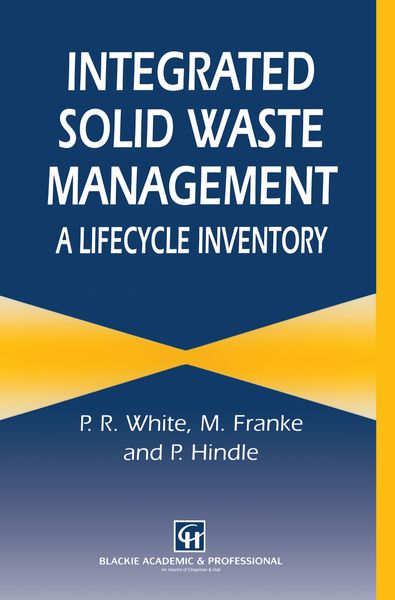
Integrated Solid Waste Management: A Lifecycle Inventory

13% sparen

85,99 € UVP 98,99 €

inkl. gesetzl. MwSt., Versandkostenfrei


Beschreibung

Produktdetails

Einband

Taschenbuch

Erscheinungsdatum

14.03.2012

Verlag

Springer Us

Seitenzahl

404

Maße (L/B/H)

23,5/15,5/2,1 cm

Gewicht

581 g

Auflage

Softcover reprint of the original 1st ed. 1995

Sprache

Englisch

ISBN

978-1-4684-6707-9

Beschreibung

Produktdetails

Einband

Taschenbuch

Erscheinungsdatum

14.03.2012

Verlag

Springer Us

Seitenzahl

404

Maße (L/B/H)

23,5/15,5/2,1 cm

Gewicht

581 g

Auflage

Softcover reprint of the original 1st ed. 1995

Sprache

Englisch

ISBN

978-1-4684-6707-9

Herstelleradresse

Springer-Verlag KG
Sachsenplatz 4-6
1201 Wien
AT

Email: GPSR Kontakt

Noch keine Bewertungen vorhanden

Verfassen Sie die erste Bewertung zu diesem Artikel

Helfen Sie anderen Kundinnen und Kunden durch Ihre Meinung.

Kundinnen und Kunden meinen

Bewertungen (0)

  • Produktbild: Integrated Solid Waste Management: A Lifecycle Inventory
  • Produktbild: Integrated Solid Waste Management: A Lifecycle Inventory
  • 1 Introduction.- Summary.- 1.1 What is waste?.- 1.2 Environmental concerns.- 1.2.1 Conservation of resources.- 1.2.2 Pollution.- 1.3 Environmental objectives.- 1.4 Current approaches: legislation.- 1.4.1 End-of-pipe regulations.- 1.4.2 Strategic targets.- 1.5 Economic costs of environmental improvements.- 1.6 An integrated approach to solid waste management.- References.- 2 Integrated waste management.- Summary.- 2.1 Basic requirements.- 2.1.1 Less waste.- 2.1.2 Effective solid waste management.- 2.2 Waste management systems.- 2.2.1 Characteristics of an effective system.- 2.2.2 The importance of an holistic approach.- 2.2.3 A total quality system.- 2.3 A hierarchy of waste management options?.- 2.4 Modelling waste management.- 2.4.1 Why model?.- 2.4.2 Previous modelling of waste management.- 2.4.3 Using lifecycle assessment for waste.- References.- 3 Lifecycle inventory: a part of lifecycle assessment.- Summary.- 3.1 What is lifecycle assessment?.- 3.2 Benefits of the lifecycle approach.- 3.3 Structure of a lifecycle assessment.- 3.3.1 Goal definition.- 3.3.2 Inventory.- 3.3.3 Impact analysis.- 3.3.4 Valuation.- 3.4 Current state of development.- 3.5 Environmental and economic lifecycle assessments.- 3.6 Lifecycle inventory in reverse.- References.- 4 A lifecycle inventory of solid waste.- Summary.- 4.1 Integrated waste management and lifecycle inventory.- 4.2 A lifecycle inventory of waste.- 4.2.1 Goal definition.- 4.2.2 The inventory stage.- 4.2.3 Results of the model: system inputs and outputs.- 4.2.4 Fuel and electricity consumption in the lifecycle of solid waste.- 4.3 The economic LCI.- 4.4 The computer spreadsheet.- 4.5 The relationship between a lifecycle inventory for waste and product or packaging lifecycle inventories.- References.- 5 Solid waste generation.- Summary.- 5.1 Introduction.- 5.2 Solid waste generation in Europe.- 5.3 Solid wastes dealt with in this study.- 5.4 Quantities of municipal solid waste (MSW) generated.- 5.5 Composition of MSW.- 5.5.1 By source.- 5.5.2 By materials.- 5.5.3 By chemical composition.- 5.6 Variability in MSW generation.- 5.7 Effects of source reduction.- 5.8 MSW classification: need for standardisation.- 5.9 MSW analysis methods.- 5.10 Defining the waste input for the LCI computer spreadsheet.- 5.10.1 Data sources.- 5.10.2 Classification of solid waste used in the lifecycle inventory.- 5.10.3 Operation of the waste input module of the LCI spreadsheet.- References.- 6 Pre-sorting and waste collection.- Summary.- 6.1 Introduction.- 6.2 Home sorting.- 6.3 Bring versus kerbside collection systems.- 6.4 Collection systems.- 6.4.1 Dry recyclable materials.- 6.4.2 Biowaste and garden waste.- 6.4.3 Hazardous materials in household waste.- 6.4.4 Bulky waste.- 6.4.5 Restwaste.- 6.5 Integrated collection schemes.- 6.6 Environmental impacts.- 6.6.1 Transport impacts.- 6.6.2 Other impacts.- 6.7 Economic costs.- 6.7.1 Material bank systems.- 6.7.2 Kerbside collection systems.- 6.8 Operation of the collection module of the LCI spreadsheet.- References.- 7 Central sorting.- Summary.- 7.1 Introduction.- 7.2 Central sorting of recyclables at a materials recovery facility (MRF).- 7.3 Sorting of mixed waste for refuse-derived fuel (RDF).- 7.4 Environmental impacts: input-output analysis.- 7.4.1 MRF sorting.- 7.4.2 RDF sorting.- 7.5 Economic costs.- 7.5.1 MRF sorting.- 7.5.2 RDF sorting.- 7.6 Operation of the central sorting module of the LCI spreadsheet.- References.- 8 Materials recycling.- Summary.- 8.1 Introduction.- 8.2 Materials recycling processes.- 8.2.1 Transportation.- 8.2.2 Paper and board.- 8.2.3 Glass.- 8.2.4 Ferrous metal.- 8.2.5 Non-ferrous metal.- 8.2.6 Plastic.- 8.2.7 Textiles.- 8.3 Environmental impacts: input-output analysis.- 8.3.1 Transport.- 8.3.2 Paper.- 8.3.3 Glass.- 8.3.4 Ferrous metal.- 8.3.5 Aluminium.- 8.3.6 Plastics.- 8.3.7 Textiles.- 8.4 Economic costs.- 8.5 Operation of the materials recycling module of the LCI spreadsheet.- References.- 9 Biological treatment.- Summary.- 9.1 Introduction.- 9.2 Biological treatment objectives.- 9.2.1 Pre-treatment for disposal.- 9.2.2 Valorisation.- 9.3 Overview of biological treatment in Europe.- 9.4 Biological treatment processes.- 9.4.1 Pre-treatment.- 9.4.2 Aerobic processing: composting.- 9.4.3 Anaerobic processing: biogasification.- 9.5 Compost markets.- 9.6 Compost standards.- 9.7 Environmental impacts: input-output analysis.- 9.7.1 Defining the system boundaries.- 9.7.2 Inputs.- 9.7.3 Outputs.- 9.7.4 Other considerations.- 9.8 Economic costs.- 9.9 Operation of the biological treatment module of the LCI spreadsheet.- References.- 10 Thermal treatment.- Summary.- 10.1 Introduction.- 10.2 Thermal treatment objectives.- 10.3 Current state of thermal treatment in Europe.- 10.4 Mass burn incineration of MSW.- 10.4.1 The incineration process.- 10.4.2 Energy recovery.- 10.4.3 Emission control.- 10.4.4 Treatment of solid residues.- 10.5 Burning of refuse-derived fuel.- 10.6 Burning of source-separated paper and plastic.- 10.7 Emission limits.- 10.8 Public acceptability.- 10.9 Environmental impacts: input-output analysis.- 10.9.1 Defining the system boundaries.- 10.9.2 Data availability.- 10.9.3 Inputs.- 10.9.4 Outputs.- 10.10 Economic costs of thermal treatment.- 10.11 Operation of the thermal treatment module of the LCI spreadsheet.- References.- 11 Landfilling.- Summary.- 11.1 Introduction.- 11.2 Landfilling objectives.- 11.3 Current landfilling activity in Europe.- 11.4 Landfilling methods.- 11.5 Environmental impacts: input-output analysis.- 11.5.1 Landfill inputs.- 11.5.2 Landfill outputs.- 11.6 Economic costs.- 11.7 Operation of the landfilling module of the LCI spreadsheet.- References.- 12 The overall picture.- 12.1 Introduction.- 12.2 From lifecycle inventory results to sustainability.- 12.3 Making comparisons.- 12.4 A case study.- 12.5 Identifying improvement opportunities.- 12.5.1 The importance of operations in the home.- 12.5.2 System improvements.- 12.6 Future directions.- 12.7 Operating the IWM-1 LCI spreadsheet.- References.- Postscript.- Appendix 1 — Secondary materials nomenclature.- Appendix 2 — Waste analysis procedure.- Appendix 3 — Programme ratios.- Appendix 4 — Terms and definitions.- Appendix 5 — Currency conversion values.- Appendix 6 — How to use IWM-LCI spreadsheet.- Indexes.- Figures.- Tables.- Boxes.- LCI Boxes.- LCI Data Boxes.- Subjects.- Authors cited.