
KI-Beratung Beta

Gutscheinbedingungen

**Gültig bis 30.11.2026 auf Spielzeug, Schreibwaren, Filme, Geschenke & Trends, Musik, tolino eReader & Zubehör, Hörbücher und Hörbuch-Downloads, nicht preisgebundene Bücher und Kalender online auf thalia.at und in der Thalia App. Einzelne Artikel können ausgeschlossen sein. Aufgrund der Buchpreisbindung sind deutschsprachige Bücher und eBooks ausgenommen. Zusätzlich ausgenommen sind Abos & Flatrates, Games, Geschenkkarten/-boxen, Shelfies, Software, Zeitschriften sowie einzelne Artikel von tonies®. Pro Einkauf einmal einlösbar. Nur gültig mit im Onlineshop hinterlegter Bonuscard. Click & Collect nur bei Onlinevorabzahlung möglich. Keine Barauszahlung. Nicht kombinierbar mit anderen Aktionen und Gutscheinen. Gutschein wird auf max. 500€ Bestellwert angerechnet. Nicht gültig für Versandkosten und Services.

  • Produktbild: The Child’s Representation of the World
  • Produktbild: The Child’s Representation of the World

The Child’s Representation of the World

51,99 €

inkl. gesetzl. MwSt., Versandkostenfrei


Beschreibung

Although central to theories of cognitive development, the concept of representation remains subtle and elusive. This collection of papers reflects a variety of individual emphases, none of which are mutually exclusive. The papers have been arranged in four groups, mainly along lines of related subject...

Beschreibung

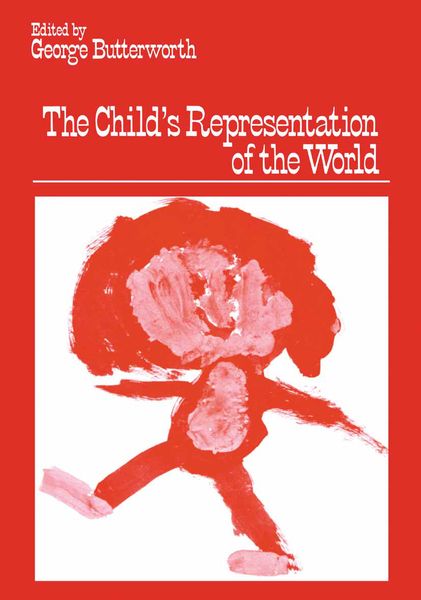
Although central to theories of cognitive development, the concept of representation remains subtle and elusive. This collection of papers reflects a variety of individual emphases, none of which are mutually exclusive. The papers have been arranged in four groups, mainly along lines of related subject matter but also to illustrate different aspects of the development of representation. In Piaget's theory, representation is defined as "the making present of an object which is not present to the senses" (Furth 1969). Representation has both a figurative and an operative aspect. The organisation of the content of the representation (the figurative aspect) depends on the operations of thought or on the schemes co-ordinating action. This use of the term is applic able both to internal representations, such as visual images and to external representation, such as children's drawings. However, it presupposes no necessary relation between a mental image and a graphic representation. The first part of the book consists of papers on children's drawing. The operative aspect of representation emerges in the serial ordering problems encountered by young children who produce "tadpole" figures (Freeman Chapter 1). The figurative aspect of graphic representation is vividly illustrated by the drawings of the autistic child Nadia (Selfe Chapter 2). One further issue which emerges concerns the relation between linguistic and graphic representation.

Produktdetails

Einband

Taschenbuch

Erscheinungsdatum

13.03.2012

Abbildungen

XII, 240 p.

Herausgeber George Butterworth

Produktdetails

Einband

Taschenbuch

Erscheinungsdatum

13.03.2012

Abbildungen

XII, 240 p.

Herausgeber George Butterworth
Verlag Springer Us
Seitenzahl

240

Maße (L/B/H)

25,4/17,8/1,4 cm

Gewicht

482 g

Sprache

Englisch

ISBN

978-1-4684-2351-8

Herstelleradresse

Springer-Verlag GmbH
Tiergartenstr. 17
69121 Heidelberg
DE

Email: ProductSafety@springernature.com

Noch keine Bewertungen vorhanden

Verfassen Sie die erste Bewertung zu diesem Artikel

Helfen Sie anderen Kundinnen und Kunden durch Ihre Meinung.

Kundinnen und Kunden meinen

Bewertungen (0)

  • Produktbild: The Child’s Representation of the World
  • Produktbild: The Child’s Representation of the World
  • I Children’s Drawing.- 1. How Young Children Try to Plan Drawings.- 2. A Single Case Study of an Autistic Child with Exceptional Drawing Ability.- 3. Production Strategies in the Child’s Drawing of the Human Figure: Towards an Argument for a Model of Syncretic Perception.- 4. A Discussion of Some Sex Differences in a Study of Human Figure Drawings by Children Aged Four-and-a-half to Seven-and-a-half Years.- 5. Naming of Parts: How Children Describe and How Children Draw Common Objects.- II The Child’s Perception and Representation of Space.- 6. The Child’s Representation of Space.- 7. Training Perspective Ability in Young Children.- 8. Scanning Strategies of Children and Adults.- 9. Spatial Representation by Blind and Sighted Children.- 10. “I’m coming to get you: Ready! Steady! Go!” The Development of Communication Between a Blind Infant and His Parents.- III Personality and Representational Style.- 11. Rational and Intuitive Frames of Reference.- IV Philosophical and Cross-cultural Aspects of Representation.- 12. Representation: The Philosophical Contribution to Psychology.- 13. How Children Learn to Represent Three-dimensional Space in Drawings.- 14. Pictorial Recognition as an Unlearned Ability.- 15. Pictures, Symbols and Frames of Reference.