Gutscheinbedingungen

**Gültig bis 25.06.2026 auf fremdsprachige Bücher online auf thalia.at und in der Thalia App. Einzelne Artikel können ausgeschlossen sein. Ausgenommen sind preisgebundene Artikel & eBooks. Pro Einkauf einmal einlösbar. Click & Collect nur bei Onlinevorabzahlung möglich. Keine Barauszahlung. Nicht kombinierbar mit anderen Aktionen und Gutscheinen. Gutschein wird auf max. 500€ Bestellwert angerechnet. Nicht gültig für Geschenkkarten, Versandkosten und Services.

  • Produktbild: Connectionism in Context
  • Produktbild: Connectionism in Context

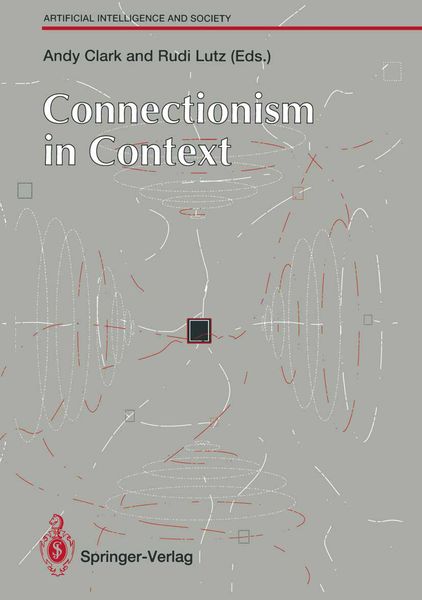
Connectionism in Context

Aus der Reihe Human-centred Systems

51,99 €

inkl. gesetzl. MwSt., Versandkostenfrei


Beschreibung

Produktdetails

Einband

Taschenbuch

Erscheinungsdatum

25.02.1992

Herausgeber

Andy Clark + weitere

Verlag

Springer Berlin

Seitenzahl

181

Maße (L/B/H)

24,2/17/1,1 cm

Gewicht

339 g

Auflage

1st Edition.

Sprache

Englisch

ISBN

978-3-540-19716-4

Beschreibung

Produktdetails

Einband

Taschenbuch

Erscheinungsdatum

25.02.1992

Herausgeber

Verlag

Springer Berlin

Seitenzahl

181

Maße (L/B/H)

24,2/17/1,1 cm

Gewicht

339 g

Auflage

1st Edition.

Sprache

Englisch

ISBN

978-3-540-19716-4

Herstelleradresse

Springer-Verlag KG
Sachsenplatz 4-6
1201 Wien
AT

Email: ProductSafety@springernature.com

Kundinnen und Kunden meinen

0 Bewertungen

Informationen zu Bewertungen

Zur Abgabe einer Bewertung ist eine Anmeldung im Konto notwendig. Die Authentizität der Bewertungen wird von uns nicht überprüft. Wir behalten uns vor, Bewertungstexte, die unseren Richtlinien widersprechen, entsprechend zu kürzen oder zu löschen.

Die Bewertungen sind nach Format, Anzahl Sterne und Datum sortiert.

Verfassen Sie die erste Bewertung zu diesem Artikel

Helfen Sie anderen Kund*innen durch Ihre Meinung

Kundinnen und Kunden meinen

0 Bewertungen filtern

  • Produktbild: Connectionism in Context
  • Produktbild: Connectionism in Context
  • 1. Introduction.- Architecture and Properties l.- A Copernican Revolution.- Distributed Representations and Context Dependence.- The Nature of Thought.- 2. Action, Connectionism and Enaction: A Developmental Perspective.- Background.- Symbols, Connectionism and Innate Knowledge.- System Scale and the Control of Action.- Development, Emergence and Enaction.- Conclusion.- 3. Connectionism and Why Fodor and Pylyshyn Are Wrong.- The Case Against Connectionism.- Fodor and Pylyshyn’s Four Conditions.- Systems that Satisfy these Conditions.- Fodor and Pylyshyn’s Argument.- What’s Wrong with this Argument.- What’s Wrong with Premise (T3)?.- What’s Wrong with Premise (T2)?.- What’s Wrong with Premise (T1).- What’s Wrong with this Defence?.- The Turing Machine Paradigm.- Minds as Semiotic Systems.- Cognitive Architecture.- On Behalf of Neural Networks.- Dispositions and Predispositions.- The Proper Comparison.- 4. Connectionism, Classical Cognitive Science and Experimental Psychology.- Classicism Versus Connectionism.- The Psychological Data.- Memory.- Inference.- Theory.- Memory.- Inference.- Modelling.- Memory.- Inference.- Conclusions.- 5. Connecting Object to Symbol in Modelling Cognition.- Symbol Systems.- The Symbolic Theory of Mind.- The Symbol Grounding Problem.- Neural Nets.- Transducers and Analogue Transformations.- Robotic Capacities: Discrimination and Identification.- Philosophical Objections to Bottom-Up Grounding of Concrete and Abstract Categories.- Categorical Perception and Category-Learning.- Neural Net and CP.- Analogue Constraints on Symbols.- 6 Active Symbols and Internal Models: Towards a Cognitive Connectionism.- Criticisms of Connectionism.- Connectionism Equals Behaviourism.- Are FFPA Models Behaviourist?.- Connectionism Equals Associationism.- The Active Symbol.- Active Symbols and Control Mechanisms.- Symbol Formation and Properties.- Higher-Level Processes.- First-Order Knowledge Structures.- Second-Order Knowledge Structures.- Toward Structure-Sensitive Operations.- Summary and Concluding Remarks.- The Continuum of Cognitive Models.- Logic, Difficulty and Adaptation.- 7. Thinking Persons and Cognitive Science.- Extending Content.- The Credentials of Cognition.- Consciousness and What It Is Like.- Conceptualized Content and the Structure of Thinking.- Inference and Causal Systernaticity.- Reconstructing the Mind.- 8. A Brief History of Connectionism and Its Psychological Implications.- Connectionist Assumptions in Earlier Psychologies.- Spencer’s Principles of Psychology (1855/1899).- William James’ Principles of Psychology.- Thorndike’s Connectionism.- Pavlov’s Theory of the Cerebral Cortex.- Watsonian and Skinnerian Behaviourism.- Hullian Stimulus—Response Theory.- Comparisons of Old and New Connectionism.- Neural Plausibility.- Thought and the Thinking Self.- Empiricism.- Practical Implications of Connectionism.- Conclusions.- 9. Connectionism and Artificial Intelligence as Cognitive Models.- Artificial Intelligence.- Level of Explanation.- Processing Style.- Representational Structure.- Connectionism.- Classification of Neural Networks.- Level of Explanation.- Processing Style.- Representational Structure.- Classical AI and Connectionism.- Segregation.- Compilation.- Hybridization.- Subsumption.- 10. The Neural Dynamics of Conversational Coherence.- Previous Research.- Conversation Analysis: Sequencing Rules Approach.- Speech Acts.- Computational Models.- A Neurally Inspired Model of Coherence.- Some Experimental Results.- How Associative Is Conversation?.- Final on the Purpose of Conversation.