Gutscheinbedingungen

**Gültig von 22.06.2026 ab 19 Uhr bis 23.06.2026 24 Uhr auf Spielzeug, Schreibwaren, Filme, Geschenke & Trends, Musik, tolino eReader & Zubehör, Hörbücher und Hörbuch-Downloads (außer Abo), nicht preisgebundene Bücher und Kalender online auf thalia.at und in der Thalia App. Einzelne Artikel können ausgeschlossen sein. Aufgrund der Buchpreisbindung sind deutschsprachige Bücher und eBooks ausgenommen. Zusätzlich ausgenommen sind preisgebundene Artikel, Abos & Flatrates, eBooks, Games, Geschenkkarten/-boxen, Shelfies, Software, Zeitschriften sowie einzelne Artikel von tonies®. Pro Einkauf einmal einlösbar. Click & Collect nur bei Onlinevorabzahlung möglich. Keine Barauszahlung. Nicht kombinierbar mit anderen Aktionen und Gutscheinen. Gutschein wird auf max. 500€ Bestellwert angerechnet. Nicht gültig für Versandkosten und Services.

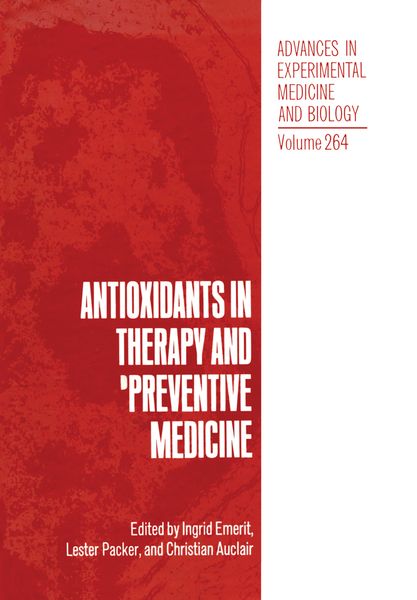
  • Produktbild: Antioxidants in Therapy and Preventive Medicine
  • Produktbild: Antioxidants in Therapy and Preventive Medicine
Band 264

Antioxidants in Therapy and Preventive Medicine

99,99 €

inkl. gesetzl. MwSt., Versandkostenfrei


Beschreibung

Produktdetails

Einband

Taschenbuch

Erscheinungsdatum

03.04.2012

Herausgeber

Ingrid Emerit + weitere

Verlag

Springer Us

Seitenzahl

608

Maße (L/B/H)

25,4/17,8/3,3 cm

Gewicht

1134 g

Auflage

Softcover reprint of the original 1st ed. 1990

Sprache

Englisch

ISBN

978-1-4684-5732-2

Beschreibung

Produktdetails

Einband

Taschenbuch

Erscheinungsdatum

03.04.2012

Herausgeber

Verlag

Springer Us

Seitenzahl

608

Maße (L/B/H)

25,4/17,8/3,3 cm

Gewicht

1134 g

Auflage

Softcover reprint of the original 1st ed. 1990

Sprache

Englisch

ISBN

978-1-4684-5732-2

Herstelleradresse

Springer-Verlag GmbH
Tiergartenstr. 17
69121 Heidelberg
DE

Email: ProductSafety@springernature.com

Kundinnen und Kunden meinen

0 Bewertungen

Informationen zu Bewertungen

Zur Abgabe einer Bewertung ist eine Anmeldung im Konto notwendig. Die Authentizität der Bewertungen wird von uns nicht überprüft. Wir behalten uns vor, Bewertungstexte, die unseren Richtlinien widersprechen, entsprechend zu kürzen oder zu löschen.

Die Bewertungen sind nach Format, Anzahl Sterne und Datum sortiert.

Verfassen Sie die erste Bewertung zu diesem Artikel

Helfen Sie anderen Kund*innen durch Ihre Meinung

Kundinnen und Kunden meinen

0 Bewertungen filtern

  • Produktbild: Antioxidants in Therapy and Preventive Medicine
  • Produktbild: Antioxidants in Therapy and Preventive Medicine
  • Superoxide Dismutase.- Extracellular Superoxide Dismutase: Distribution in the Body and Therapeutic Applications.- Targeting SOD by Gene and Protein Engineering and Inhibition of Oxidative Stress in Various Diseases.- The Role of Superoxide Dismutase (SOD) in Preventing Postischemic Spinal Cord Injury.- SOD in Rat Models of Shock and Organ Failure.- The Protective Role of Superoxide Dismutase During Activation of Ribonucleotide Reductase.- Effect of Superoxide Dismutase on the Autoxidation of Hydroquinones Formed during DT-Diaphorase Catalysis and Glutathione Nucleophilic Addition.- Copper Complexes And Other Sod Mimicks.- Superoxide Scavengers and SOD or SOD Mimicks.- Reactivity of Active Centre Analogues of Cu2Zn2 Superoxi de Di smutase.- SOD Mimicking Properties of Copper(II) Complexes: Health Side Effects.- Radiation Recovery Agents: Cu(II), Mn(II), Zn(II) or Fe(III) 3,5-Diisopropylsalicylate Complexes Facilitate Recovery from Ionizing Radiation Induced Radical Medi ated Ti ssue Damage.- Effects of Glycyl-Histidyl-Lysyt Chelated Cu(II) on Ferritin Dependent Lipid Peroxidation.- SOD-Like Activity of 5-Membered Ring Nitroxide Spin Labels.- Antioxidant Vitamins.- Vitamin E in Biological Systems.- The Role of Vitamine E in the Hepatotoxicity by Glutathione Depleting Agents.- Regulation of Lipid Peroxidation by Glutathione and Lipoic Acid: Involvement of Liver Microsomal Vitamin E free radical reductase.- Quenching of Singlet Oxygen by Tocopherols.- Antioxidant Properties of Vitamin E and Membrane Permeability in Human Fibroblast Cultures.- Vitamin E and Tumor Growth.- Abnormal Susceptibility to Lipid Peroxidation of Plasma LDL and its Prevention by Alpha-Tocopherol during Experimental Cholestasis in the Rat.- The Role of Oxidative Modification and Antioxidants in LDL Metabolism and Atherosclerosis.- Effects of Vitamin E Treatment in Cholestatic Children.- Efficacy of Vitamin E as a Drug in Inflammatory Joint Diseases.- Vitamin E and Correlated Antioxidants: A ? Radiolysis Study.- Ascorbate: The Most Effective Antioxidant in Human Plasma.- Other Natural And Synthetic Antioxidants.- Radical Chemistry of Flavonoid Antioxidants.- Scavenging Effects of Aspalathus Linealis (Rooibos Tea) on Active Oxygen Species.- Selenium and Oxidant Injury in Patients with Cystic Fibrosis.- Selenium and Glutathione Peroxidase Activity in Diploid Human Fibroblasts. Their Effects against H2O2 or UVB Induced Toxicity.- Selenium Therapy in Down Syndrome. A Theory and a Clinical Trial.- Protection by Seleno-Organic Compound, Ebselen, against Acute Gastric Mucosal Injury Induced by Ischemia Reperfusion in Rats.- Biological Activities and Clinical Potential of Ebselen.- Glutathione Level in Mouse Brain after Testosterone Administration..- Prostaglandins, Glutathione Metabolism and Lipid Peroxidation in Relation to Inflammation in Bovine Mastitis.- Sulfur Containing Compounds as Antioxidants.- Zinc, a Redox-Inactive Metal Provides a Novel Approach for Protection against Metal-Mediated Free Radical Induced Injury: Study of Paraquat Toxicity in E.coli.- Antioxidative Action of Zinc-Carnosine Compound Z-103.- High Molecular Weight Forms of Deferoxamine: Novel Therapeutic Agents for Treatment of Iron Mediated Tissue Injury.- Oxygen Toxicity: Role of Hydrogen Peroxide and Iron.- Antioxidant Properties of an Antiischaemic Agent: Trimetazidine.- Oxidative Damage in Chronic Heart Failure: Protection by Captopril through Free Radical Scavenging?.- Free Radical Scavenging Capacity and Anti-Inflammatory Activity of CBS-113 A.- Mechanism, whereby Different Antioxidants and Lipoxy- genase Pathway Inhibitors Suppress IL2 Synthesis.- Reactive Oxygen Species Released by Human Blood neutrophils from Pi roxi cam-Treated Healthy Subjects.- Antioxidative properties of met- and leu-Enkephalin.- Platelet-Activating Factor Amplifies Tumour Necrosis Factor-Induced Superoxide Generation by Human Neut rophi Is.- Comparison of Antioxidant and Prooxidant Activity of Various Synthetic Antioxidants.- Radiation And Chemotherapy.- Antioxidant Effects in Radioprotection.- Nuclear Glutathione Transferases which Detoxify Irradiated DNA.- Urinary Biomarkers in Radiation Therapy of Cancer.- Redox Parameters Associated to Cytotoxic and Antitumor Activities in the Series of Antitumor Drugs Ellipticines and Derivatives.- Peroxidase Induced Metabolism and Lipid Peroxide Scavenging by Antitumor Agents.- Reduction of Toxicity and Increase of Antitumor Effect of Adriamycin by N-Acyl Dehydroalanînes: a New Family of Free Radical Scavengers.- Inhibition of Bleomycin-Induced Toxic Effects by Anti- Oxidants in Human Malignant Melanoma Cells.- Are Oxygen Radicals Responsible for the Acute Cardio- Toxicity of Doxorubicin?.- Influence of Selenium on Lipid Peroxidation and Cardiac Functions in Chronically Adriamycin-Treated Rats.- Ischemia-Reperfusion Injury.- Improvement of Ischemic and Postischimic Mitochondrial Function by Deferrioxamine: the Role of Iron.- Allopurinol in Ischemia-Reperfusion Injury of the Heart.- Direct Measurement of Free Radical Generation in Isolated Rat Heart by Electron Paramagnetic Resonance Spectroscopy: Effect of Trimetazidine.- Effect of a 5 Day Trimetazidine Pretreatment in a Model of Ischemic and Reperfused Isolated Rat Heart: Spin Trapping Experiments.- Antilipoperoxidant Effect of Trimetazidine in Postischemic Acute Renal Failure in the Rat.- Reperfusion Injury and Renal Metabolism: the Temporal Relationship between Oxidative Stress and Functional Change.- Iron Redistribution and Lipid Peroxidation in the Cold Ischemi c Kidney.- Evidence that Calcium Mediates Free Radical Damage through Activation of Phospholipase A2during Cold Storage of the Rabbit Kidney.- Ischemia-Reperfusion Injury and Free Radical Involvement in Gastric Mucosal Disorders.- Zinc-Carnosine Chelate Compound (Z-103) Attenuates Acute Gastric Mucosal Injury Induced by Ischemia Reperfusion in Rats.- Role of Xanthine-Xanthine Oxidase Systems and Polymorpho Nuclear Leukocytes in Lipid Peroxidation in Compound 48/80-Induced Gastric Mucosal Injury in Rats.- Effect of the Platelet-Activating Factor (PAF) Antagonists, Bn 52021, on Free Radical-Induced Intestinal Ischemia Reperfusion Damage in the Rat.- Other Diseases.- Antioxidant Therapy in Hematological Disorders.- The Adult Respiratory Distress Syndrome (ARDS) and Oxidative Stress: Therapeutic Implications.- Antioxidant Activity in Fetal and Neonatal Lung.- Pro-and Anti-oxidant Factors in Rat Lung Cytosol.- Oxidants, Joint Inflammation and Anti-Inflammatory Strategies.- Antioxidant Therapy in Neurological Disorders.- Free Radicals and Trials of Antioxidant Therapy in Muscle Diseases..- Parkinson’s Disease and Alzheimer’s Disease: Neuro- Degenerative Disorders due to Brain Antioxidant System Deficiency?.- Oxidative Stress, Poly(ADP)Ribosylation and Aging: invitroStudies on Lymphocytes from Normal and Down’s Syndrome Subjects of Different Age and from Patients with Alzheimer’s Dementia.- Protein Oxidation and Proteolytic Degradation: General Aspects and Relationship to Cataract Formation.- Free Radicals and Antioxidants in the Pathogenesis of Eye Diseases.- Singlet Oxygen-Induced Damage to Rat Lenses in vitro, Protection by Anisyldithiolthione.- Dermatologic Antioxidant Therapy May be Warranted to Prevent Ultraviolet Induced Skin Damage.- Antioxidant and Prooxidant Effects of the Antipsoriatic Compound Anthralin in Skin and Subcellular Fractions.- Antioxidant Treatment in Experimental Thermal Injury.- Production of Superoxide Anion by Glycated Proteins: Involvement in Complications of Diabetes Mellitus.- Rationale for Antioxidant Therapy in Pancreatitis and Cystic Fibrosis.- Lipid peroxidation Levels and Antioxidant Activities of Blood Plasma in Parturients and New-Born Infants after Normal Delivery.- Attendees.