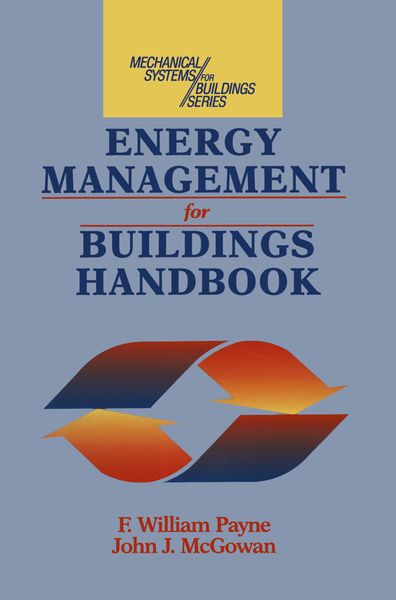
Beschreibung
Produktdetails
Einband
Taschenbuch
Erscheinungsdatum
02.04.2012
Abbildungen
XII, 400 p.
Verlag
Springer UsSeitenzahl
400
Maße (L/B/H)
22,9/15,2/2,3 cm
Gewicht
600 g
Auflage
Softcover reprint of the original 1st ed. 1988
Sprache
Englisch
ISBN
978-1-4684-6613-3
1 Automation Through Energy Management and Control Systems - Where We Stand Today.- EMCS Industry and Market Overview.- Current Issues.- Education and Training.- User Satisfaction, Cost Savings, and Other Benefits.- Controls Standardization.- Design Integration.- Emerging Issues.- Trend to Electronic Local Loop Controls.- Increasing Complexity of Control Strategies.- Market Absorption of Innovation.- Utility and Communitywide Energy Monitoring and Control.- 2 10 Reasons Why Some Automation (EMC) Systems Do Not Meet Their Performance Goals.- 3 The First Step to a Successful EMC System: Develop an Initial Energy Management Plan.- The Initial Energy Management Plan.- Select Buildings to Be Studied.- Retaining a Consultant.- Conducting an Energy Audit.- Determine Energy Savings.- Consultant's Report.- Prioritize ECOs.- Finalize and Implement the Initial Plan.- 4 The Second Step: Develop and Implement the Final Energy Management Plan.- First Part.- Perform an EMC Systems Analysis.- Three Levels of EMC Systems.- Implement the Final Plan.- 5 Level I EMC System: Multifunction Supervisory and Demand Controllers.- Supervisory Load Controller.- Optimal Start/Stop Controller.- Demand Controller.- 6 Level II EMC System: Central Monitoring and Control System.- 7 Level III Automation System Technology.- Hardware Types.- Function Categories.- Computer.- Peripheral Devices.- Field Equipment.- Distributed Processing.- Data Transmission Links.- Software.- 8 Level III EMCS Hardware.- Computer Technology.- Peripherals.- Field Equipment.- Software.- Miscellaneous Cost Issues.- System Architecture.- 9 EMC System Functions and Applications.- Basic Functions.- Optimizing Functions.- Operational Functions.- Other Functions.- System and Equipment Applications.- 10 Direct Digital Control.-Definitions.- Benefits of DDC.- "Adaptive" DDC Control.- 11 EMCS Communications and Standardization.- DDC Interface Process.- 12 Designing a Level III EMC System.- Basic Selection Criteria.- Technology Issues.- Drawings.- 13 Specifying a Level III EMC System.- Major Specification Concerns.- Sample Specifications.- Detailed Specifications.- 14 EMC System Procurement, Installation, Fine-Tuning and Maintenance.- Obtaining Bids.- Contractor Selection.- Post Award Review.- Shop Drawing Review.- On-Site Debugging.- Fine-Tuning and Long-Term Considerations.- System Documentation.- System Maintenance.- 15 Tips on EMCS Specification, Vendor Selection, Operation.- Specifications.- Software.- Point Selection.- Configuration and Hardware.- Selecting a Vendor.- Installation.- Operation and Maintenance.- 16 Training the EMC System Staff.- 17 EMCS Program Management.- Program Management Components.- Program Management Functions.- 18 EMC System Guidelines for New Buildings.- 19 Life Cycle Costing.- Using the Payback Period Method.- Using Life Cycle Costing.- The Time Value of Money.- Investment Decision-Making.- Making Decisions for Alternate Investments.- Depreciation, Taxes, and the Tax Credit.- Life Cycle Cost Analysis Optimization.- 20 Case Study 1: Computing EMC System Energy Savings for a New Commercial Building.- 21 Case Study 2: Energy Management and Control Systems in Supermarkets.- 22 Case Study 3: Energy Management and Control Systems at Princeton University.- 23 Case Study 4: Automation @@@ Shedding a Little Light on Building Security.- Appendix A - Software Dictionary.- Appendix B - Abbreviations.- Appendix C - Suppliers of Energy Management Systems-Building Controls and Automation.
Noch keine Bewertungen vorhanden
Verfassen Sie die erste Bewertung zu diesem Artikel
Helfen Sie anderen Kundinnen und Kunden durch Ihre Meinung.
Kurze Frage zu unserer Seite
Vielen Dank für Ihr Feedback
Wir nutzen Ihr Feedback, um unsere Produktseiten zu verbessern. Bitte haben Sie Verständnis, dass wir Ihnen keine Rückmeldung geben können. Falls Sie Kontakt mit uns aufnehmen möchten, können Sie sich aber gerne an unseren Kund*innenservice wenden.
zum Kundenservice