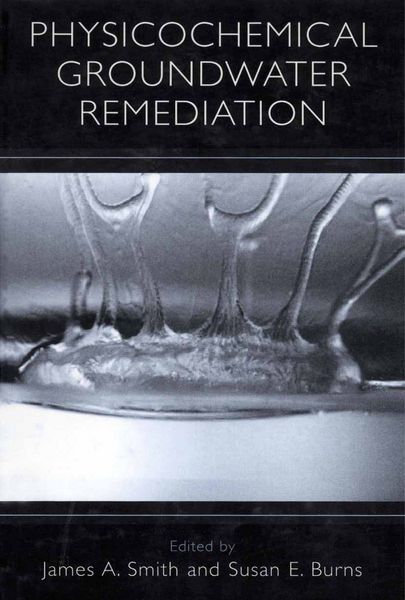

Physicochemical Groundwater Remediation
-
- Hardcover
- Taschenbuch ausgewählt
-
Sprache:Englisch
95,99 €
UVP
109,99 €
inkl. gesetzl. MwSt.,
Beschreibung
Produktdetails
Einband
Taschenbuch
Erscheinungsdatum
24.03.2013
Abbildungen
XII, 366 p.
Herausgeber
James A. Smith + weitereVerlag
Springer UsSeitenzahl
366
Maße (L/B/H)
24,4/17/2,1 cm
Gewicht
661 g
Auflage
2002
Sprache
Englisch
ISBN
978-1-4757-8766-5
As we transition into the 21
st
century, it is apparent that this is an exciting time for environmental engineers and scientists studying remediation technologies. There has been a rapid development of new ways to clean-up polluted groundwater. Research activities of the past and next 10 years will have a dramatic impact on the quality of the subsurface environment for the next century. In 20, or even 10 years from now, our approach to subsurface remediation will probably be vastly different than it is today. Many of the emerging technologies presented in this book will form the basis of standard remediation practices of the future.
Physicochemical Groundwater Remediation
presents detailed information on multiple emerging technologies for the remediation of the contaminated subsurface environment. All of these technologies apply our knowledge of physical and chemical processes to clean up ground water and the unsaturated zone, and many (if not all) of these emerging technologies will help define standard practices in the future. These technologies include
in situ
sorptive and reactive treatment walls, surfactant-enhanced aquifer remediation, optimization analyses for remediation system design, chemical, electrochemical, and biochemical remediation processes, and monitored natural attenuation. You will learn how palladium catalyzes the dehalogenation of chlorinated solvents. You will find out how barometric pumping can naturally remove significant quantities of volatile organic pollutants from shallow ground water and the unsaturated zone. You can learn about mobilizing non-aqueous phase liquids (NAPLs) without risking significant downward migration of the NAPL. You can find out how processes such as electroosmosis and electromigration can be exploited for groundwater remediation purposes and how zero-valent iron and zeolite treatment walls can be used in situ to treat and control contaminant plume migration. Contributors to this book are experts in groundwater remediation processes, and they represent industry, consulting, academia, and government.
If your work involves the clean up of contaminated soil and groundwater, this book is an essential reference to keep you up to date on the most promising new developments in remediation research.
Noch keine Bewertungen vorhanden
Verfassen Sie die erste Bewertung zu diesem Artikel
Helfen Sie anderen Kundinnen und Kunden durch Ihre Meinung.
Kurze Frage zu unserer Seite
Vielen Dank für Ihr Feedback
Wir nutzen Ihr Feedback, um unsere Produktseiten zu verbessern. Bitte haben Sie Verständnis, dass wir Ihnen keine Rückmeldung geben können. Falls Sie Kontakt mit uns aufnehmen möchten, können Sie sich aber gerne an unseren Kund*innenservice wenden.
zum Kundenservice