Gutscheinbedingungen

**Gültig bis 22.07.2026 ab einem Mindestbestellwert von 40€ auf Spielzeug, Schreibwaren, Filme, Geschenke & Trends, Musik, tolino eReader & Zubehör, Hörbücher und Hörbuch-Downloads (außer Abo), nicht preisgebundene Bücher und Kalender online auf thalia.at und in der Thalia App. Einzelne Artikel können ausgeschlossen sein. Aufgrund der Buchpreisbindung sind deutschsprachige Bücher und eBooks ausgenommen. Zusätzlich ausgenommen sind preisgebundene Artikel, Abos & Flatrates, eBooks, Games, Geschenkkarten/-boxen, Shelfies, Software, Zeitschriften sowie einzelne Artikel von tonies®. Pro Einkauf einmal einlösbar. Click & Collect nur bei Onlinevorabzahlung möglich. Keine Barauszahlung. Nicht kombinierbar mit anderen Aktionen und Gutscheinen. Gutschein wird auf max. 500€ Bestellwert angerechnet. Nicht gültig für Versandkosten und Services. Preisgebundene Artikel sind vom Mindestbestellwert ausgeschlossen.

  • Produktbild: From Pigments to Perception
  • Produktbild: From Pigments to Perception
  • Produktbild: From Pigments to Perception
Band 203

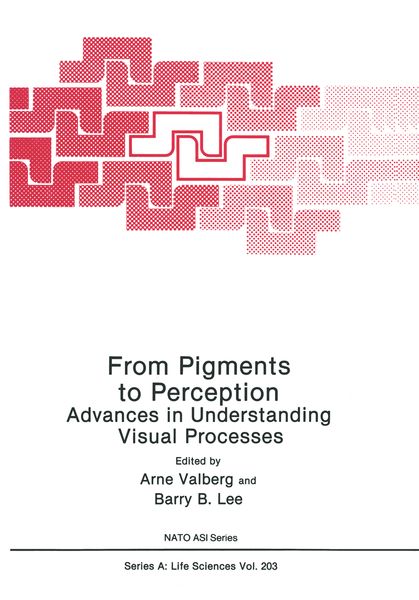
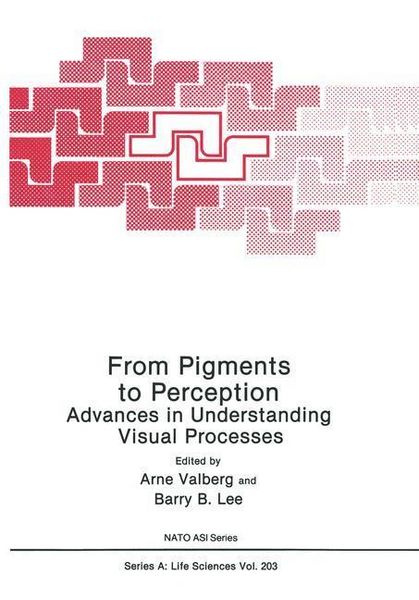
From Pigments to Perception Advances in Understanding Visual Processes

Aus der Reihe NATO Science Series A:

51,99 €

inkl. gesetzl. MwSt., Versandkostenfrei


Beschreibung

Produktdetails

Einband

Taschenbuch

Erscheinungsdatum

01.11.2012

Herausgeber

Arne Valberg + weitere

Verlag

Springer Us

Seitenzahl

485

Maße (L/B/H)

25,4/17,8/2,8 cm

Gewicht

938 g

Auflage

Softcover reprint of the original 1st ed. 1991

Sprache

Englisch

ISBN

978-1-4613-6654-6

Beschreibung

Produktdetails

Einband

Taschenbuch

Erscheinungsdatum

01.11.2012

Herausgeber

Verlag

Springer Us

Seitenzahl

485

Maße (L/B/H)

25,4/17,8/2,8 cm

Gewicht

938 g

Auflage

Softcover reprint of the original 1st ed. 1991

Sprache

Englisch

ISBN

978-1-4613-6654-6

Herstelleradresse

Springer-Verlag KG
Sachsenplatz 4-6
1201 Wien
AT

Email: GPSR Kontakt

Noch keine Bewertungen vorhanden

Verfassen Sie die erste Bewertung zu diesem Artikel

Helfen Sie anderen Kundinnen und Kunden durch Ihre Meinung.

Kundinnen und Kunden meinen

Bewertungen (0)

  • Produktbild: From Pigments to Perception
  • Produktbild: From Pigments to Perception
  • Produktbild: From Pigments to Perception
  • Biophysics and Psychophysics of Photoreceptors.- Visual Pigments and Colour Vision in Primates.- The Cost of Trichromaticity for Spatial Vision.- Variability in Cone Populations and Implications.- Discussion: Biophysics and Psychophysics of Photoreceptor.- Transition from Photopic to Scotopic Light Assessments and Possible Underlying Processes.- Dual Rod Pathways.- Wavelength-Discrimination with Only Rods and Blue Cones.- Density of Bipolar Cells in the Macaque Monkey Retina.- Discussion: Rod Vision.- Parvocellular and Magnocellular Pathways and Psychophysics.- Which Cells Code for Color?.- Receptive Field Structure of P and M Cells in the Monkey Retina.- On the Relation between Cellular Sensitivity and Psychophysical Detection.- P and M Pathway Specialization in the Macaque.- The Color-Opponent and Broad-band Channels of the Primate Visual System.- Discussion: P- and M-Pathways I.- Temporal Characteristics of Colour Vision: VEP and Psychophysical Measurements.- The Contribution of Colour to Motion.- Functional Classification of Parallel Pathways.- The Responses of Macaque Retinal Ganglion Cells to Complex Temporal Waveforms.- Remote Surrounds and the Sensitivity of Primate P-Cells.- On Neurophysiological Correlates of Simultaneous Colour and Brightness Contrast as Demonstrated in P-LGN-Cells of the Macaque.- Development of Infant Contrast Sensitivity and Acuity for Coloured Patterns.- Psychophysical Evidence of two Gradients of Neural Sampling in Peripheral Vision.- Discussion: P- and M-Pathways II.- Visual Evoked Potentials.- On the Nature of Visual Evoked Potentials, Unit Responses and Psychophysics.- Localization of the Electromagnetic Sources of the Pattern Onset Response in Man.- Discussion: Evoked Potentials.- Cortical Processing and Psychophysical Measurement.- Probing the Primate Visual Cortex: Pathways and Perspectives.- Lateral Interactions in Visual Cortex.- The Perceptual Significance of Cortical Organization.- Orientation and Spatial Frequency Selectivity: Properties and Modular Organization.- Orientation and Color Columns in Monkey Striate Cortex.- Discussion: Cortical Processing.- Psychophysical Studies and Post-Receptoral Processes.- Visual Photometry: Relating Psychophysics to some Aspects of Neurophysiology.- Sensory and Perceptual Processes in Seeing Brightness and Lightness.- Assimilation Versus Contrast.- On Achromatic Colors.- Color Opponency from Eye to Brain.- Chromatic Mechanisms beyond Linear Opponency.- Discussion: Psychophysics and Post-Receptoral Processes I.- Adaptation Mechanisms in Color and Brightness.- Testing the Contrast Explanation of Color Constancy.- Adaptation and Color Discrimination.- Studies on Colour Constancy in Man Using a “Checkerboard - Mondrian”.- Discussion: Post-Receptoral Processes II.- Models, Neural Processes and Psychophysics.- Origin of Perceptually Measured Phase Shifts in the Visual System.- Psychophysical Correlates of Parvo Channel Function.- On the Physiological Basis of Higher Colour Metrics.- Neural Decoding.- Effects of Phase Shifts between Cone Inputs on Responses of Chromatically Opponent Cells.- Different Neural Codes for Spatial Frequency and Contrast.- Displacement Estimation, Stereo Matching and ‘Object’ Recognition: A Computer Simulation Approach Working with Real World Imagery.- Scaling and Thresholds of Color and Light Described by an Opponent Model of Color Vision Based on Psychophysical Data.- Discussion: Models and Neural Nets.- General Discussion.- Participants.