Gutscheinbedingungen

**Gültig bis 06.07.2026 auf fremdsprachige Bücher online auf thalia.at, in der Thalia App ab einem Mindestbestellwert von 30€ und in allen Thalia Buchhandlungen in Österreich. In den Buchhandlungen nur gültig auf lagernde Ware. Einzelne Artikel können ausgeschlossen sein. Ausgenommen sind preisgebundene Artikel & eBooks. Pro Einkauf einmal einlösbar. Nur gültig gegen Vorlage oder im Onlineshop hinterlegter Bonuscard. Infos zur Einlösung in der Buchhandlung sind auf der Bonuscard-Vorteilspreisseite zu finden. Click & Collect nur bei Onlinevorabzahlung möglich. Keine Einlösung bei Scan & Go-Bezahlung. Keine Barauszahlung. Nicht kombinierbar mit anderen Aktionen und Gutscheinen. Gutschein wird auf max. 500€ Bestellwert angerechnet. Nicht gültig für Versandkosten und Services.

  • Produktbild: Biological Reactive Intermediates Vi
  • Produktbild: Biological Reactive Intermediates Vi
Band 500 - 34%

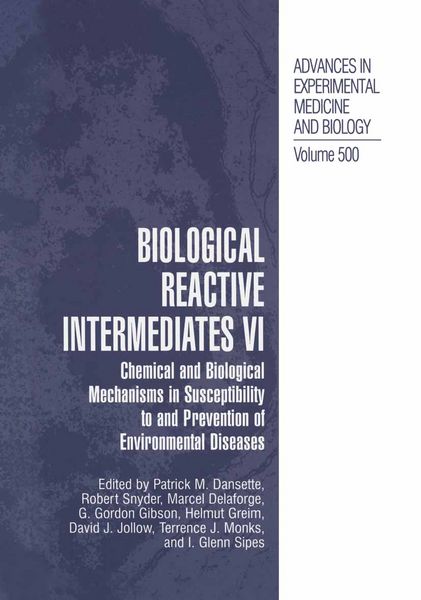
Biological Reactive Intermediates Vi Chemical and Biological Mechanisms in Susceptibility to and Prevention of Environmental Diseases

34% sparen

144,99 € UVP 219,99 €

inkl. gesetzl. MwSt., Versandkostenfrei


Beschreibung

Produktdetails

Einband

Taschenbuch

Erscheinungsdatum

21.10.2012

Herausgeber

Patrick M. Dansette + weitere

Verlag

Springer Us

Seitenzahl

728

Maße (L/B/H)

25,4/17,8/4 cm

Gewicht

1381 g

Auflage

2001

Sprache

Englisch

ISBN

978-1-4613-5185-6

Beschreibung

Portrait

Helmut Greim is Head of the DFG-Senate Commission for the Investigation of Health Hazards of Chemical Compounds in the Work Area and also President of the Advisory Committee on Existing Chemicals of Environmental Relevance of the German Chemical Society. Both bodies are intimately involved in European regulatory procedures concerning hazardous chemicals.

Produktdetails

Einband

Taschenbuch

Erscheinungsdatum

21.10.2012

Herausgeber

Verlag

Springer Us

Seitenzahl

728

Maße (L/B/H)

25,4/17,8/4 cm

Gewicht

1381 g

Auflage

2001

Sprache

Englisch

ISBN

978-1-4613-5185-6

Herstelleradresse

Springer-Verlag GmbH
Tiergartenstr. 17
69121 Heidelberg
DE

Email: GPSR Kontakt

Noch keine Bewertungen vorhanden

Verfassen Sie die erste Bewertung zu diesem Artikel

Helfen Sie anderen Kundinnen und Kunden durch Ihre Meinung.

Kundinnen und Kunden meinen

Bewertungen (0)

  • Produktbild: Biological Reactive Intermediates Vi
  • Produktbild: Biological Reactive Intermediates Vi
  • Keynote Presentation; S. Orrenius, et al. Session I. Structure Activity Relationships for the Chemical Behaviour and Toxicity of Electrophilic Quinones/Quinone Methides; I.M.C.M. Rietjens, et al. Use of Structure-Activity Relationships for Probing Biochemical Mechanisms: Glutathione Transferase Zeta Conjugation of Haloacids; P.D. Swartz, A.M. Richard. Structure Toxicity Relationships - How Useful are They in Predicting Toxicities of New Drugs? S.D. Nelson. Session II. Biological Reactive Intermediates in Drug Discovery and Development A Perspective from the Pharmaceutical Industry; T.A. Baillie, K. Kassahun. Bioactiviation of Toxicants by Cytochrome P450-Mediated Dehydrogenation Mechanisms; G.S. Yost. New Aspects of DNA Adduct Formation by the Carcinogens Crotonaldehyde and Acetaldehyde; S.S. Hecht, et al. Mechanisms of Ovotoxicity Induced by Environmental Chemicals: 4-Vinylcyclohexene Diepoxide as a Model Chemical; P.B. Hoyer, et al. Mutagenicity and Carcinogenicity of Biological Reactive Intermediate's Derived A `Non-Genotoxic' Carcinogen; S.S. Lau, et al. Reactive Metabolites of 1,3-Butadiene: DNA and Hemoglobin Adduct Formation and Potential Roles in Carcinogenicity; A.A. Elfarra, et al. Chemistry and Biological Activity of Novel Selenium Containing Compounds; J.N.M. Commandeur, et al. Formation and Fate of Reactive Intermediates of Haloalkanes, Haloalkenes, and alpha-Haloacids; M.W. Anders. Short Communications. Session III. DNA Microarray Reveals Increased Expression of Thioredoxin Peroxidase in Thioredoxin-1 Transfected Cells and its Functional Consequences; B. Husbeck, et al. Reactive Nitrogen Species and Proteins: Biological Significance and Clinical Relevance; J.M. Souza, et al. Bicarbonate Enhances Nitration and Oxidation Reactions in Biological Systems-Role of Reactive Oxygen and Nitrogen Species; B. Kalyanaraman, et al. Nitric Oxide and Peroxynitrite in Ozone-Induced Lung Injury; D.L. Laskin, et al. Antioxidant Reactions of Green Tea Catechins and Soy Isoflavones; D.C. Liebler, et al. Short Communications. Session IV. Chromosome Damage From Biological Reactive Intermediates of Benzene and 1,3-Butadiene in Leukemia; M.T. Smith. hOGG1 Gene Alterations in Human Clear Cell Carcinomas of the Kidney: Effect of Single Mutations in hOGG1 Gene on Substrate Specificity of the hOgg1 Protein; M. Audebert, et al. The Antitumor Agent Ecteinascidin 743: Characterization of its Covalent DNA Adducts and Chemical Stability; L.H. Hurley, M. Zewail-Foote. Design of DNA Damaging Agents that Hijack Transcription Factors and Block DNA Repair; J.M. Essigmann, et al. Short Communications. Session V. Are Blood-Brain Interfaces Efficient in Protecting the Brain From Reactive Molecules? J.-F. Ghersi-Egea, et al. The Roles of P-Glycoprotein and MRP1 in the Blood-Brain and Blood-Cerebrospinal Fluid Barriers; A.H. Schinkel. Are Dopamine, Norepinephrine, and Serotonin precursors of Biologically Reactive Intermediates Involved in the Pathogenesis of Neurodegenerative Brain Disorders? G. Dryhurst. Serotonergic Neurotoxicity of Methylenedioxyamphetamine and Methylenedioxymetamphetamine; T.J. Monks, et al. Session VI. Caspase Cascades in Chemically-Induced Apoptosis; S.B. Bratton, G.M. Cohen. Spermatogenesis by Sisyphus: Proliferating Stem Germ Cells Fail to Repopulate the Testis After `Irreversible' Injury; K. Boekelheide, H.A. Schoenfeld. The Interaction of 1,4-Benzoquinone, A Bioreactive Intermediate of Benzene, With Three Proteins Essential for Differentiation? Maturation of the Mo