KI-Beratung Beta

Gutscheinbedingungen

**Gültig bis 09.11.2026 auf tolino shine color (4016621130473), tolino vision color (4016621130183) und tolino vision color weiß (4016621131456) online auf thalia.at, in der Thalia App und in allen Thalia Buchhandlungen in Österreich. In den Buchhandlungen nur gültig auf lagernde Ware. Pro Einkauf einmal einlösbar. Nur gültig gegen Vorlage oder im Onlineshop hinterlegter Bonuscard. Infos zur Einlösung in der Buchhandlung sind auf der Bonuscard-Vorteilspreisseite zu finden. Click & Collect nur bei Onlinevorabzahlung möglich. Keine Einlösung bei Scan & Go-Bezahlung. Keine Barauszahlung. Nicht kombinierbar mit anderen Aktionen und Gutscheinen. Nicht gültig für Geschenkkarten, Versandkosten und Services. Nur solange der Vorrat reicht.

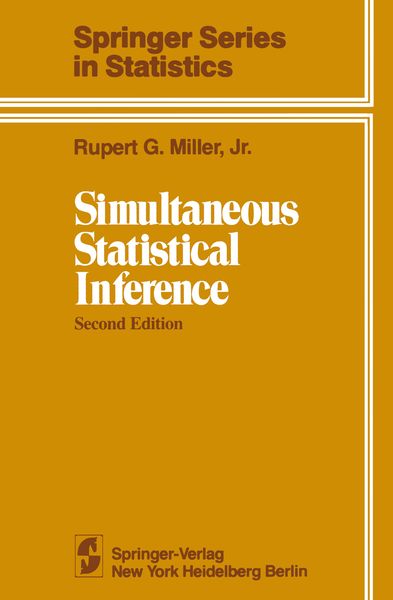
  • Produktbild: Simultaneous Statistical Inference
  • Produktbild: Simultaneous Statistical Inference

Simultaneous Statistical Inference

79,99 €

inkl. gesetzl. MwSt., Versandkostenfrei


Beschreibung

Produktdetails

Einband

Taschenbuch

Erscheinungsdatum

14.10.2011

Abbildungen

XVI, 299 p.

Verlag

Springer Us

Seitenzahl

299

Maße (L/B/H)

23,5/15,5/1,8 cm

Gewicht

487 g

Auflage

Second Edition 1981

Sprache

Englisch

ISBN

978-1-4613-8124-2

Beschreibung

Produktdetails

Einband

Taschenbuch

Erscheinungsdatum

14.10.2011

Abbildungen

XVI, 299 p.

Verlag

Springer Us

Seitenzahl

299

Maße (L/B/H)

23,5/15,5/1,8 cm

Gewicht

487 g

Auflage

Second Edition 1981

Sprache

Englisch

ISBN

978-1-4613-8124-2

Herstelleradresse

Springer-Verlag GmbH
Tiergartenstr. 17
69121 Heidelberg
DE

Email: ProductSafety@springernature.com

Noch keine Bewertungen vorhanden

Verfassen Sie die erste Bewertung zu diesem Artikel

Helfen Sie anderen Kundinnen und Kunden durch Ihre Meinung.

Kundinnen und Kunden meinen

Bewertungen (0)

  • Produktbild: Simultaneous Statistical Inference
  • Produktbild: Simultaneous Statistical Inference
  • 1 Introduction.- 1 Case of two means.- 2 Error rates.- 3 Basic techniques.- 4 p-mean significance levels.- 5 Families.- 2 Normal Univariate Techniques.- 1 Studentized range (Tukey).- 2 F projections (Scheffé)48.- 3 Bonferroni t statistics.- 4 Studentized maximum modulus.- 5 Many-one t statistics76.- 6 Multiple range tests (Duncan).- 7 Least significant difference test (Fisher).- 8 Other techniques.- 9 Power.- 10 Robustness.- 3 Regression Techniques.- 1 Regression surface confidence bands.- 2 Prediction.- 3 Discrimination.- 4 Other techniques.- 4 Nonparametric Techniques.- 1 Many-one sign statistics (Steel).- 2 k-sample sign statistics.- 3 Many-one rank statistics (Steel).- 4 k-sample rank statistics.- 5 Signed-rank statistics.- 6 Kruskal-Wallis rank statistics (Nemenyi).- 7 Friedman rank statistics (Nemenyi).- 8 Other techniques.- 5 Multivariate Techniques.- 1 Single population; covariance scalar unknown.- 2 Single population; covariance matrix unknown.- 3 k populations; covariance matrix unknown.- 4 Other techniques.- 6 Miscellaneous Techniques.- 1 Outlier detection.- 2 Multinomial populations.- 3 Equality of variances.- 4 Periodogram analysis.- 5 Alternative approaches: selection, ranking, slippage.- A Strong Law For The Expected Error Rate.- B TABLES.- I Percentage points of the studentized range.- II Percentage points of the Bonferroni t statistic.- III Percentage points of the studentized maximum modulus.- IV Percentage points of the many-one t statistics.- V Percentage points of the Duncan multiple range test.- VI Percentage points of the many-one sign statistics.- VIII Percentage points of the many-one rank statistics.- IX Percentage points of the k-sample rank statistics.- Developments in Multiple Comparisons 1966–1976.- 1 Introduction.- 2 Papers of specialinterest.- 2.1 Probability inequalities.- 2.2 Methods for unbalanced ANOVA.- 2.3 Conditional confidence levels.- 2.4 Empirical Bayes approach.- 2.5 Confidence bands in regression.- 3 References.- 4 Bibliography 1966–1976.- 4.1 Survey articles.- 4.2 Probability inequalities.- 4.3 Tables.- 4.4 Normal multifactor methods.- 4.5 Regression.- 4.6 Categorical data.- 4.7 Nonparametric techniques.- 4.8 Multivariate methods.- 4.9 Miscellaneous.- 4.10 Pre-1966 articles missed in [6].- 4.11 Late additions.- 5 List of journals scanned.- Addendum New Table of the Studentized Maximum Modulus.- Table IIIA Percentage points of the studentized maximum modulus.- Author Index.