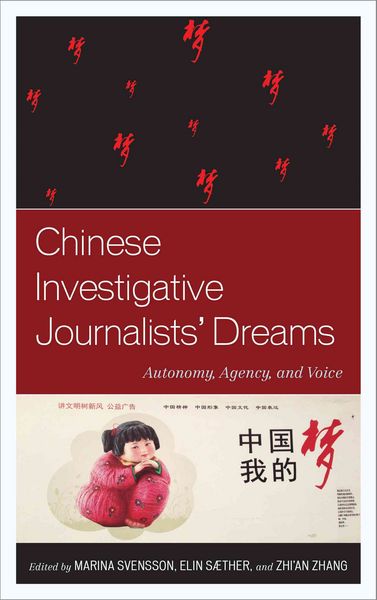
Chinese Investigative Journalists' Dreams Autonomy, Agency, and Voice
152,99 €
inkl. gesetzl. MwSt.,
Beschreibung
Produktdetails
Einband
Gebundene Ausgabe
Erscheinungsdatum
11.12.2013
Abbildungen
3 Graphs, 3 Maps, 8 Tables, Karten
Herausgeber
Svensson Marina + weitereVerlag
Ingram Publishers ServicesSeitenzahl
238
Maße (L/B/H)
23,5/15,7/1,9 cm
Gewicht
543 g
Sprache
Englisch
ISBN
978-0-7391-8987-0
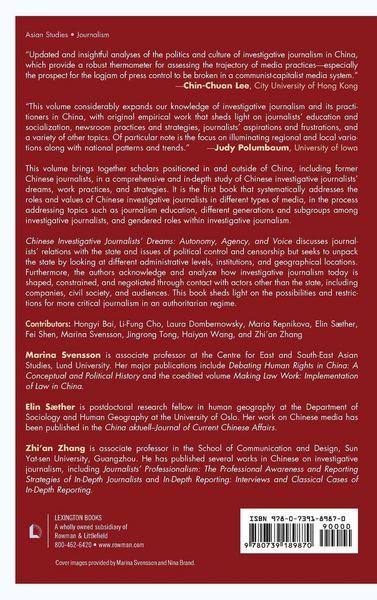
This edited volume provides comprehensive and in-depth case studies of Chinese investigative journalists’ dreams, work practices, and strategies. It is the first book that systematically addresses the roles, values, and methods of Chinese investigative journalists in different types of media and geographical locations. It provides insights into the possibilities for critical journalism within China at a time where the media appears crucial in realizing the country’s ambitions for greater global soft power.
Noch keine Bewertungen vorhanden
Verfassen Sie die erste Bewertung zu diesem Artikel
Helfen Sie anderen Kundinnen und Kunden durch Ihre Meinung.
Kurze Frage zu unserer Seite
Vielen Dank für Ihr Feedback
Wir nutzen Ihr Feedback, um unsere Produktseiten zu verbessern. Bitte haben Sie Verständnis, dass wir Ihnen keine Rückmeldung geben können. Falls Sie Kontakt mit uns aufnehmen möchten, können Sie sich aber gerne an unseren Kund*innenservice wenden.
zum Kundenservice