
Gutscheinbedingungen

**Gültig bis 04.08.2026 ab einem Mindestbestellwert von 30€ auf Spielzeug, Schreibwaren, Filme, Geschenke & Trends, Musik, tolino eReader & Zubehör, Hörbücher und Hörbuch-Downloads (außer Abo), nicht preisgebundene Bücher und Kalender online auf thalia.at und in der Thalia App. Einzelne Artikel können ausgeschlossen sein. Aufgrund der Buchpreisbindung sind deutschsprachige Bücher und eBooks ausgenommen. Zusätzlich ausgenommen sind preisgebundene Artikel, Abos & Flatrates, eBooks, Games, Geschenkkarten/-boxen, Shelfies, Software, Zeitschriften sowie einzelne Artikel von tonies®. Pro Einkauf einmal einlösbar. Click & Collect nur bei Onlinevorabzahlung möglich. Keine Barauszahlung. Nicht kombinierbar mit anderen Aktionen und Gutscheinen. Gutschein wird auf max. 500€ Bestellwert angerechnet. Nicht gültig für Versandkosten und Services. Preisgebundene Artikel sind vom Mindestbestellwert ausgeschlossen.

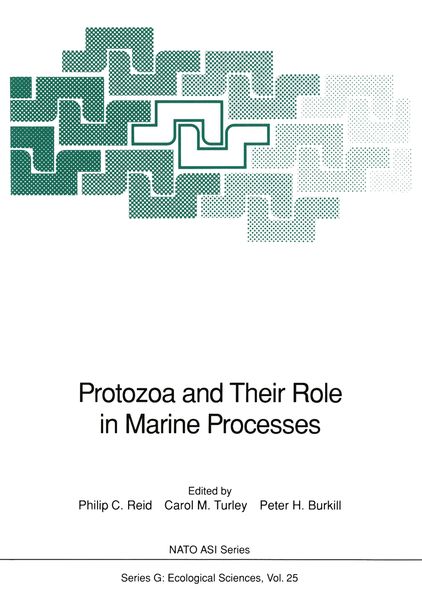
  • Produktbild: Protozoa and Their Role in Marine Processes
  • Produktbild: Protozoa and Their Role in Marine Processes
Band 25

Protozoa and Their Role in Marine Processes

Aus der Reihe Nato ASI Subseries G:

148,99 €

inkl. gesetzl. MwSt., Versandkostenfrei


Beschreibung

Produktdetails

Einband

Taschenbuch

Erscheinungsdatum

10.12.2011

Herausgeber

P.C. Reid + weitere

Verlag

Springer Berlin

Seitenzahl

506

Maße (L/B/H)

24,2/17/2,8 cm

Gewicht

874 g

Auflage

Softcover reprint of the original 1st ed. 1991

Sprache

Englisch

ISBN

978-3-642-73183-9

Beschreibung

Produktdetails

Einband

Taschenbuch

Erscheinungsdatum

10.12.2011

Herausgeber

Verlag

Springer Berlin

Seitenzahl

506

Maße (L/B/H)

24,2/17/2,8 cm

Gewicht

874 g

Auflage

Softcover reprint of the original 1st ed. 1991

Sprache

Englisch

ISBN

978-3-642-73183-9

Herstelleradresse

Springer-Verlag KG
Sachsenplatz 4-6
1201 Wien
AT

Email: GPSR Kontakt

Noch keine Bewertungen vorhanden

Verfassen Sie die erste Bewertung zu diesem Artikel

Helfen Sie anderen Kundinnen und Kunden durch Ihre Meinung.

Kundinnen und Kunden meinen

Bewertungen (0)

  • Produktbild: Protozoa and Their Role in Marine Processes
  • Produktbild: Protozoa and Their Role in Marine Processes
  • Taxonomy.- Taxonomy (46 — or more — protistan phyla) — Session summary.- A taxonomic review of heterotrophic protists important in marine ecology.- Methods.- Methods for the study of marine microzooplankton — Session summary.- Quantitative sampling of field populations of protozooplankton.- The application of image analysed fluorescence microscopy for characterising planktonic bacteria and protists.- Culturing marine protozoa — Session summary.- A method for the cloning and axenic cultivation of marine protozoa.- Pollution.- Pollution — Session summary.- Protists and pollution — with an emphasis on planktonic ciliates and heavy metals.- Effects of saline sewage on the biological community of a percolating filter.- Symbiosis.- Endosymbiosis in the protozoa — Session summary.- Mixotrophy in marine planktonic ciliates: physiological and ecological aspects of plastid-retention by oligotrichs.- Autecology.- Brief perspective on the autecology of marine protozoa.- Trophic Behaviour.- Trophic behaviour — Session summary.- Community Grazing.- Community grazing in heterotrophic marine protista — Session summary.- Trophic behaviour and related community feeding activities of heterotrophic marine protists.- Energetics and Production.- Protozoan energetics — Session summary.- Global production of heterotrophic marine planktonic ciliates.- Marine ‘Snow’ and ‘Fluff’.- Protozoa associated with marine ‘snow’ and ‘fluff’ — Session summary.- Protozoa as makers and breakers of marine aggregates.- Mineral Flux.- Mineral flux and biogeochemical cycles of marine planktonic protozoa — Session summary.- Protista and mineral cycling in the sea.- Nutrient Cycling.- Evolving role of protozoa in aquatic nutrient cycles.- Protozoans as agents in planktonic nutrient cycling.- Modelling.- Modelling — Session summary.- Modelling carbon and nitrogen flows in a microbial plankton community.- Workshop Summary and Forward Look.- Status and future needs in protozoan ecology.- List of Participants.