Gutscheinbedingungen

**Gültig nur für Bestellungen an die Wunsch-Poststation bis 10.06.2026 auf Spielzeug, Schreibwaren, Filme, Geschenke & Trends, Musik, tolino eReader & Zubehör, Hörbücher und Hörbuch-Downloads (außer Abo), nicht preisgebundene Bücher und Kalender online auf thalia.at und in der Thalia App. Einzelne Artikel können ausgeschlossen sein. Aufgrund der Buchpreisbindung sind deutschsprachige Bücher und eBooks ausgenommen. Zusätzlich ausgenommen sind preisgebundene Artikel, Abos & Flatrates, eBooks, Games, Geschenkkarten/-boxen, Shelfies, Software, Zeitschriften sowie einzelne Artikel von tonies®. Pro Einkauf einmal einlösbar. Kein Click & Collect möglich. Keine Barauszahlung. Nicht kombinierbar mit anderen Aktionen und Gutscheinen. Gutschein wird auf max. 500€ Bestellwert angerechnet. Nicht gültig für Versandkosten und Services.

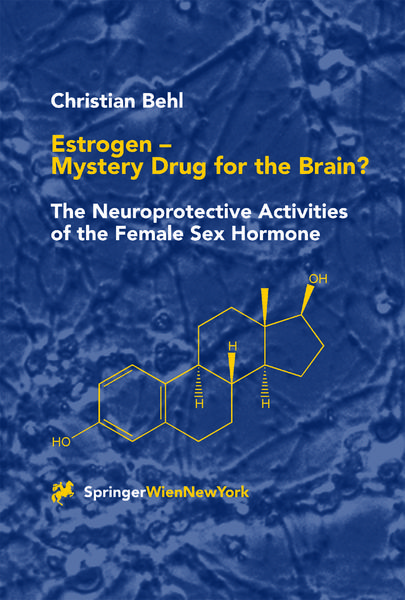
  • Produktbild: Estrogen — Mystery Drug for the Brain?
  • Produktbild: Estrogen — Mystery Drug for the Brain?

Estrogen — Mystery Drug for the Brain? The Neuroprotective Activities of the Female Sex Hormone

99,99 €

inkl. gesetzl. MwSt., Versandkostenfrei


Beschreibung

Produktdetails

Einband

Taschenbuch

Erscheinungsdatum

12.09.2012

Verlag

Springer Wien

Seitenzahl

231

Maße (L/B/H)

23,5/15,5/1,4 cm

Gewicht

391 g

Auflage

Softcover reprint of the original 1st ed. 2001

Sprache

Englisch

ISBN

978-3-7091-7254-4

Beschreibung

Rezension

"... Ein fundierter Beitrag zum heute viel diskutierten Thema der (neuro-)protektiven Wirkung von Östrogenen." Gynäkologie 4/2003 "Wer mehr über die bislang bekannten neuroprotektiven Aktivitäten erfahren will, die Östrogene im Hirn entfalten, der sollte sich das Buch "Estrogen - Mystery Drug for the Brain?" vornehmen, das vor kurzem erschienen ist: Christian Behl gibt darin einen Überblick zum aktuellen Stand des Wissens zu diesem Thema, und zwar sowohl der Grundlagenforschung als auch der klinischen Erfahrungen ..." Das Wirtschaftsmagazin der MPG 4/2001

Produktdetails

Einband

Taschenbuch

Erscheinungsdatum

12.09.2012

Verlag

Springer Wien

Seitenzahl

231

Maße (L/B/H)

23,5/15,5/1,4 cm

Gewicht

391 g

Auflage

Softcover reprint of the original 1st ed. 2001

Sprache

Englisch

ISBN

978-3-7091-7254-4

Herstelleradresse

Springer-Verlag GmbH
Prinz Eugen-Straße 8-10
1040 Wien
Österreich
Email: springer@springer.at
Url: www.springer.at
Telephone: +43 1 33024150
Fax: +43 1 33024260

Kundinnen und Kunden meinen

0 Bewertungen

Informationen zu Bewertungen

Zur Abgabe einer Bewertung ist eine Anmeldung im Konto notwendig. Die Authentizität der Bewertungen wird von uns nicht überprüft. Wir behalten uns vor, Bewertungstexte, die unseren Richtlinien widersprechen, entsprechend zu kürzen oder zu löschen.

Die Bewertungen sind nach Format, Anzahl Sterne und Datum sortiert.

Verfassen Sie die erste Bewertung zu diesem Artikel

Helfen Sie anderen Kund*innen durch Ihre Meinung

Kundinnen und Kunden meinen

0 Bewertungen filtern

  • Produktbild: Estrogen — Mystery Drug for the Brain?
  • Produktbild: Estrogen — Mystery Drug for the Brain?
  • General abbreviations.- 1. Introduction.- Estrogen — more than “just” a female sex hormone.- Estrogen is a hormone: but what are hormones, anyway?.- A little history.- In the beginning there was a physiological function.- … then there was the chemical structure.- … an estrogen binding-protein.- … and finally there was the cloning of the first estrogen receptor.- How do hormones act?.- Hormones.- Estrogen — THE sex hormone and more.- 2. Estrogen is a steroid.- Production of sex hormones in the gonadal glands.- Biosynthesis of sex hormones.- Hormonal changes during the female puberty and the menstrual cycle.- Transport of estradiol in the bloodstream and catabolism.- 3. Estrogen acts via receptors.- “Estrogen’s classics” — the genomic pathway of estrogen action.- Steroid receptors have a complex protein structure.- Another level of complexity: estrogen acts via two ERs (ER? and ER?).- ER? and ER?: a basic comparison.- The structural domains of ER? and ER?.- Modulation of the estrogen receptor function.- Interaction of the ER with co-activators and co-repressors: of RIPs, RAPs and DRIPs.- Selective estrogen receptor modulators – SERMs.- To be or not to be? Are there membrane ERs?.- 4. “Non-classical” activities of estrogen.- Rapid non-genomic effects compared to slow genomic effects of steroid hormones: what makes the difference?.- Rapid effects of estrogen.- Structure-dependent effects: estradiol as antioxidant.- Reactive oxygen species (ROS): normal byproducts of life under oxygen.- Antioxidant defense lines of the cell.- Estradiol is an antioxidant similar to ?-tocopherol (vitamin E).- Dietary phenols and the blood-brain-barrier.- 5. General physiological activities of estrogen.- Lessons from the ERKO-mice.- 6. Estrogen’s actions in the brain.- Estrogen receptors in the brain.- Neuroactivities of estrogens in brain areas outside the hypothalamus: the effect of sex differences.- Effects of estrogen on the cholinergic system.- Effects of estrogen on the serotonergic and catecholaminergic system.- Activities of estrogen on glial cells.- Are there gender differences in brain function?.- Sexual differentiation and gross gender differences in brain structure and function.- Sex differences in the function of the hippocampus.- “Non-classical” activities of estrogen in the brain.- Estrogen as “neuroactive steroid” and estradiol’s non-genomic effects at neuronal membranes 79 Estrogen’s “cross-talks” with the intracellular signaling in neurons.- Estrogen and MAP kinase signaling.- Estrogen’s “cross-talk” with other signal pathways in neurons.- Estrogen is a phenolic antioxidant.- The pathogenetic role of oxidative stress in the CNS.- The brain is particularly sensitive to oxidative stress.- 7. Protection of the brain by estrogen.- Estrogen as drug for the brain?.- Menopause, and estrogen replacement therapy (ERT).- ERT for age-related degenerative diseases: general remarks.- Estrogen and human diseases: general beneficial effects of estrogen.- Estrogen and arteriosclerosis.- Estrogen and osteoporosis.- Estrogen as a drug for the treatment and prevention of brain diseases?.- Effects of estrogen on cognition.- Estrogen in neuropsychiatric disorders.- Neurodegenerative disorders — Alzheimer’s Disease.- What is the cause of AD?.- Various AD-hypotheses.- The estrogen-Alzheimer link.- Parkinson’s Disease.- PD and estrogen.- Novel approaches for the treatment of PD.- Stroke.- Stroke and estrogen.- Schizophrenia.- Depression.- To replace or not to replace? ERT and breast cancer risk.- 8. Nerve cell protection by estrogen: molecular mechanisms.- Life is difficult, at the cellular and molecular level, too.- Protective effect of estrogen in cultured neuronal cells.- Mechanisms of nerve cell death.- The two main routes to cell death: apoptosis and necrosis.- Executioners of apoptosis: caspases.- How to detect apoptosis?.- Is there apoptosis in Alzheimer’s Disease?.- Apoptosis in post-mortem AD brain tissue.- Apoptosis and necrosis of nerve cells in culture (in vitro).- AD genetics and apoptosis.- Investigations of estrogen’s neuroprotective activities in vitro.- Intracellular molecular mechanisms of neuroprotection by estrogen.- Direct ER-dependent neuroprotection: induction of neuroprotective genes.- “Cross-Talks” of estradiol with neuroprotective signaling.- MAP-kinase signaling.- Phosphatidylinositol 3 (PI3)-kinase.- NF-?B.- NF-?B is an oxidative stress-responsive transcription factor.- NF-?B has anti-apoptotic and pro-apoptotic activities.- Cyclic AMP/CREB-signaling.- Intracellular Cat2+levels and electrophysiology.- Estradiol is a neuroprotective antioxidant: ER-independent effects.- Oxidative stress as a general trigger of nerve cell death.- Oxidative stress in neurodegeneration.- Estradiol is a neuroprotective antioxidant.- 9. Outlook.- Estrogen’s neuroprotective target genes and estrogen’s effects on neuronal stem cells.- Following the neuroprotective trace of estrogen.- DNA-array/gene chip technology and expression profiling.- Screening DNA-arrays/gene chips to identify estrogen target genes.- Estrogen and stem cells.- What are stem cells?.- Stem cells in the brain — the concept of mammalian neural stem cells and estrogen’s effects on neural stem cells.- Estrogen modulates neural stem cell generation.- Final remarks: neuroprotection by estrogen.- 10. References.