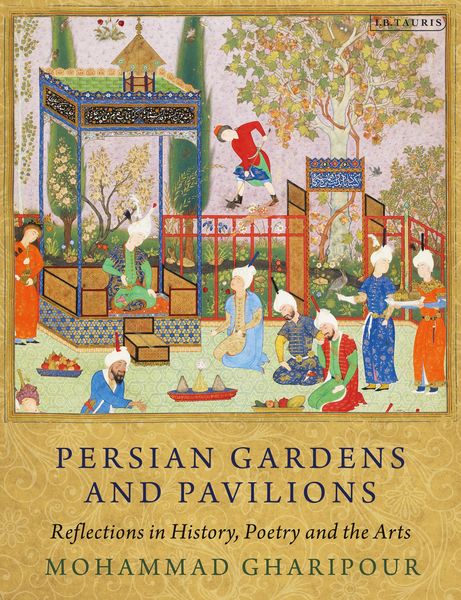
Persian Gardens and Pavilions Reflections in History, Poetry and the Arts
Aus der Reihe
International Library of Iranian Studies
-
- Einzelkauf Download ausgewählt
-
Sprache:Englisch
40,10 €
inkl. gesetzl. MwSt.Beschreibung
Produktdetails
Format
ePUB
Kopierschutz
Ja
Family Sharing
Nein
Text-to-Speech
Ja
Erscheinungsdatum
02.04.2013
Verlag
Bloomsbury eBooks UKSeitenzahl
256 (Printausgabe)
Auflage
1. Auflage
Sprache
Englisch
EAN
9780857733207
From Timur's tent in Samarqand to Shah 'Abbas's palace in Isfahan and Humayun's tomb in Delhi, the pavilion has been an integral part of Persianate gardens since its earliest appearance at the Achaemenid garden in Pasargadae in the sixth century BC. Here, Mohammad Gharipour places both the garden and the pavilion within their historical, literary and artistic contexts, emphasizing the importance of the pavilion, which has hitherto been overlooked in the study of Iranian historical architecture.
Starting with an examination of the depictions and representations of gardens in religious texts, Gharipour analyses the how the idea of the garden developed from the model of pre-Islamic gardens in Achaemenid and Sassanian Persia to its mentions in the Zoroastrian text of Aban Yasht and on to its central role as paradise in the Qur'an. Continuing on with an exploration of gardens and pavilions in Persian poetry, Gharipour offers in-depth analysis of their literal and metaphorical values. It is in the poetry of major Persian poets such as Ferdowsi, Naser Khosrow, Sa'di, Rumi and Hafez that Gharipour finds that whilst gardens are praised for their spiritual values, they also contain significant symbolic worth in terms of temporal wealth and power. Persian Gardens and Pavilions then goes onto examine the garden and the pavilion as reflected in Persian miniature painting, sculpture and carpets, as well as accounts of travelers to Persia. With masters such as Bizhad representing daily life as well as the more mystical prose and poetry in, for example, Sa'di's Bustan (The Orchard) and Golestan (The Rose Garden), the garden and the pavilion can be seen to have crucial semiotic significances and cultural meanings. But in addition to this, they also point to historical patterns of patronage and ownership which were of central importance in the diplomatic and social life of the royal courts of Persia.
Gharipour thereby highlights the metaphorical, spiritual, symbolic and religious aspects of gardens, as well as their more materialistic and economic functions. This book reaches back through Persia's rich history to explore the material and psychological relationships between human beings, pavilions and gardens, and will be a valuable resource for Art History, Architecture and Iranian Studies.
Starting with an examination of the depictions and representations of gardens in religious texts, Gharipour analyses the how the idea of the garden developed from the model of pre-Islamic gardens in Achaemenid and Sassanian Persia to its mentions in the Zoroastrian text of Aban Yasht and on to its central role as paradise in the Qur'an. Continuing on with an exploration of gardens and pavilions in Persian poetry, Gharipour offers in-depth analysis of their literal and metaphorical values. It is in the poetry of major Persian poets such as Ferdowsi, Naser Khosrow, Sa'di, Rumi and Hafez that Gharipour finds that whilst gardens are praised for their spiritual values, they also contain significant symbolic worth in terms of temporal wealth and power. Persian Gardens and Pavilions then goes onto examine the garden and the pavilion as reflected in Persian miniature painting, sculpture and carpets, as well as accounts of travelers to Persia. With masters such as Bizhad representing daily life as well as the more mystical prose and poetry in, for example, Sa'di's Bustan (The Orchard) and Golestan (The Rose Garden), the garden and the pavilion can be seen to have crucial semiotic significances and cultural meanings. But in addition to this, they also point to historical patterns of patronage and ownership which were of central importance in the diplomatic and social life of the royal courts of Persia.
Gharipour thereby highlights the metaphorical, spiritual, symbolic and religious aspects of gardens, as well as their more materialistic and economic functions. This book reaches back through Persia's rich history to explore the material and psychological relationships between human beings, pavilions and gardens, and will be a valuable resource for Art History, Architecture and Iranian Studies.
Noch keine Bewertungen vorhanden
Verfassen Sie die erste Bewertung zu diesem Artikel
Helfen Sie anderen Kundinnen und Kunden durch Ihre Meinung.
Kurze Frage zu unserer Seite
Vielen Dank für Ihr Feedback
Wir nutzen Ihr Feedback, um unsere Produktseiten zu verbessern. Bitte haben Sie Verständnis, dass wir Ihnen keine Rückmeldung geben können. Falls Sie Kontakt mit uns aufnehmen möchten, können Sie sich aber gerne an unseren Kund*innenservice wenden.
zum Kundenservice