KI-Beratung Beta

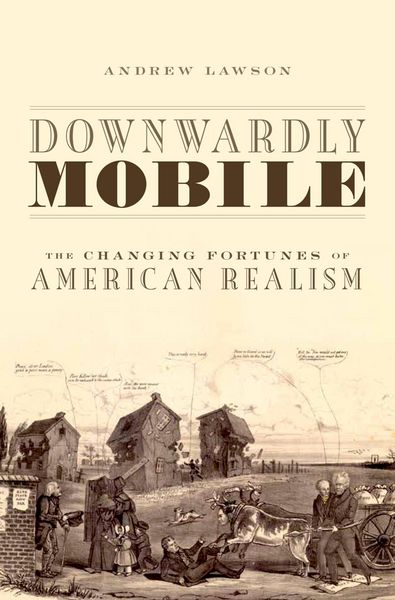
Produktbild: Downwardly Mobile

Downwardly Mobile The Changing Fortunes of American Realism

29,30 €

inkl. gesetzl. MwSt.

Beschreibung

In the unstable economy of the nineteenth-century, few Americans could feel secure. Paper money made values less tangible, while a series of financial manias, panics, and depressions clouded everyday life with uncertainty and risk. In this groundbreaking study, Andrew Lawson traces the origins of American...

Beschreibung

In the unstable economy of the nineteenth-century, few Americans could feel secure. Paper money made values less tangible, while a series of financial manias, panics, and depressions clouded everyday life with uncertainty and risk. In this groundbreaking study, Andrew Lawson traces the origins of American realism to a new structure of feeling: the desire of embattled and aspiring middle class for a more solid and durable reality. The story begins with New England authors Susan Warner and Rose Terry Cooke, whose gentry-class families became insolvent in the wake of the 1837 Panic, and moves to the western frontier, where the early careers of Rebecca Harding Davis and William Dean Howells were shaped by a constant struggle for social position and financial security. We see how the pull of downward social mobility affected even the outwardly successful, bourgeois family of Henry James in New York, while the drought-stricken wheat fields of Iowa and South Dakota produced the most militant American realist, Hamlin Garland. For these writers, realism offered to stabilize an uncertain world by capturing it with a new sharpness and accuracy. It also revealed a new cast of social actors-factory workers, slaves, farm laborers, the disabled, and the homeless, all victims of an unregulated market. Combining economic history and literary analysis to powerful effect, Downwardly Mobile shows how the fluctuating fortunes of the American middle class forced the emergence of a new kind of literature, while posing difficult political choices about how the middle class might remedy its precarious condition.

Produktdetails

Format

PDF

Kopierschutz

Ja

Family Sharing

Nein

Text-to-Speech

Nein

Produktdetails

Format

PDF

Format

eBooks im PDF-Format haben eine festgelegte Seitengröße und eignen sich daher nur bedingt zum Lesen auf einem tolino eReader oder Smartphone. Für den vollen Lesegenuss empfehlen wir Ihnen bei PDF-eBooks die Verwendung eines Tablets oder Computers.

Kopierschutz

Ja

Kopierschutz

Zum Lesen dieses eBooks auf Geräten der tolino Familie sowie auf sonstigen eReadern und am PC benötigen Sie eine ByteBook-ID. Weitere Hinweise zum Lesen von kopiergeschützten eBooks finden Sie unter Hilfe/Downloads.

Family Sharing

Nein

Family Sharing

Mit Family Sharing können Sie eBooks innerhalb Ihrer Familie (max. sechs Mitglieder im gleichen Haushalt) teilen. Sie entscheiden selbst, welches Buch Sie mit welchem Familienmitglied teilen möchten. Auch das parallele Lesen durch verschiedene Familienmitglieder ist durch Family Sharing möglich. Um eBooks zu teilen oder geteilt zu bekommen, muss jedes Familienmitglied ein Konto bei Thalia oder einem anderen tolino-Buchhändler haben. Weitere Informationen finden Sie unter Hilfe/Family-Sharing.

Text-to-Speech

Nein

Text-to-Speech

Bedeutet Ihnen Stimme mehr als Text? Mit der Funktion Text-to-Speech können Sie sich im tolino webReader und in der aktuellen Thalia – Lesen & Hören App das eBook vorlesen lassen. Weitere Informationen finden Sie unter Hilfe/Text-to-Speech.

Erscheinungsdatum

19.04.2012

Verlag Oxford University Press
Seitenzahl

(Printausgabe)

Dateigröße

1772 KB

Sprache

Englisch

EAN

9780199828067

Barrierefreiheit
  • keine Information zur Barrierefreiheit bekannt

Noch keine Bewertungen vorhanden

Verfassen Sie die erste Bewertung zu diesem Artikel

Helfen Sie anderen Kundinnen und Kunden durch Ihre Meinung.

Kundinnen und Kunden meinen

Bewertungen (0)

Weitere Artikel finden Sie in

Die Leseprobe wird geladen.
  • Produktbild: Downwardly Mobile