KI-Beratung Beta

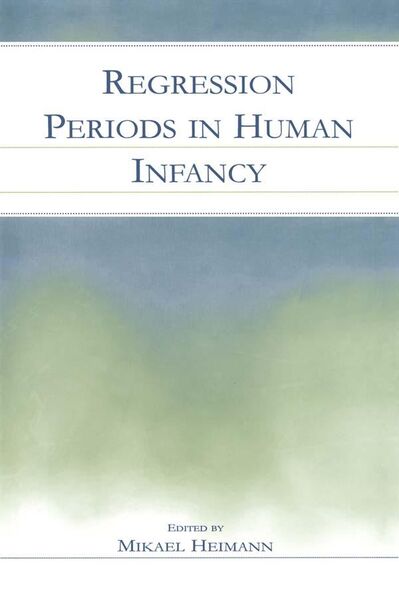
Produktbild: Regression Periods in Human infancy

Regression Periods in Human infancy

86,90 €

inkl. gesetzl. MwSt.

Beschreibung

Regression periods play a central role in the psychological development of the human baby. Studies of infants have identified 10 periods of regression, or a return to a high frequency of mother-infant contact, within the first 20 months of life. These periods of emotional insecurity in the child signal...

Beschreibung

Regression periods play a central role in the psychological development of the human baby. Studies of infants have identified 10 periods of regression, or a return to a high frequency of mother-infant contact, within the first 20 months of life. These periods of emotional insecurity in the child signal forthcoming periods of developmental advance and the emergence of an array of new skills as a consequence of parent-infant conflict over body contact and the renegotiation of old privileges.
Although the basic idea in this book is an old one, the authors believe that regression periods deserve further study and have identified four questions of central importance today:
*Can the phenomenon of regression periods as found by Dutch researchers in 1992 be replicated in other countries and cultures?
*What environmental conditions have an effect on these regression periods and how?
*Are there physical conditions in infants that show a non-linear distribution over age similar to regression periods?
*Have brain changes been detected since the review of Fischer & Rose (1994) at other ages than the six reported by them, and, if yes, how do these relate to the ages at which regression periods are found?
Forming the core of this book, the replication studies performed in Sweden, Spain, and England provide support that regression periods are a rreliable phenomenon and should be dealt with accordingly whenever developmental processes in infancy are discussed.

Produktdetails

Format

ePUB

Kopierschutz

Ja

Family Sharing

Nein

Text-to-Speech

Ja

Produktdetails

Format

ePUB

Format

eBooks im ePUB-Format erlauben eine dynamische Anpassung des Inhalts an die jeweilige Display-Größe des Lesegeräts. Das Format eignet sich daher besonders für das Lesen auf mobilen Geräten, wie z.B. Ihrem tolino, Tablets oder Smartphones.

Kopierschutz

Ja

Kopierschutz

Zum Lesen dieses eBooks auf Geräten der tolino Familie sowie auf sonstigen eReadern und am PC benötigen Sie eine Adobe ID. Weitere Hinweise zum Lesen von kopiergeschützten eBooks finden Sie unter Hilfe/Downloads.

Family Sharing

Nein

Family Sharing

Mit Family Sharing können Sie eBooks innerhalb Ihrer Familie (max. sechs Mitglieder im gleichen Haushalt) teilen. Sie entscheiden selbst, welches Buch Sie mit welchem Familienmitglied teilen möchten. Auch das parallele Lesen durch verschiedene Familienmitglieder ist durch Family Sharing möglich. Um eBooks zu teilen oder geteilt zu bekommen, muss jedes Familienmitglied ein Konto bei Thalia oder einem anderen tolino-Buchhändler haben. Weitere Informationen finden Sie unter Hilfe/Family-Sharing.

Text-to-Speech

Ja

Text-to-Speech

Bedeutet Ihnen Stimme mehr als Text? Mit der Funktion Text-to-Speech können Sie sich im tolino webReader und in der aktuellen Thalia – Lesen & Hören App das eBook vorlesen lassen. Weitere Informationen finden Sie unter Hilfe/Text-to-Speech.

Erscheinungsdatum

17.10.2003

Herausgeber
Verlag Taylor & Francis eBooks
Seitenzahl

240 (Printausgabe)

Dateigröße

3880 KB

Sprache

Englisch

EAN

9781135638832

Barrierefreiheit
  • navigierbares Inhaltsverzeichnis
  • navigierbarer Index
  • logische Lesereihenfolge eingehalten
  • kurze Alternativtexte (z.B. für Abbildungen) vorhanden
  • mathematische Inhalte in MathML
  • Seitennummerierung folgt dem gedruckten Werk
  • Navigation über vorher / nachher Elemente
  • ARIA-Rollen vorhanden

Noch keine Bewertungen vorhanden

Verfassen Sie die erste Bewertung zu diesem Artikel

Helfen Sie anderen Kundinnen und Kunden durch Ihre Meinung.

Kundinnen und Kunden meinen

Bewertungen (0)

Weitere Artikel finden Sie in

Die Leseprobe wird geladen.
  • Produktbild: Regression Periods in Human infancy