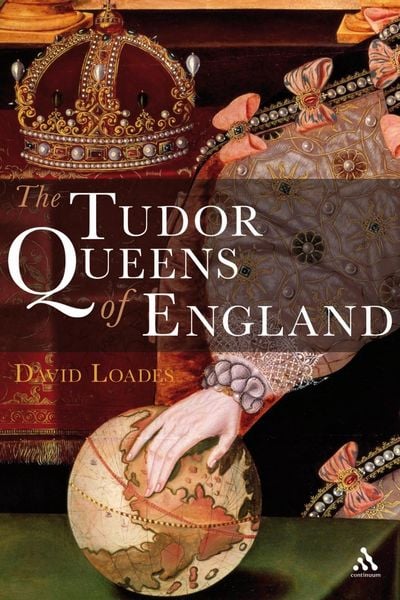
The Tudor Queens of England
-
- Taschenbuch
- eBook ausgewählt
-
Form:Einzelkauf Download
-
Sprache:Englisch
30,90 €
inkl. gesetzl. MwSt.Beschreibung
Produktdetails
Format
Kopierschutz
Ja
Family Sharing
Nein
Text-to-Speech
Nein
Erscheinungsdatum
01.01.2009
Verlag
Bloomsbury eBooks UKSeitenzahl
272 (Printausgabe)
Dateigröße
3856 KB
Auflage
1. Auflage
Sprache
Englisch
EAN
9781441140340
An intimate and revealing look at the daily lives and responsibilities of the Tudor Queens of England
From Elizabeth of York, wife of Henry VII, the first Tudor monarch, to Elizabeth I, her grand-daughter and the last, The Tudor Queens of England delves into the secret lives of some of the most colorful and dramatic women in British history. The majority of the fourteen queens considered here, from Catherine de Valois and Elizabeth Woodville to Elizabeth of York, Jane Seymour and Catherine Parr, were consorts, the wives of kings. Although less frequently examined than ruling queens, queen consorts played a crucial and central role within the Royal Court.
Their first duty was to bear children and their chastity within marriage had to be above reproach. Any suspicion of sexual misconduct would cast doubt on the legitimacy of their offspring. Three of these women - Margaret of Anjou, Anne Boleyn and Catherine Howard - were accused of such conduct, and two were tried and executed. A queen also had to contribute to her husband's royal image. This could be through works of piety or through humble intercession. It could also be through her fecundity because the fathering of many children was a sign of virility and of divine blessing. A queen might also make a tangible contribution to her husband's power with her marriage as the symbol of an international diplomatic agreement.
A ruling queen was very different, especially if she was married, insofar as she had to fill the roles of both king and queen. No woman could be both martial and virile, and at the same time submissive and supportive. Mary I solved this problem in a constitutional sense but never at the personal level. Elizabeth I sacrificed motherhood by not marrying. She chose to be mysterious and unattainable - la belle dame sans merci. In later life she used her virginity to symbolize the integrity of her realm and her subjects remained fascinated by her unorthodoxy.
How did they behave (in and out of the bedchamber)? How powerful were they as patrons of learning and the arts? What religious views did they espouse and why? How successful and influential were they? From convenient accessory to sovereign lady the role of queen was critical, colorful, and often dramatic. The Tudor Queens of England is the first book of its kind to intimately examine these questions and more.
From Elizabeth of York, wife of Henry VII, the first Tudor monarch, to Elizabeth I, her grand-daughter and the last, The Tudor Queens of England delves into the secret lives of some of the most colorful and dramatic women in British history. The majority of the fourteen queens considered here, from Catherine de Valois and Elizabeth Woodville to Elizabeth of York, Jane Seymour and Catherine Parr, were consorts, the wives of kings. Although less frequently examined than ruling queens, queen consorts played a crucial and central role within the Royal Court.
Their first duty was to bear children and their chastity within marriage had to be above reproach. Any suspicion of sexual misconduct would cast doubt on the legitimacy of their offspring. Three of these women - Margaret of Anjou, Anne Boleyn and Catherine Howard - were accused of such conduct, and two were tried and executed. A queen also had to contribute to her husband's royal image. This could be through works of piety or through humble intercession. It could also be through her fecundity because the fathering of many children was a sign of virility and of divine blessing. A queen might also make a tangible contribution to her husband's power with her marriage as the symbol of an international diplomatic agreement.
A ruling queen was very different, especially if she was married, insofar as she had to fill the roles of both king and queen. No woman could be both martial and virile, and at the same time submissive and supportive. Mary I solved this problem in a constitutional sense but never at the personal level. Elizabeth I sacrificed motherhood by not marrying. She chose to be mysterious and unattainable - la belle dame sans merci. In later life she used her virginity to symbolize the integrity of her realm and her subjects remained fascinated by her unorthodoxy.
How did they behave (in and out of the bedchamber)? How powerful were they as patrons of learning and the arts? What religious views did they espouse and why? How successful and influential were they? From convenient accessory to sovereign lady the role of queen was critical, colorful, and often dramatic. The Tudor Queens of England is the first book of its kind to intimately examine these questions and more.
Noch keine Bewertungen vorhanden
Verfassen Sie die erste Bewertung zu diesem Artikel
Helfen Sie anderen Kundinnen und Kunden durch Ihre Meinung.
Kurze Frage zu unserer Seite
Vielen Dank für Ihr Feedback
Wir nutzen Ihr Feedback, um unsere Produktseiten zu verbessern. Bitte haben Sie Verständnis, dass wir Ihnen keine Rückmeldung geben können. Falls Sie Kontakt mit uns aufnehmen möchten, können Sie sich aber gerne an unseren Kund*innenservice wenden.
zum Kundenservice