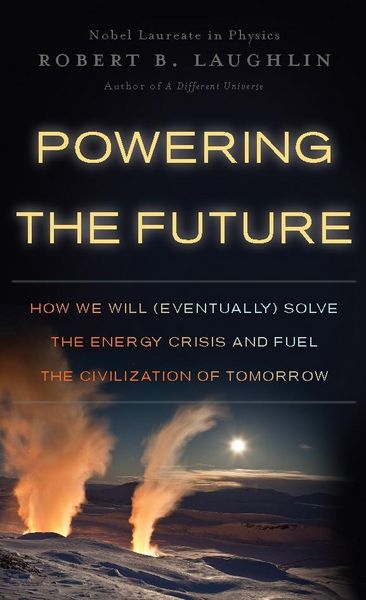
Powering the Future How We Will (Eventually) Solve the Energy Crisis and Fuel the Civilization of Tomorrow
-
- Taschenbuch
- eBook ausgewählt
-
Form:Einzelkauf Download
-
Sprache:Englisch
8,49 €
inkl. gesetzl. MwSt.Beschreibung
Produktdetails
Format
ePUB 3
Kopierschutz
Ja
Family Sharing
Ja
Text-to-Speech
Ja
Altersempfehlung
13 - 99 Jahr(e)
Erscheinungsdatum
27.09.2011
Verlag
Basic BooksSeitenzahl
240 (Printausgabe)
Dateigröße
464 KB
Sprache
Englisch
EAN
9780465027941
In Powering the Future, Nobel laureate Robert B. Laughlin transports us two centuries into the future, when we've ceased to use carbon from the ground -- either because humans have banned carbon burning or because fuel has simply run out. Boldly, Laughlin predicts no earth-shattering transformations will have taken place. Six generations from now, there will still be soccer moms, shopping malls, and business trips. Firesides will still be snug and warm.
How will we do it? Not by discovering a magic bullet to slay our energy problems, but through a slew of fascinating technologies, drawing on wind, water, and fire. Powering the Future is an objective yet optimistic tour through alternative fuel sources, set in a world where we've burned every last drop of petroleum and every last shovelful of coal.
The Predictable:Fossil fuels will run out. The present flow of crude oil out of the ground equals in one day the average flow of the Mississippi River past New Orleans in thirteen minutes. If you add the energy equivalents of gas and coal, it's thirty-six minutes. At the present rate of consumption, we'll be out of fossil fuels in two centuries" time. We always choose the cheapest gas. From the nineteenth-century consolidation of the oil business to the California energy crisis of 2000-2001, the energy business has shown, time and again, how low prices dominate market share. Market forces -- not green technology -- will be the driver of energy innovation in the next 200 years.The laws of physics remain fixed. Energy will still be conserved, degrade entropically with use, and have to be disposed of as waste heat into outer space. How much energy a fuel can pack away in a given space is fixed by quantum mechanics -- and if we want to keep flying jet planes, we will need carbon-based fuels.The Potential:Animal waste.If dried and burned, the world's agricultural manure would supply about one-third as much energy as all the coal we presently consume.Trash. The United States disposes of 88 million tons of carbon in its trash per year. While the incineration of waste trash is not enough to contribute meaningfully to the global demand for energy, it will constrain fuel prices by providing a cheap supply of carbon.Solar energy.The power used to light all the cities around the world is only one-millionth of the total power of sunlight pouring down on earth's daytime side. And the amount of hydropump storage required to store the world's daily electrical surge is equal to only eight times the volume of Lake Mead.
How will we do it? Not by discovering a magic bullet to slay our energy problems, but through a slew of fascinating technologies, drawing on wind, water, and fire. Powering the Future is an objective yet optimistic tour through alternative fuel sources, set in a world where we've burned every last drop of petroleum and every last shovelful of coal.
The Predictable:Fossil fuels will run out. The present flow of crude oil out of the ground equals in one day the average flow of the Mississippi River past New Orleans in thirteen minutes. If you add the energy equivalents of gas and coal, it's thirty-six minutes. At the present rate of consumption, we'll be out of fossil fuels in two centuries" time. We always choose the cheapest gas. From the nineteenth-century consolidation of the oil business to the California energy crisis of 2000-2001, the energy business has shown, time and again, how low prices dominate market share. Market forces -- not green technology -- will be the driver of energy innovation in the next 200 years.The laws of physics remain fixed. Energy will still be conserved, degrade entropically with use, and have to be disposed of as waste heat into outer space. How much energy a fuel can pack away in a given space is fixed by quantum mechanics -- and if we want to keep flying jet planes, we will need carbon-based fuels.The Potential:Animal waste.If dried and burned, the world's agricultural manure would supply about one-third as much energy as all the coal we presently consume.Trash. The United States disposes of 88 million tons of carbon in its trash per year. While the incineration of waste trash is not enough to contribute meaningfully to the global demand for energy, it will constrain fuel prices by providing a cheap supply of carbon.Solar energy.The power used to light all the cities around the world is only one-millionth of the total power of sunlight pouring down on earth's daytime side. And the amount of hydropump storage required to store the world's daily electrical surge is equal to only eight times the volume of Lake Mead.
Noch keine Bewertungen vorhanden
Verfassen Sie die erste Bewertung zu diesem Artikel
Helfen Sie anderen Kundinnen und Kunden durch Ihre Meinung.
Kurze Frage zu unserer Seite
Vielen Dank für Ihr Feedback
Wir nutzen Ihr Feedback, um unsere Produktseiten zu verbessern. Bitte haben Sie Verständnis, dass wir Ihnen keine Rückmeldung geben können. Falls Sie Kontakt mit uns aufnehmen möchten, können Sie sich aber gerne an unseren Kund*innenservice wenden.
zum Kundenservice