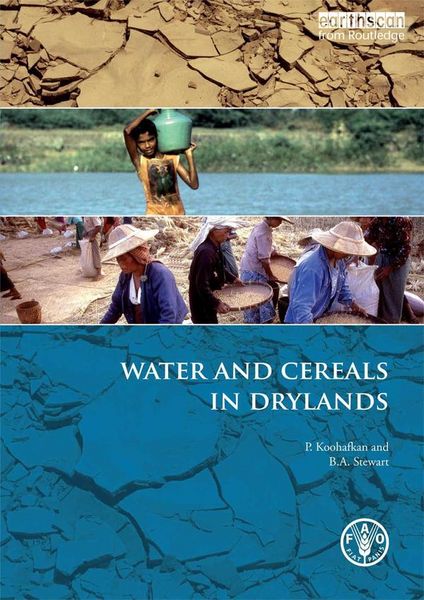
Water and Cereals in Drylands
-
- Einzelkauf Download ausgewählt
-
Sprache:Englisch
-
eBook Format:PDF
- ePUB 3 35,50 €
- PDF 35,50 € ausgewählt
35,50 €
inkl. gesetzl. MwSt.Beschreibung
Produktdetails
Format
Kopierschutz
Ja
Family Sharing
Nein
Text-to-Speech
Nein
Erscheinungsdatum
04.05.2012
Verlag
Taylor & Francis eBooksSeitenzahl
120 (Printausgabe)
Dateigröße
10625 KB
Sprache
Englisch
EAN
9781136548888
This topic is central to contemporary concerns for more sustainable agricultural development. This is a well-written and clear book, with excellent data, tables and illustrations, addressing issues of water use, climate change, poverty and small farmers. The authors are highly respected and complement each other's acknowledged international expertise.'
Professor Jules Pretty, University of Essex, UK
'This useful guide shows that there is great potential for increasing the productive capacity of smallholder farms in the drylands via a range of water management techniques, from the simple to the more complex. Providing a theoretical grounding and a practical guide, Water and cereals in the drylands will appeal to workers on-location as well as students, researchers and policymakers.'
New Agriculturalist
Cereals are by far the most important source of food throughout the world, either directly for human consumption or indirectly in the form of animal feed for livestock products consumed as food. With world population set to rise to nine billion by 2050, there is an urgent need to examine ways to increase cereal production. Indeed recently the future of cereal production and consumption has been complicated by rising energy prices and the economics of biofuels, which are competing for the use of cereals. One way to increase cereal production is by the more effective use of marginal dryland areas.
This book reviews the potential for increased cereal production in drylands across the world, from the USA, Australia and Southern Europe to Asia and Africa. It describes how improved water conservation, water harvesting and investment options can contribute to this, and suggests policies for the more efficient use of existing natural resources in order to lessen the dependence of agriculture on further irrigation development.
Noch keine Bewertungen vorhanden
Verfassen Sie die erste Bewertung zu diesem Artikel
Helfen Sie anderen Kundinnen und Kunden durch Ihre Meinung.
Kurze Frage zu unserer Seite
Vielen Dank für Ihr Feedback
Wir nutzen Ihr Feedback, um unsere Produktseiten zu verbessern. Bitte haben Sie Verständnis, dass wir Ihnen keine Rückmeldung geben können. Falls Sie Kontakt mit uns aufnehmen möchten, können Sie sich aber gerne an unseren Kund*innenservice wenden.
zum Kundenservice