Beschreibung
Produktdetails
Format
ePUB
Kopierschutz
Ja
Family Sharing
Ja
Text-to-Speech
Ja
Erscheinungsdatum
11.11.2008
Verlag
Knopf Doubleday Publishing GroupSeitenzahl
848 (Printausgabe)
Dateigröße
8708 KB
Sprache
Englisch
EAN
9780307270566
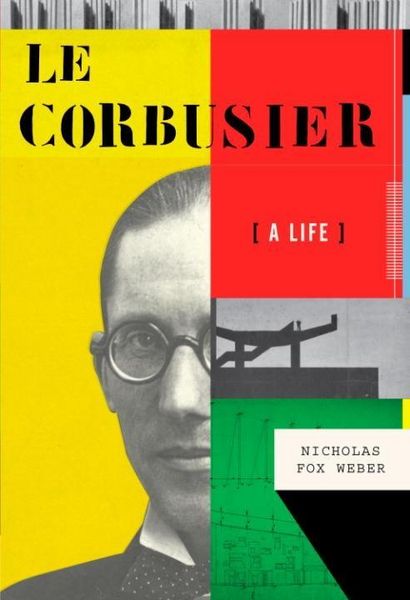
From acclaimed biographer and cultural historian, author of Balthus and Patron Saintsthe first full-scale life of le Corbusier, one of the most influential, admired, and maligned architects of the twentieth century, heralded is a prophet in his lifetime, revered as a god after his death.
He was a leader of the modernist movement that sought to create better living conditions and a better society through housing concepts. He predicted the city of the future with its large, white apartment buildings in parklike settingsa move away from the turn-of-the-century industrial city, which he saw as too fussy and suffocating and believed should be torn down, including most of Paris. Irascible and caustic, tender and enthusiastic, more than a mercurial innovator, Le Corbusier was considered to be the very conscience of modern architecture.
In this first biography of the man, Nicholas Fox Weber writes about Le Corbusier the precise, mathematical, practical-minded artist whose idealismvibrant, poetic, imaginative; discipline; and sensualism were reflected in his iconic designs and pioneering theories of architecture and urban planning.
Weber writes about Le Corbusier's training; his coming to live and work in Paris; the ties he formed with Nehru . . . Brassaï . . . Malraux (he championed Le Corbusier's work and commissioned a major new museum for art to be built on the outskirts of Paris) . . . Einstein . . . Matisse . . . the Steins . . . Picasso . . . Walter Gropius, and others.
We see how Le Corbusier, who appreciated goverments only for the possibility of obtaining architectural commissions, was drawn to the new Soviet Union and extolled the merits of communism (he never joined the party); and in 1928, as the possible architect of a major new building, went to Moscow, where he was hailed by Trotsky and was received at the Kremlin. Le Corbusier praised the ideas of Mussolini and worked for two years under the Vichy government, hoping to oversee new construction and urbanism throughout France. Le Corbusier believed that Hitler and Vichy rule would bring about a marvelous transformation of society, then renounced the doomed regime and went to work for Charles de Gaulle and his provisional government.
Weber writes about Le Corbusier's fraught relationships with women (he remained celibate until the age of twenty-four and then often went to prostitutes); about his twenty-seven-year-long marriage to a woman who had no interest in architecture and forbade it being discussed at the dinner table; about his numerous love affairs during his marriage, including his shipboard romance with the twenty-three-year-old Josephine Baker, already a legend in Paris, whom he saw as a pure and guileless soul. She saw him as irresistibly funny. What a shame you're an architect! she wrote. You'd have made such a good partner!
A brilliant revelation of this single-minded, elusive genius, of his extraordinary achivements and the age in which he lived.
He was a leader of the modernist movement that sought to create better living conditions and a better society through housing concepts. He predicted the city of the future with its large, white apartment buildings in parklike settingsa move away from the turn-of-the-century industrial city, which he saw as too fussy and suffocating and believed should be torn down, including most of Paris. Irascible and caustic, tender and enthusiastic, more than a mercurial innovator, Le Corbusier was considered to be the very conscience of modern architecture.
In this first biography of the man, Nicholas Fox Weber writes about Le Corbusier the precise, mathematical, practical-minded artist whose idealismvibrant, poetic, imaginative; discipline; and sensualism were reflected in his iconic designs and pioneering theories of architecture and urban planning.
Weber writes about Le Corbusier's training; his coming to live and work in Paris; the ties he formed with Nehru . . . Brassaï . . . Malraux (he championed Le Corbusier's work and commissioned a major new museum for art to be built on the outskirts of Paris) . . . Einstein . . . Matisse . . . the Steins . . . Picasso . . . Walter Gropius, and others.
We see how Le Corbusier, who appreciated goverments only for the possibility of obtaining architectural commissions, was drawn to the new Soviet Union and extolled the merits of communism (he never joined the party); and in 1928, as the possible architect of a major new building, went to Moscow, where he was hailed by Trotsky and was received at the Kremlin. Le Corbusier praised the ideas of Mussolini and worked for two years under the Vichy government, hoping to oversee new construction and urbanism throughout France. Le Corbusier believed that Hitler and Vichy rule would bring about a marvelous transformation of society, then renounced the doomed regime and went to work for Charles de Gaulle and his provisional government.
Weber writes about Le Corbusier's fraught relationships with women (he remained celibate until the age of twenty-four and then often went to prostitutes); about his twenty-seven-year-long marriage to a woman who had no interest in architecture and forbade it being discussed at the dinner table; about his numerous love affairs during his marriage, including his shipboard romance with the twenty-three-year-old Josephine Baker, already a legend in Paris, whom he saw as a pure and guileless soul. She saw him as irresistibly funny. What a shame you're an architect! she wrote. You'd have made such a good partner!
A brilliant revelation of this single-minded, elusive genius, of his extraordinary achivements and the age in which he lived.
Kundinnen und Kunden meinen
Verfassen Sie die erste Bewertung zu diesem Artikel
Helfen Sie anderen Kund*innen durch Ihre Meinung
Kurze Frage zu unserer Seite
Vielen Dank für Ihr Feedback
Wir nutzen Ihr Feedback, um unsere Produktseiten zu verbessern. Bitte haben Sie Verständnis, dass wir Ihnen keine Rückmeldung geben können. Falls Sie Kontakt mit uns aufnehmen möchten, können Sie sich aber gerne an unseren Kund*innenservice wenden.
zum Kundenservice