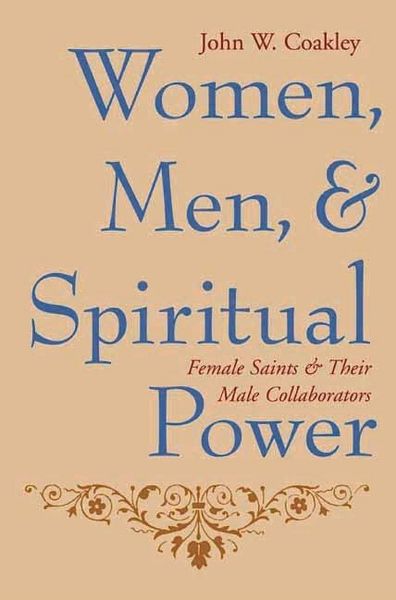
Women, Men, and Spiritual Power Female Saints and Their Male Collaborators
-
- Einzelkauf Download ausgewählt
-
Sprache:Englisch
81,80 €
inkl. gesetzl. MwSt.Beschreibung
Produktdetails
Format
ePUB
Kopierschutz
Ja
Family Sharing
Nein
Text-to-Speech
Ja
Erscheinungsdatum
18.01.2006
Verlag
Columbia University PressSeitenzahl
(Printausgabe)
Dateigröße
16544 KB
Sprache
Englisch
EAN
9780231508612
In Women, Men, and Spiritual Power, John Coakley explores male-authored narratives of the lives of Catherine of Siena, Hildegard of Bingen, Angela of Foligno, and six other female prophets or mystics of the late Middle Ages. His readings reveal the complex personal and literary relationships between these women and the clerics who wrote about them. Coakley's work also undermines simplistic characterizations of male control over women, offering an important contribution to medieval religious history.
Coakley shows that these male-female relationships were marked by a fundamental tension between power and fascination: the priests and monks were supposed to hold authority over the women entrusted to their care, but they often switched roles, as the men became captivated with the women's spiritual gifts. In narratives of such women, the male authors reflect directly on the relationship between the women's powers and their own. Coakley argues that they viewed these relationships as gendered partnerships that brought together female mystical power and male ecclesiastical authority without placing one above the other.
Women, Men, and Spiritual Power chronicles a wide-ranging experiment in the balance of formal and informal powers, in which it was assumed to be thoroughly imaginable for both sorts of authority, in their distinctly gendered terms, to coexist and build on each other. The men's writings reflect an extended moment in western Christianity when clerics had enough confidence in their authority to actually question its limits. After about 1400, however, clerics underwent a crisis of confidence, and such a questioning of institutional power was no longer considered safe. Instead of seeing women as partners, their revelatory powers began to be viewed as evidence of witchcraft.
Noch keine Bewertungen vorhanden
Verfassen Sie die erste Bewertung zu diesem Artikel
Helfen Sie anderen Kundinnen und Kunden durch Ihre Meinung.
Kurze Frage zu unserer Seite
Vielen Dank für Ihr Feedback
Wir nutzen Ihr Feedback, um unsere Produktseiten zu verbessern. Bitte haben Sie Verständnis, dass wir Ihnen keine Rückmeldung geben können. Falls Sie Kontakt mit uns aufnehmen möchten, können Sie sich aber gerne an unseren Kund*innenservice wenden.
zum Kundenservice