Gutscheinbedingungen

**Gültig bis 19.07.2026 auf tolino Accessoires online auf thalia.at und in der Thalia App. Einzelne Artikel können ausgeschlossen sein. Ausgenommen sind tolino stylus schwarz (4016621130282) und weiß (4016621131463). Pro Einkauf einmal einlösbar. Click & Collect nur bei Onlinevorabzahlung möglich. Keine Barauszahlung. Nicht kombinierbar mit anderen Aktionen und Gutscheinen. Nicht gültig für Geschenkkarten, Versandkosten und Services. Nur solange der Vorrat reicht.

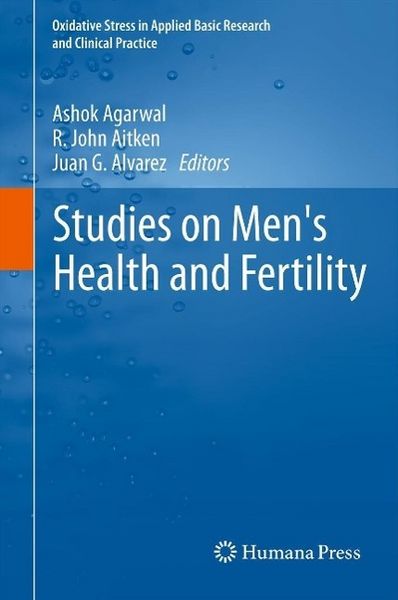
Produktbild: Studies on Men's Health and Fertility

Studies on Men's Health and Fertility

219,99 €

inkl. gesetzl. MwSt.

Beschreibung

Produktdetails

Format

PDF

Kopierschutz

Nein

Family Sharing

Nein

Text-to-Speech

Nein

Erscheinungsdatum

17.03.2012

Herausgeber

Ashok Agarwal + weitere

Verlag

Humana Press

Seitenzahl

672 (Printausgabe)

Dateigröße

8736 KB

Sprache

Englisch

EAN

9781617797767

Beschreibung

Rezension

From the reviews:

“The authors achieve their stated goal of exploring the basic science, physiology, and pathophysiology behind reactive oxygen and nitrogen species in male reproductive health. … The book does an excellent job of highlighting the seminal work that has defined how oxidative stress contributes to men’s overall genitourinary health. … This is an excellent resource for basic science researchers or clinicians looking to examine the role of oxidative stress in men’s genitourinary health.” (James M. Hotaling, Doody’s Book Reviews, June, 2012)

Portrait

Ashok Agarwal is the Director of the Clinical Andrology Laboratory and Reproductive Tissue Bank, and the Director of Research at the Center for Reproductive Medicine since 1993. He holds these positions at The Cleveland Clinic Foundation, where he is a Professor at the Lerner College of Medicine of Case Western Reserve University. Ashok received his Ph.D. in 1983 and did his post-doctoral training in Reproductive Biology under a fellowship from The Rockefeller Foundation at Harvard Medical School, Boston. He was an Instructor in Surgery and then an Assistant Professor of Urology at Harvard Medical School from 1988 to 1993. Ashok has published over 500 scientific papers and reviews in peer reviewed scientific journals. He is currently an editor of 10 medical text books/ manuals related to male infertility, ART, fertility preservation, DNA damage and antioxidants. Ashok is active in basic and clinical research and his laboratory has trained over 150 basic scientists and clinical researchers from the United States and abroad. In addition, more than 150 medical, undergraduate, and high school students have worked in his laboratory. His current research interests include studies on molecular markers of oxidative stress, DNA integrity, and apoptosis in the pathophysiology of male and female reproduction, effect of radio frequency radiation on fertility and fertility preservation in patients with cancer.R. John Aitken's research career began with a PhD in reproductive biology from the University of Cambridge. Following post-doctoral positions at the Institute of Animal Genetics, University of Edinburgh and the University of Bordeaux, he joined the World Health Organization in Geneva, where he managed two independent WHO task forces dealing with different approaches to fertility regulation.  In 1977, he joined the Medical Research Council's Reproductive Biology Unit, University of Edinburgh, to establish a research group in gamete biology with clinical outreach into male infertility. In 1992, John was awarded an Honorary Professorship within the Faculty of Medicine , University of Edinburgh, and in 1995 was elected a Fellow of the Royal Society of Edinburgh.  In 1998 he received an ScD degree from the University of Cambridge in recognition of his contribution to the field of gamete biology.  In the same year, he moved to the University of Newcastle, NSW, as Chair of Biological Sciences and, later, Director of the ARC Centre of Excellence in Biotechnology and Development.  In 2011 he was elected to the Australian Academy of Science and is currently Laureate Professor of Biological Sciences and Director of the Priority Research Centre in Reproductive Science at the University of Newcastle. Professor Juan G. Alvarez received his Medical Doctor degree at the University of Santiago of Compostela in Spain, has a Ph.D in Physical-Chemistry by the University of Villanova, Pennsylvania, and was Associate Professor of Obstetrics and Gynecology and Reproductive Biology at Harvard Medical School. During over three decades he has developed his scientific career in world leading research centers such as the Reproductive Biology Unit at the University of Pennsylvania and Harvard Medical School, where he was Director of Research at the Department of Obstetrics and Gynecology and Co-Director of the Women's Health Research Institut at Beth Israel Deaconess Medical Center in Boston. He was also Scientific Director of Institut Marques in Barcelona, one of the leading IVF centres in Spain. He carried out basic and clinical research in the field of infertility with particular emphasis in oxygen radical chemistry and biochemistry in mammalian spermatozoa and free radical-induced sperm DNA damage in human spermatozoa. Currently, he is Director of Centro ANDROGEN, one of the leading male infertility clinics in Spain. He combines his clinical activities with research in the area of male infertility. He collaborates with the Cleveland Clinic Glickman Urological Institute, Harvard Medical School, Yale University and the Massachusetts Institute of Technology (MIT).

Produktdetails

Format

PDF

eBooks im PDF-Format haben eine festgelegte Seitengröße und eignen sich daher nur bedingt zum Lesen auf einem tolino eReader oder Smartphone. Für den vollen Lesegenuss empfehlen wir Ihnen bei PDF-eBooks die Verwendung eines Tablets oder Computers.

Kopierschutz

Nein

Dieses eBook können Sie uneingeschränkt auf allen Geräten der tolino Familie, allen sonstigen eReadern und am PC lesen. Das eBook ist nicht kopiergeschützt und kann ein personalisiertes Wasserzeichen enthalten. Weitere Hinweise zum Lesen von eBooks mit einem personalisierten Wasserzeichen finden Sie unter Hilfe/Downloads.

Family Sharing

Nein

Mit Family Sharing können Sie eBooks innerhalb Ihrer Familie (max. sechs Mitglieder im gleichen Haushalt) teilen. Sie entscheiden selbst, welches Buch Sie mit welchem Familienmitglied teilen möchten. Auch das parallele Lesen durch verschiedene Familienmitglieder ist durch Family Sharing möglich. Um eBooks zu teilen oder geteilt zu bekommen, muss jedes Familienmitglied ein Konto bei Thalia oder einem anderen tolino-Buchhändler haben. Weitere Informationen finden Sie unter Hilfe/Family-Sharing.

Text-to-Speech

Nein

Bedeutet Ihnen Stimme mehr als Text? Mit der Funktion Text-to-Speech können Sie sich im tolino webReader und in der aktuellen Thalia – Lesen & Hören App das eBook vorlesen lassen. Weitere Informationen finden Sie unter Hilfe/Text-to-Speech.

Barrierefreiheit

  • keine Information zur Barrierefreiheit bekannt

Erscheinungsdatum

17.03.2012

Herausgeber

Verlag

Humana Press

Seitenzahl

672 (Printausgabe)

Dateigröße

8736 KB

Sprache

Englisch

EAN

9781617797767

Noch keine Bewertungen vorhanden

Verfassen Sie die erste Bewertung zu diesem Artikel

Helfen Sie anderen Kundinnen und Kunden durch Ihre Meinung.

Kundinnen und Kunden meinen

Bewertungen (0)

Weitere Artikel finden Sie in

  • Produktbild: Studies on Men's Health and Fertility
  • Electromagnetic Radiation and Oxidative Stress in the Male Germ Line.- Mitochondria as a Source of ROS in Mammalian Spermatozoa.- Cryostorage and Oxidative Stress in Mammalian Spermatozoa.- Sperm Capacitation as an Oxidative Event.- Protection of Epididymal Spermatozoa from Oxidative Stress.- Lipid Peroxidation in Human Spermatozoa.- Age and Oxidative Stress in the Germ Line.- Heat and Oxidative Stress in the Germ Line.- Cytokines and Oxidative Stress in the Germ Line.- Metabolic Strategy in Mammalian Spermatozoa and Oxidative Stress.- Role of Protamine Disulfide Cross-Linking in Counteracting Oxidative Damage to DNA.- Role of Caspase, PARP and Oxidative Stress in Male Infertility.- Methods for the Detection of ROS in Human Sperm Samples.- Direct Methods for the Detection of Reactive Oxygen Species in Human Semen Samples.- ROS and Semen Quality.- Oxidative Stress and Male Infertility-A Clinical Perspective.- Oxidative Stress and Testicular Torsion.- Varicocele and Oxidative Stress.- Recreational Drugs and ROS Production in Mammalian Spermatozoa.- Oxidative Stress, DNA Damage and Apoptosis in Male Infertility.- Effect of Oxidative Stress on ART Outcome.- Oxidative Stress and the Use of Antioxidants for Idiopathic OATs.- Leukocytospermia and Oxidative Stress.- Clinical Consequence of Oxidative Stress in Male Infertility.- Oxidative Stress and Infection.- The Role of Obesity in ROS Generation and Male Infertility.- Oxidative Stress in Benign Prostate Hyperplasia.- Role of Oxidative Stress in ED: Unraveling the Molecular Mechanism.