KI-Beratung Beta

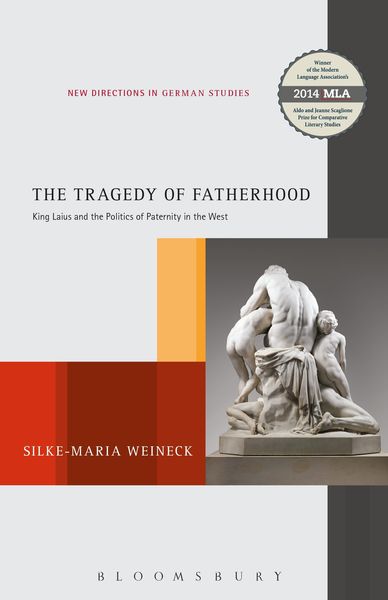
Produktbild: The Tragedy of Fatherhood

The Tragedy of Fatherhood King Laius and the Politics of Paternity in the West

28,99 €

inkl. gesetzl. MwSt., zzgl. Versandkosten


  • Kostenlose Lieferung ab 30 € Einkaufswert
  • Versandkostenfrei für Bonuscard-Kund*innen

Beschreibung

Winner of the 2014 Aldo and Jeanne Scaglione Prize for Comparative Literary Studies, awarded by the Modern Language Association. Theories of power have always been intertwined with theories of fatherhood: paternity is the oldest and most persistent metaphor of benign, legitimate rule. The paternal trope...

Beschreibung

Winner of the 2014 Aldo and Jeanne Scaglione Prize for Comparative Literary Studies, awarded by the Modern Language Association. Theories of power have always been intertwined with theories of fatherhood: paternity is the oldest and most persistent metaphor of benign, legitimate rule. The paternal trope gains its strength from its integration of law, body, and affect-in the affirmative model of fatherhood, the biological father, the legal father, and the father who protects and nurtures his children are one and the same, and in a complex system of mutual interdependence, the father of the family is symbolically linked to the paternal gods of monotheism and the paternal ruler of the monarchic state. If tragedy is the violent eruption of a necessary conflict between competing, legitimate claims, The Tragedy of Fatherhood argues that fatherhood is an essentially tragic structure. Silke-Maria Weineck traces both the tensions and various strategies to resolve them through a series of readings of seminal literary and theoretical texts in the Western cultural tradition. In doing so, she demonstrates both the fragility and resilience of fatherhood as the most important symbol of political power. A long history of fatherhood in literature, philosophy, and political thought, The Tragedy of Fatherhood weaves together figures as seemingly disparate as Aristotle, Freud, Kafka, and Kleist, to produce a stunning reappraisal of the nature of power in the Western tradition.

Rezension

The Tragedy of Fatherhood is a tour de force that will open new avenues of research. Although the pater familias is generally considered the model for all figures of authority, his position has gone largely unaddressed in criticism except from the vantage point of the son or the subservient subject. Silke Weineck's elegant and thought-provoking study lifts the father from the shadows and lets him speak as a figure that is at once powerful but vulnerable, the bedrock of the social order but also its most contested member. The book combines an enormous wealth of learning with grace and wit, and is written in a manner that should be the envy of all scholars in the humanities. Rochelle Tobias, Professor of German, Johns Hopkins University, USA

Produktdetails

Einband

Taschenbuch

Erscheinungsdatum

28.08.2014

Verlag Bloomsbury Academic
Seitenzahl

224

Produktdetails

Einband

Taschenbuch

Erscheinungsdatum

28.08.2014

Verlag Bloomsbury Academic
Seitenzahl

224

Maße (L/B/H)

21,3/14/2 cm

Gewicht

295 g

Sprache

Englisch

ISBN

978-1-62892-789-4

Herstelleradresse

Libri GmbH
Europaallee 1
36244 Bad Hersfeld
DE

Email: gpsr@libri.de

Noch keine Bewertungen vorhanden

Verfassen Sie die erste Bewertung zu diesem Artikel

Helfen Sie anderen Kundinnen und Kunden durch Ihre Meinung.

Kundinnen und Kunden meinen

Bewertungen (0)

Die Leseprobe wird geladen.
  • Produktbild: The Tragedy of Fatherhood
  • Section I: Freud's Fatherhood I

    One Revenants

    Section II: The Tragic Father

    Two The Laius Complex

    Three Oedipus Patêr

    Four "I Must Do What I've Been Told":
    Abraham and the Conditions of Paternity

    Section III: The Political Father

    Five Aristotle and the Body of the Father

    Six Paternity and the Perfect City

    Seven Hobbes: The End of the Paternal Triad

    Section IV: The Rise of the Son

    Eight "I Will Be King No More": Lessing's Philotas
    and the Abdication of the Father

    Nine Kleist: Paternal Resurrections

    Section V: Freud's Fatherhood II

    Ten The Gschnas, or the Path to the Fatherless Society

    Conclusion Dead Children

    Bibliography