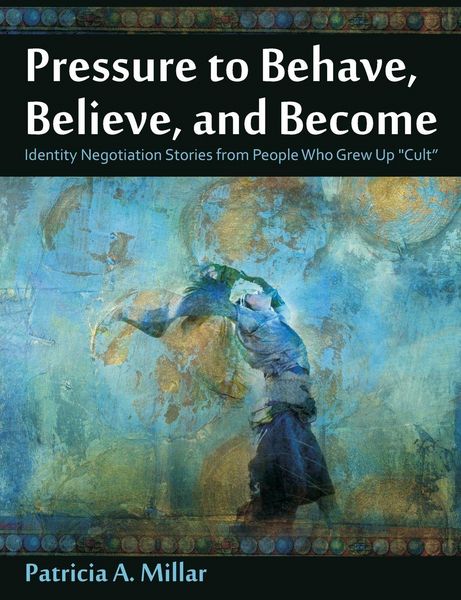
Pressure to Behave, Believe, and Become Identity Negotiation Stories from People Who Grew Up Cult
-
- Englisch ausgewählt
48,99 €
inkl. gesetzl. MwSt.,
Beschreibung
Produktdetails
Einband
Taschenbuch
Erscheinungsdatum
07.08.2013
Verlag
Dissertation.ComSeitenzahl
244
Maße (L/B/H)
24,6/18,9/1,3 cm
Gewicht
480 g
Sprache
Englisch
ISBN
978-1-61233-409-7
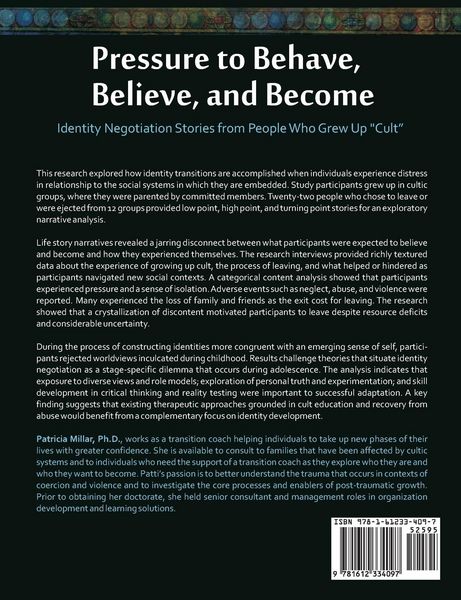
This research explored how identity transitions are accomplished when individuals experience distress in relationship to the social systems in which they are embedded. Study participants grew up in cultic groups, where they were parented by committed members. Twenty-two people who chose to leave or were ejected from 12 groups provided low point, high point, and turning point stories for an exploratory narrative analysis. Life story narratives revealed a jarring disconnect between what participants were expected to believe and become and how they experienced themselves. The research interviews provided richly textured data about the experience of growing up cult, the process of leaving, and what helped or hindered as participants navigated new social contexts. A categorical content analysis showed that participants experienced pressure and a sense of isolation. Adverse events such as neglect, abuse, and violence were reported. Many experienced the loss of family and friends as the exit cost for leaving. The research showed that a crystallization of discontent motivated participants to leave despite resource deficits and considerable uncertainty. During the process of constructing identities more congruent with an emerging sense of self, participants rejected worldviews inculcated during childhood. Results challenge theories that situate identity negotiation as a stage-specific dilemma that occurs during adolescence. The analysis indicates that exposure to diverse views and role models; exploration of personal truth and experimentation; and skill development in critical thinking and reality testing were important to successful adaptation. A key finding suggests that existing therapeutic approaches grounded in cult education and recovery from abuse would benefit from a complementary focus on identity development.
Noch keine Bewertungen vorhanden
Verfassen Sie die erste Bewertung zu diesem Artikel
Helfen Sie anderen Kundinnen und Kunden durch Ihre Meinung.
Kurze Frage zu unserer Seite
Vielen Dank für Ihr Feedback
Wir nutzen Ihr Feedback, um unsere Produktseiten zu verbessern. Bitte haben Sie Verständnis, dass wir Ihnen keine Rückmeldung geben können. Falls Sie Kontakt mit uns aufnehmen möchten, können Sie sich aber gerne an unseren Kund*innenservice wenden.
zum Kundenservice